
Louver panel for an electronic sign
a technology of electronic signs and loud speakers, applied in the field of loud speakers, can solve the problems of little improvement in contrast or readability, affecting affecting the appearance of electronic signs, so as to improve the quality of electronic signs, improve viewing angles, and improve viewing contras
- Summary
- Abstract
- Description
- Claims
- Application Information
AI Technical Summary
Benefits of technology
Problems solved by technology
Method used
Image

Examples
Embodiment Construction
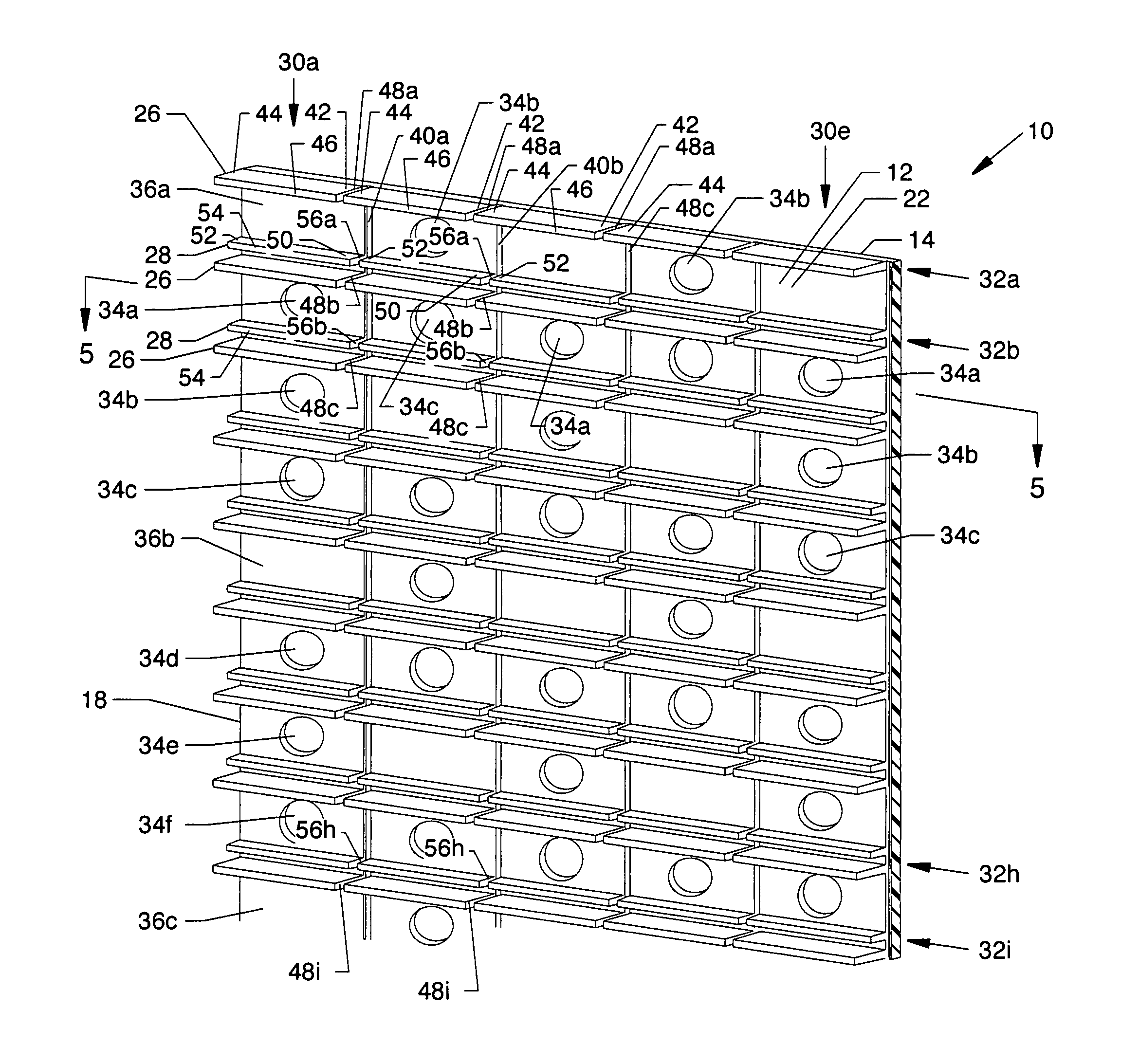
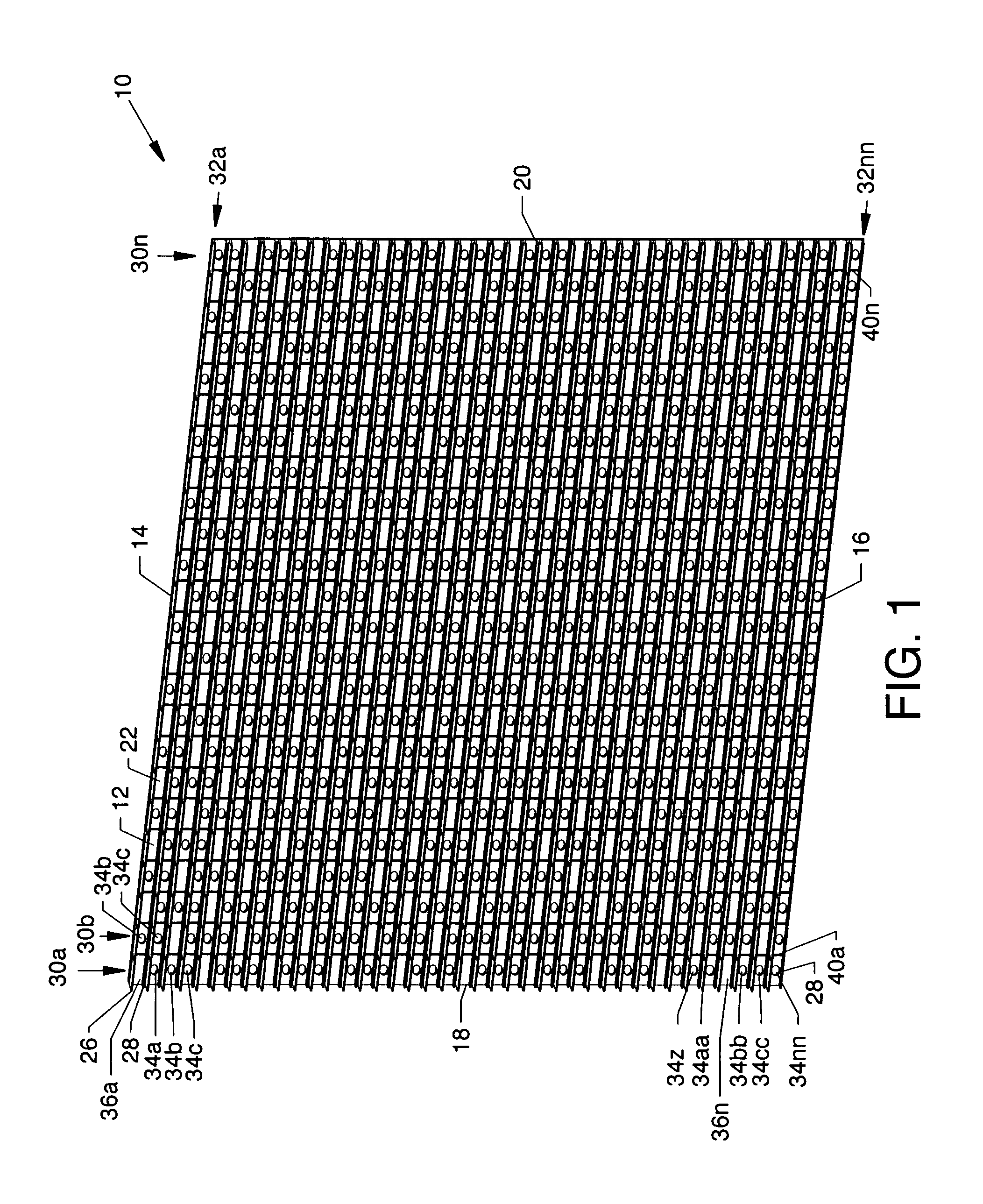
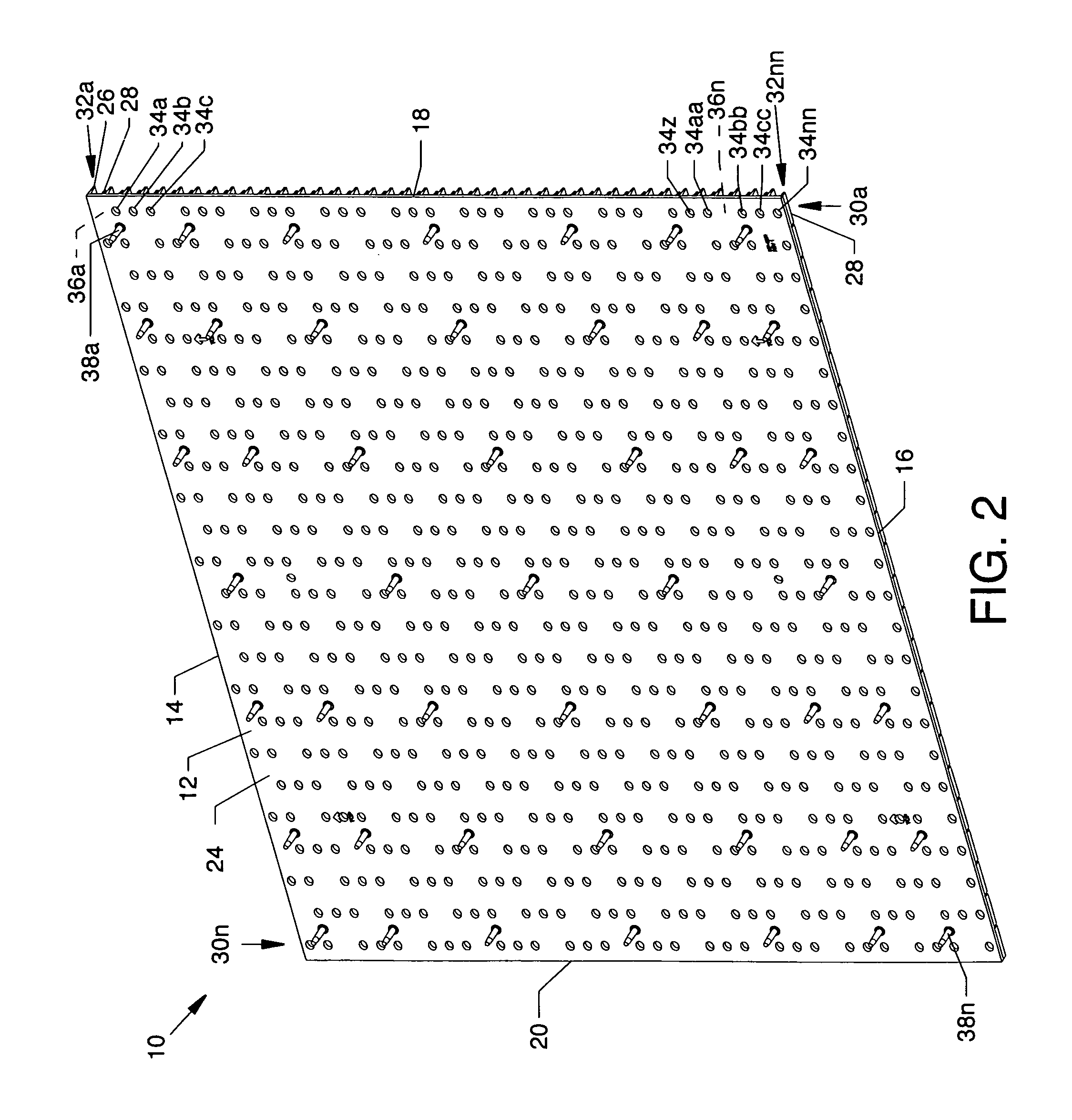
[0051]FIG. 1 is an isometric front view of a louver panel for use with an electronic sign 10, the present invention, alternately referred to as the louver panel 10. The louver panel for use with an electronic sign 10 is geometrically configured and formed of, but not limited to, a suitable plastic or metal material. A substantially planar panel 12, which serves as the base of the invention, includes a top edge 14, an opposed bottom edge 16, a left side edge 18, an opposed right side edge 20, and also includes a front surface 22 and an opposed rear surface 24 (FIG. 2), each surface of which extends between the top edge 14, the bottom edge 16, the left side edge 18, and the right side edge 20 and also includes other significant features as now described. Multiple arrangements of rectangularly shaped planar protrusions in the form of primary and secondary louvers 26 and 28, respectively, extend outwardly and forwardly from the front surface 22 of the panel 12 and are arranged in a plur...
PUM
 Login to View More
 Abstract
Description
Claims
Application Information
 Login to View More