
Isolation and use of melanoma cancer stem cells
a technology of stem cells and melanoma, which is applied in the field of isolation and use of melanoma cancer stem cells, can solve problems such as metastatic disease, and achieve the effects of reducing the risk of metastatic diseas
- Summary
- Abstract
- Description
- Claims
- Application Information
AI Technical Summary
Benefits of technology
Problems solved by technology
Method used
Image

Examples
example 1
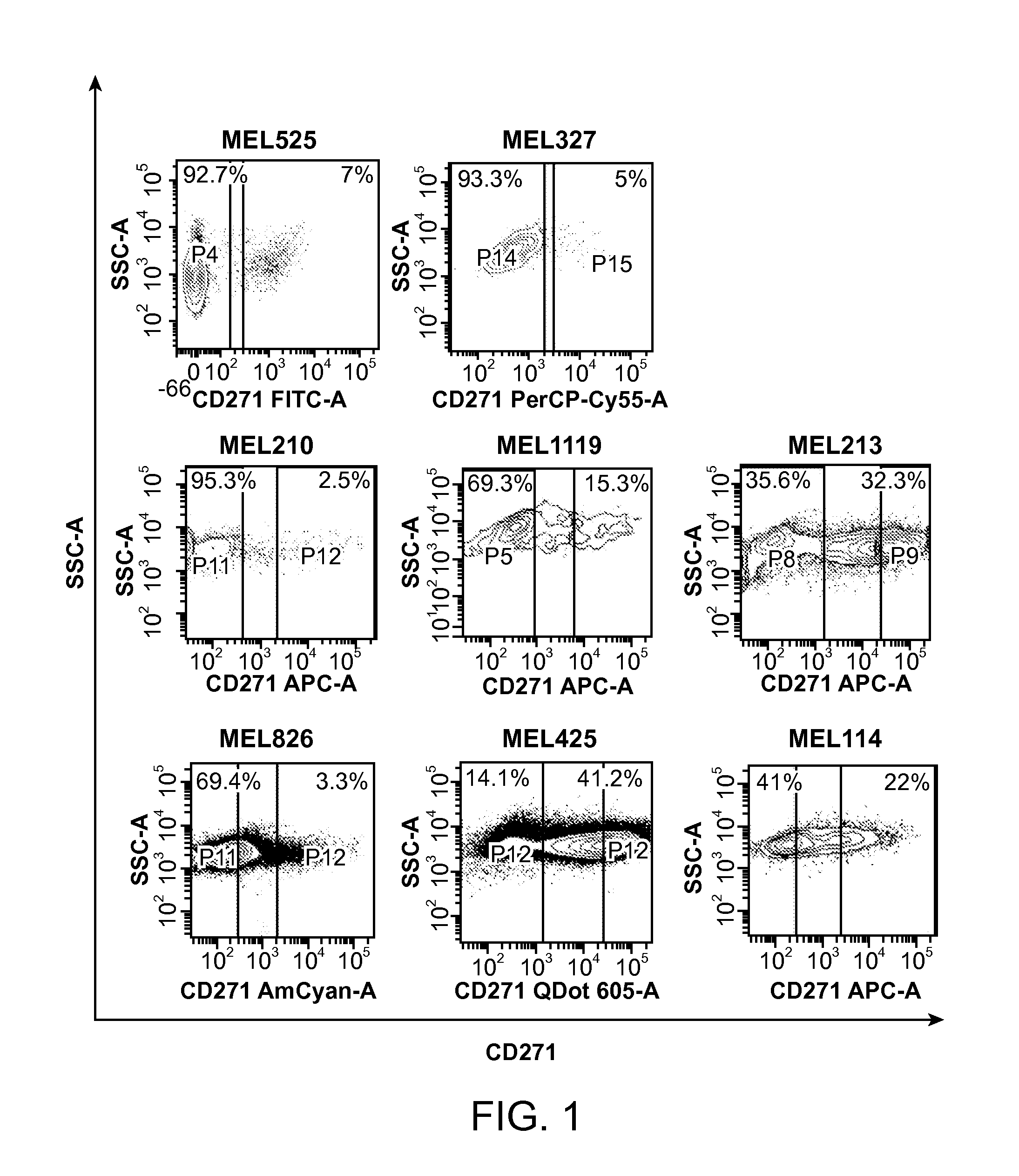
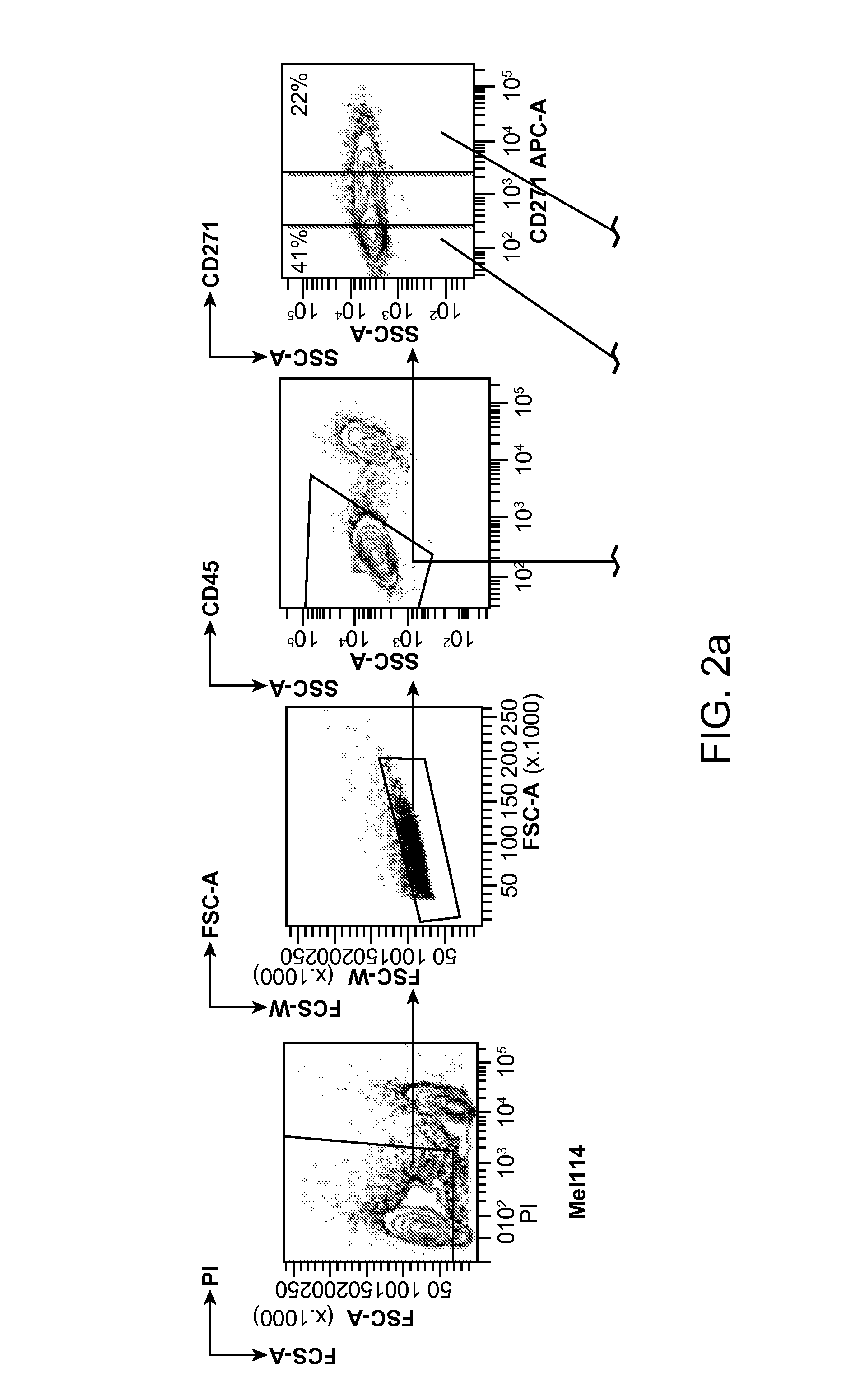
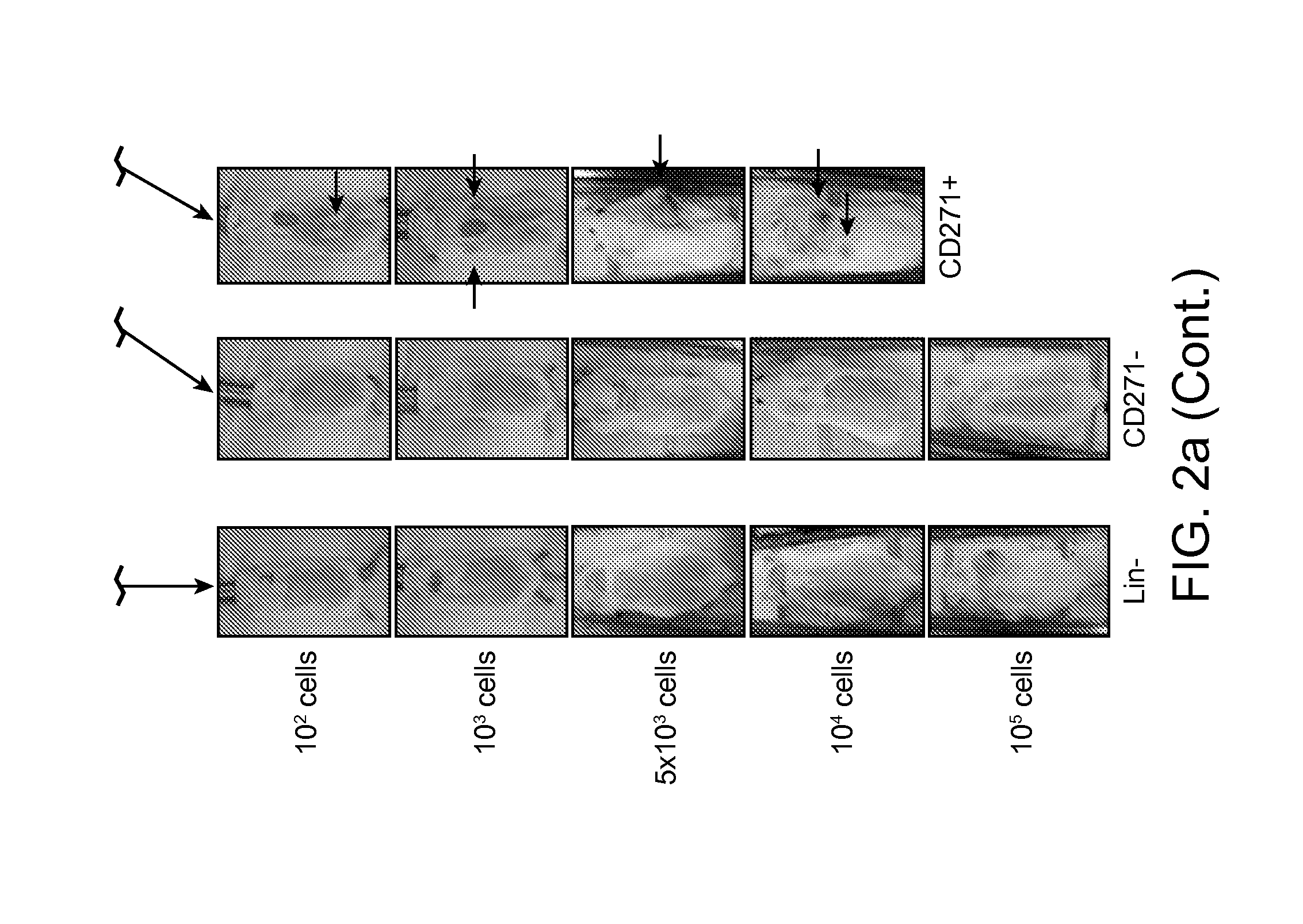
[0121]The question whether tumorigenic cancer initiating cells [cancer stem cells{CSC}] exist in human melanomas has arisen recently. Here we show that in melanomas cancer stem cells can be isolated prospectively as a highly enriched CD271+ CSC population using the improved methods of tumor initiation, where the tumors sampled in the present study were taken from primary sites rather than from metastatic sites or grafts passaged in NOG mice. At all stages tested the CD271+ subset of cells in the tumor were the only tumorigenic fraction in melanomas tested; and CD271+ cells contain the metastasis initiation tumor population. The expression level of CD271 is a factor for increased risk of poor outcome in melanoma patients. The melanoma antigens MART-1, Tyr, and HMB-45 are restricted to the CD271− fraction. MAGE is expressed in some, but not all CD27130 melanoma cells.
[0122]Cancers derive by clonal progression to appear as abnormal growths which can be at diagnosis at a stage ranging f...
PUM
| Property | Measurement | Unit |
|---|---|---|
| volume | aaaaa | aaaaa |
| durable | aaaaa | aaaaa |
| compositions | aaaaa | aaaaa |
Abstract
Description
Claims
Application Information
 Login to View More