
Percutaneous system for dynamic spinal stabilization
a dynamic stabilization and percutaneous technology, applied in the field of spine disorders, can solve the problems of reducing the recovery time and the amount of trauma to the patien
- Summary
- Abstract
- Description
- Claims
- Application Information
AI Technical Summary
Benefits of technology
Problems solved by technology
Method used
Image

Examples
Embodiment Construction
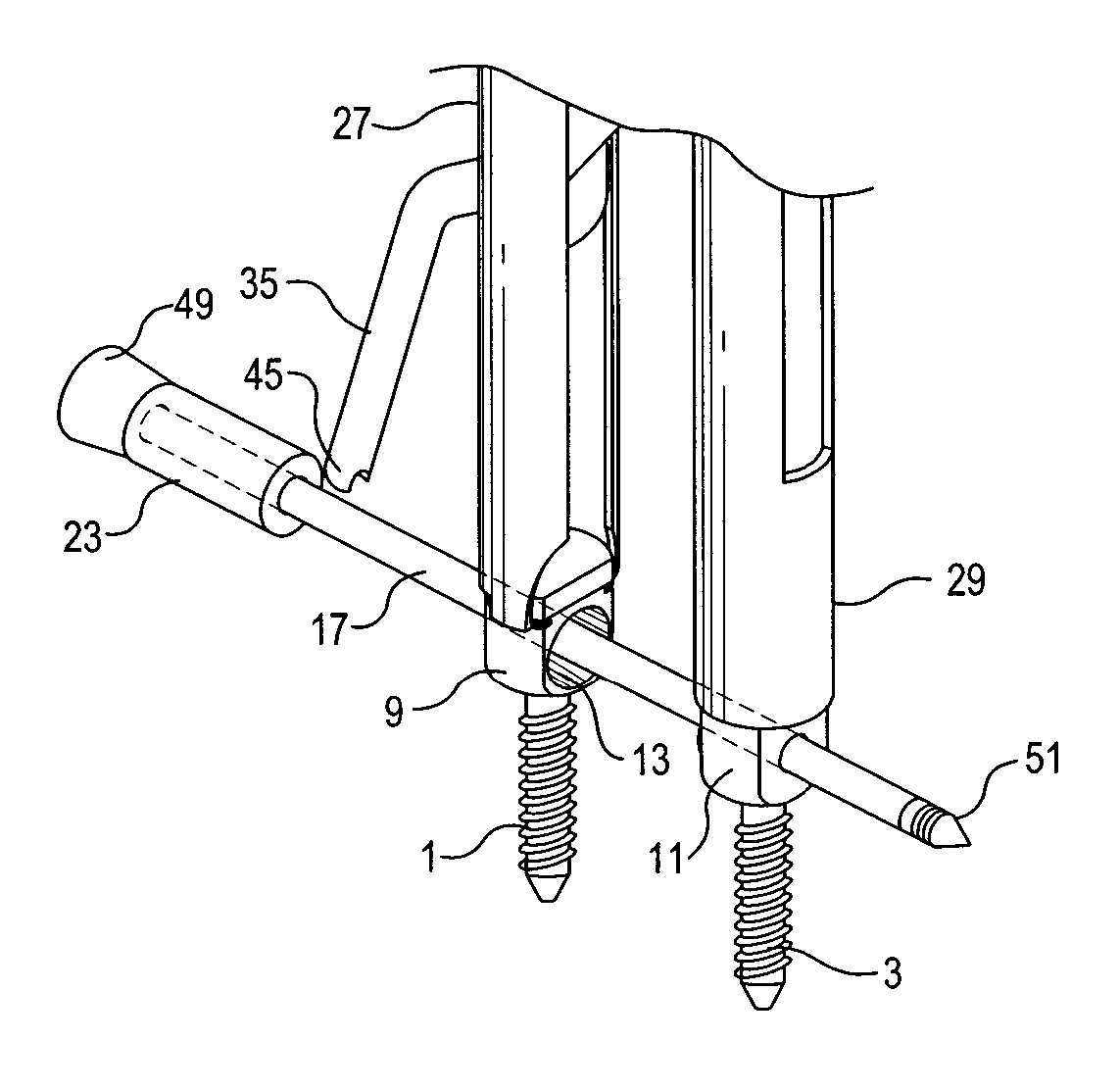
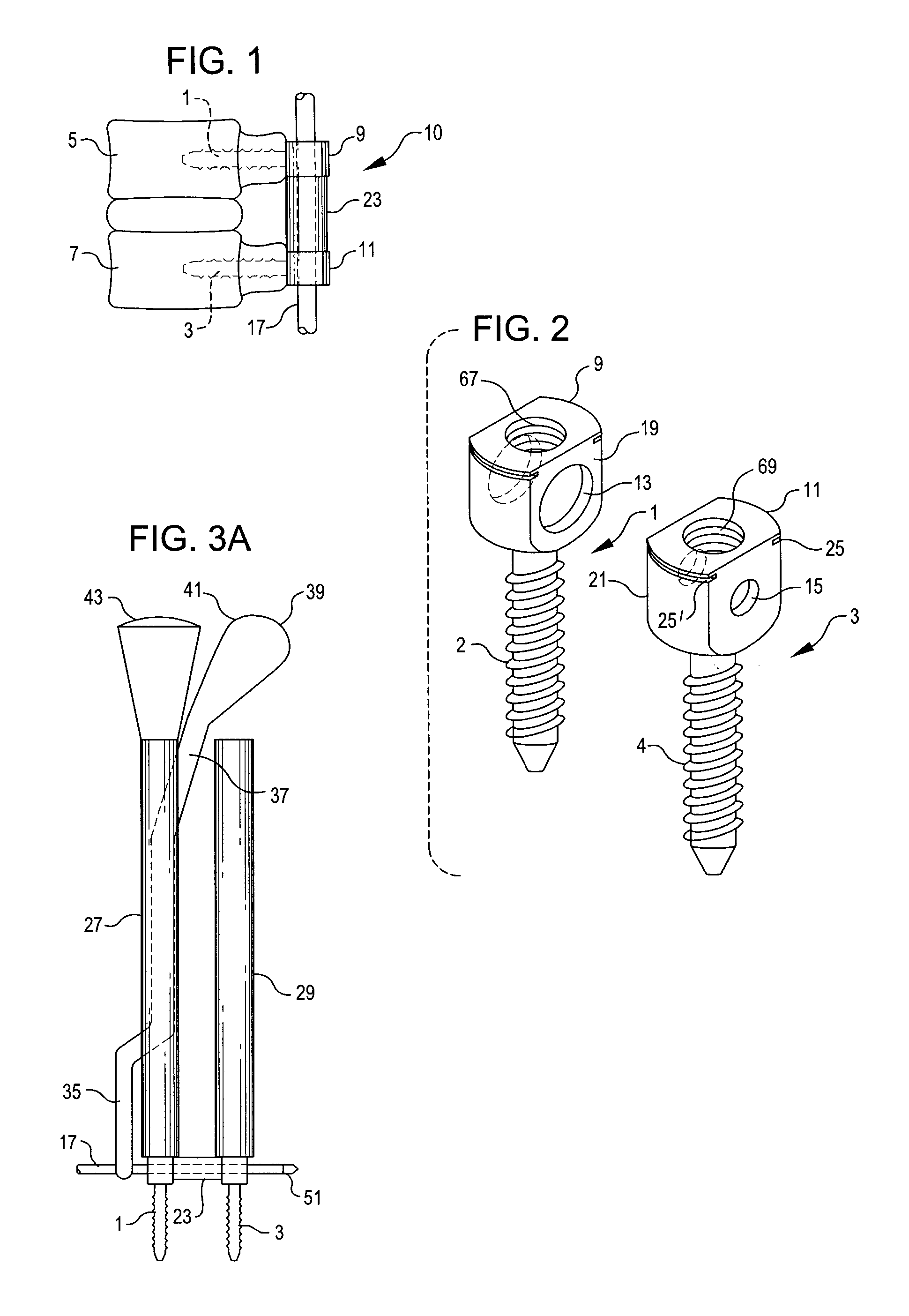
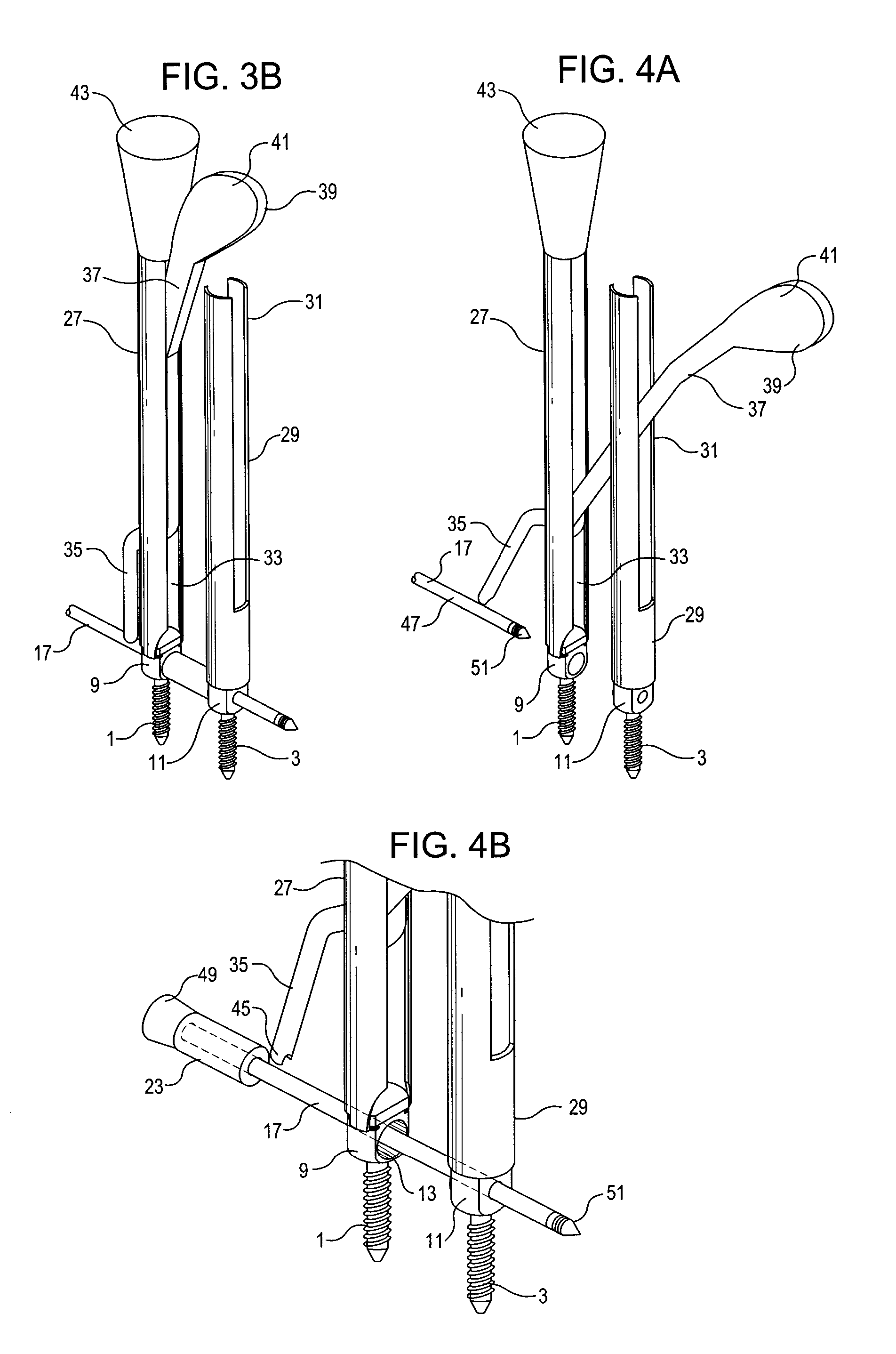
[0038]While in the specific embodiments described below, the system is used to stabilize two adjacent vertebrae, those of skill in the art will appreciate that the system disclosed herein may also be employed to effectively stabilize three or more adjacent vertebrae by employing additional pedicle screws and spacers. As shown in FIG. 1, in one embodiment spinal stabilization system 10 comprises two anchoring members, such as pedicle screws 1 and 3, which are anchored into adjacent vertebrae 5 and 7, respectively. Pedicle screws 1 and 3 are formed of a durable, generally rigid, biocompatible material, such as, but not limited to, carbon fiber, titanium, titanium alloys, Nitinol™, cobalt-chromium alloys and cobalt-chromium-molybdenum alloys, and may be cannulated in order to allow use of a guidewire for positioning the screws. Screws of various lengths, diameters, and threadforms may be employed, depending upon the size of the vertebrae. For example, screws 1 and 3 may have diameters ...
PUM
 Login to View More
 Abstract
Description
Claims
Application Information
 Login to View More