
Insect repellant fabrics and its manufacture method
A manufacturing method, a technology for fabrics, applied in the fields of botanical equipment and methods, textiles and paper, animal fibers, etc., can solve problems such as permethrin retention
Patent Information
- Authority / Receiving Office
- CN · China
- Patent Type
- Patents(China)
- Current Assignee / Owner
- Publication Date
- 2011-06-22
Smart Images
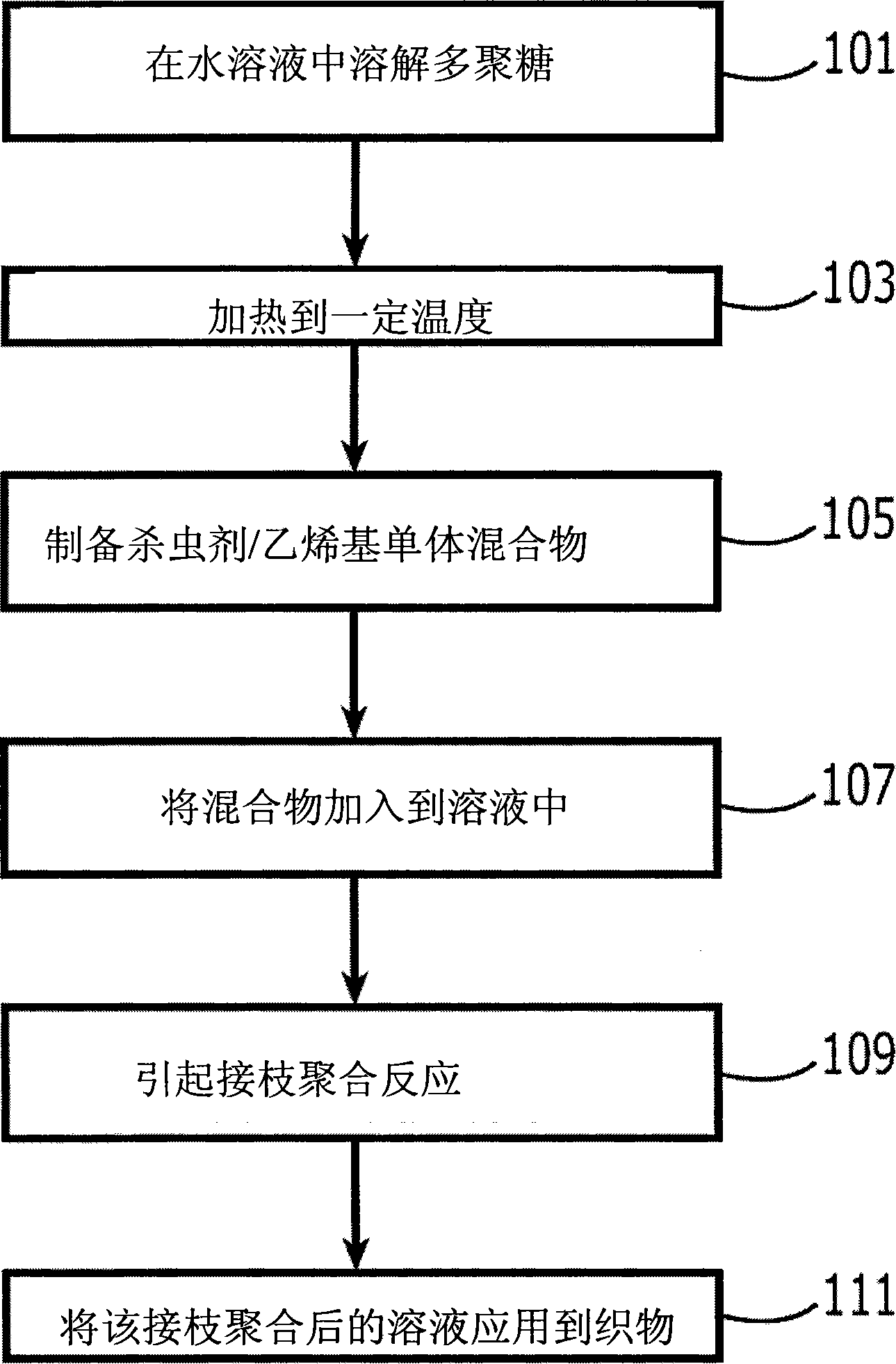
Figure 1 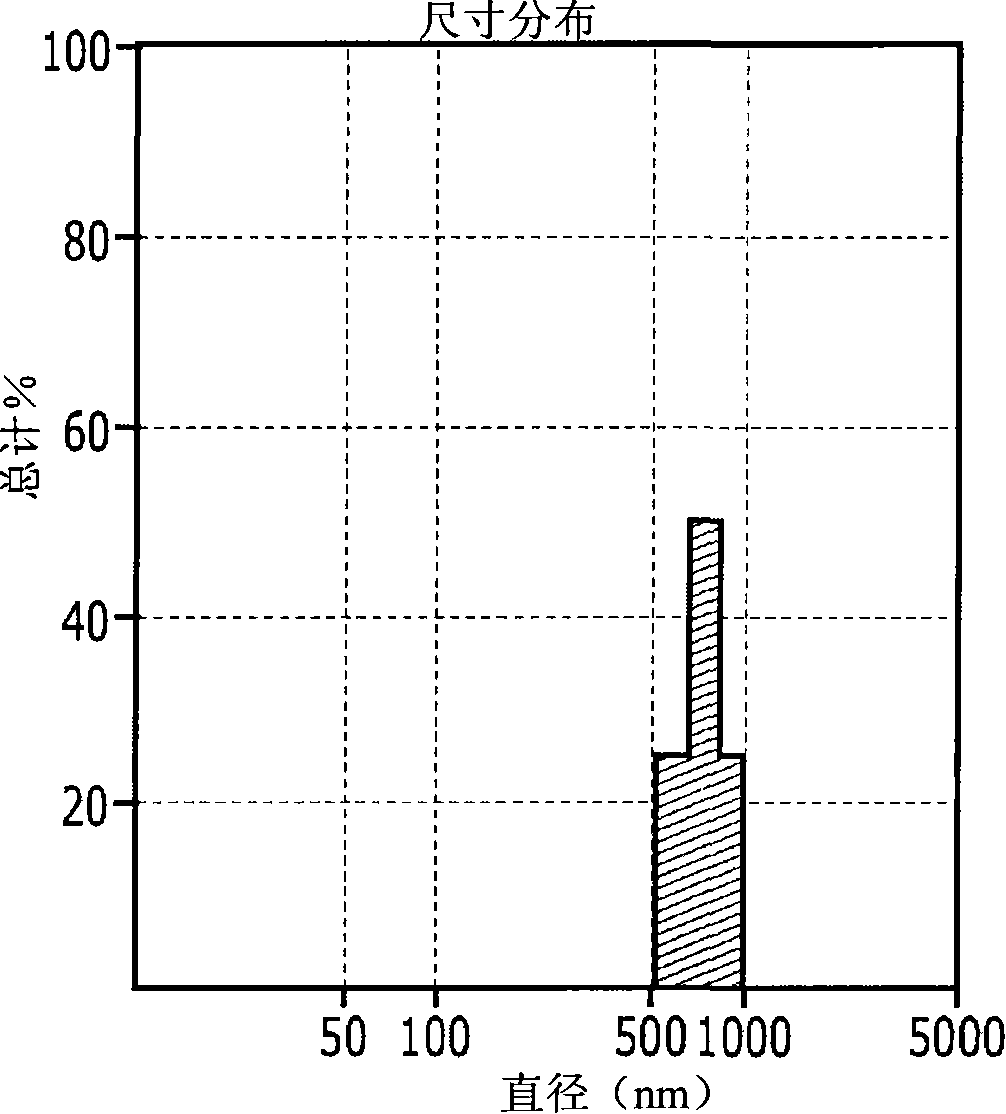
Figure 2 
Figure 3
Abstract
Description
technical field
[0001] The present invention relates to textiles, and more particularly, to a durable insect repellent fabric treated with a polymeric nanocapsule emulsion and a method of making the same. Background technique
[0002] Pyrethroids, including natural compounds and their synthetic analogs, are effective in controlling various pests such as ticks, mites, cockroaches, houseflies, mosquitoes, blackflies, fleas, and other flying or crawling insects insect. They exhibit knockdown and insecticidal activity against insects. Pyrethrins are not harmful to plants, food, animals or humans and have no harmful residues. Therefore, in various countries, they can be used for clothing. Despite having so many beneficial properties, the application of pyrethrins is greatly limited due to their relatively short insecticidal activity. This is due to the fact that after it is applied to clothing, the washing resistance is poor, and under the condition of aerobic and ultraviolet...
Examples
Embodiment 1
[0064] Mix 97 mL of deionized water with 1 mL of acetic acid, and dissolve 0.5 g of chitosan. After filtering out insoluble impurities, the solution was heated to 80°C in a flask with a condenser, and N 2 , Stir for half an hour. Then, 2 ml of ethylene acetate and 1.0 g of permethrin were added to the above solution, followed by 2 ml of 20 mM tert-butyl hydroperoxide (TBHP) solution. Maintain the reaction at 70°C for 6 hours. The size of the resulting particles is between 500-700 nm. The resulting emulsion was then coated onto cotton / polyester fabric.
Embodiment 2
[0066] 80 ml of deionized water and 0.1 g of NaOH were mixed in a flask with a condenser, and 5 g of amylopectin was added at 70° C. to convert the amylopectin into a gelled state. After the pullulan had gelled, 0.2 g of maleic anhydride was added to the pullulan solution to neutralize the NaOH. Nitrogen was bubbled through the solution for half an hour. A mixture of 10 ml of styrene and 5 g of phenothrin was then added to the solution, followed by 0.5 g of ammonium persulfate. The reaction was maintained at 70°C for 8 hours. The size of the resulting particles is between 500-1000 nm. The resulting emulsion is then applied to cotton / polyester fabric by dipping / coating.
Embodiment 3
[0068] Dissolve 5 g of hydroxyethylcellulose in 72 mL of deionized water. The solution was heated to 60° C. in a flask with a condenser, and nitrogen gas was blown in for half an hour while stirring. Then 10 ml of ethyl acrylate and 5 g of pyrethrin were added to the solution, and then 8 g of ammonium cerium nitrate was added to the solution. The reaction was maintained at 60°C for 8 hours. The resulting polymer nanocapsules range in size from 400 nm to 900 nm. The emulsion is then applied to the fabric by dipping.