
A traditional Chinese medicine deworming additive and its application
A technology of additives and traditional Chinese medicines, applied in applications, artificial filaments in cellulose solution, clothing, etc., can solve problems such as adverse reactions, and achieve the effects of relieving discomfort, reducing costs, and producing pure and mild products
Patent Information
- Authority / Receiving Office
- CN · China
- Patent Type
- Patents(China)
- Current Assignee / Owner
- Publication Date
- 2016-05-18
- Estimated Expiration
- Not applicable · inactive patent
Smart Images
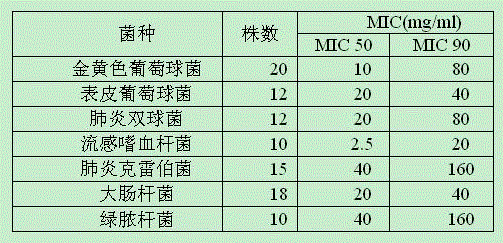
Figure 1 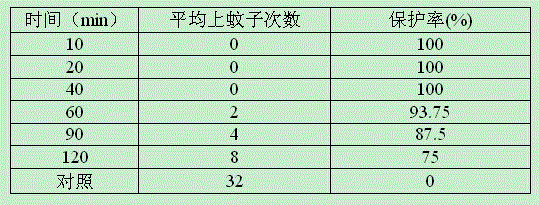
Figure 2 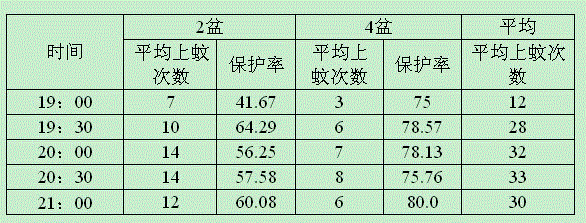
Figure 3
Abstract
Description
technical field
[0001] The invention relates to materials containing components derived from plants, animals or minerals, in particular to a traditional Chinese medicine anthelmintic additive and its application. Background technique
[0002] Mosquito bites will cause blisters. This is mainly because the skin has an allergic reaction to the saliva of the insects. Some people are bitten by mosquitoes and cannot return the red envelopes for more than a month. This is more serious, but for most people, mosquito bites are nothing. big problem. For mosquito bites, there are many kinds of folk remedies and medicines, and folk remedies may not be effective for everyone, so don't blindly listen to what other people say about the effect. However, common cooling oils and essential oils contain alcohol, so people with sensitive skin should use them as little as possible. As for hormone drugs, the antipruritic effect will be very obvious.
[0003] Insect bite dermatitis is the most co...
Examples
preparation example Construction
[0056] (3) The preparation method of insect repellent regenerated cellulose fibers, mainly including the effect of coagulation bath on the structure and tensile properties of primary insect repellent fibers, and the improvement of fiber tensile properties;
[0057] (4) The structure, physical and mechanical properties and insect repelling properties of regenerated cellulose fiber for insect repellent.
[0058] The invention uses mint fiber and cellulose pulp as raw materials, uses cuproammonia solution method, and adopts wet spinning to prepare insect repellent regenerated cellulose fiber. The insect-repellent regenerated cellulose fiber developed is one of the important raw materials for the development of insect-repellent textiles.
[0059] The purification of cellulose is to separate cellulose from wax, pectin and lignin to obtain products with higher purity of cellulose. The purification of cellulose mainly includes chemical method and biological method. The biological m...
specific Embodiment 1
[0097] Atractylodes 1000g, mint 1000g, double-faced needle 1000g, flavescens 1000g, Senecio 1000g, kaempferia 1000g, calamus 1000g, mugwort 1000g, borneol 1000g, magnolia 1000g, asarum 1000g, clove 1000g, windproof 1000g, cassia twig 1000g, cinnamon 1000g , Cyperus cyperi 1000g, Bletilla striata 1000g, Perrin 1000g, geranium 1000g, vaporize into crystals by distillation, sieve after crushing, pass through a fine sieve of 120-150, stand-by, as component 1; add water to the vaporized raw material drug residue Soak, heat and boil 3 times, 1-2 hours each time, filter, and use the filtrate for later use; pump the combined filtrate 3 times into a decompression concentration tank, decompress and concentrate to a relative density of 1.20, and the temperature to 60°C-70°C Extraction; become component 2, mix component 1 and component 2, add ultraviolet sterilized stand-by.
specific Embodiment 2
[0098] Atractylodes 1200g, mint 1200g, double-faced needle 1300g, flavescens 1200g, Senecio 1200g, kaempferia 1200g, calamus 1200g, mugwort 1100g, borneol 1200g, magnolia 1200g, asarum 1200g, clove 1200g, windproof 1200g, cassia twig 1200g, cinnamon 1100g , Cyperus cyperi 1100g, Bletilla striata 1200g, Peilan 1100g, Fangfeng 1100g, camphor 1100g, vaporize into crystals by distillation, sieve after crushing, pass through a fine sieve of 120-150, stand-by, as component 1; The raw material drug residue is soaked in 5-10 times the amount of ethanol for 1-2 hours, heated and extracted twice for 1-2 hours each time, the extracts are combined, the supernatant is removed after standing, and then filtered through 100-120 mesh. After ultrafiltration through an ultrafiltration column with a cut-off molecular weight of 5,000-10,000, the ultrafiltrate is concentrated under reduced pressure to an extract with a relative density of 1.36 at 80° C., left standing for later use, and becomes comp...