
A tryptophan-rich antibacterial peptide wk12 and its preparation method and application
A technology of WK12 and antimicrobial peptide, applied in the field of tryptophan-rich antibacterial peptide WK12 and its preparation, can solve the problems of cytotoxicity, long peptide chain, high synthesis cost, etc.
Patent Information
- Authority / Receiving Office
- CN · China
- Patent Type
- Patents(China)
- Current Assignee / Owner
- Publication Date
- 2019-07-30
Smart Images
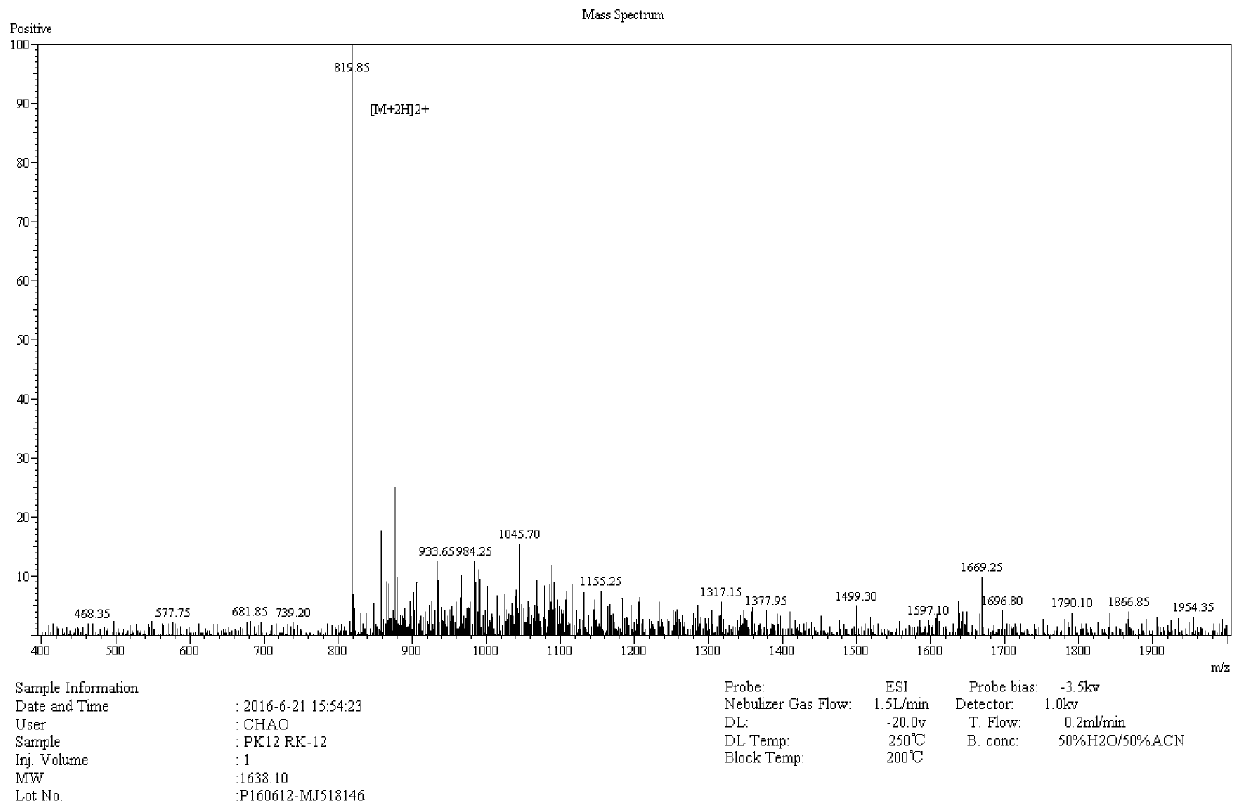
Figure 1 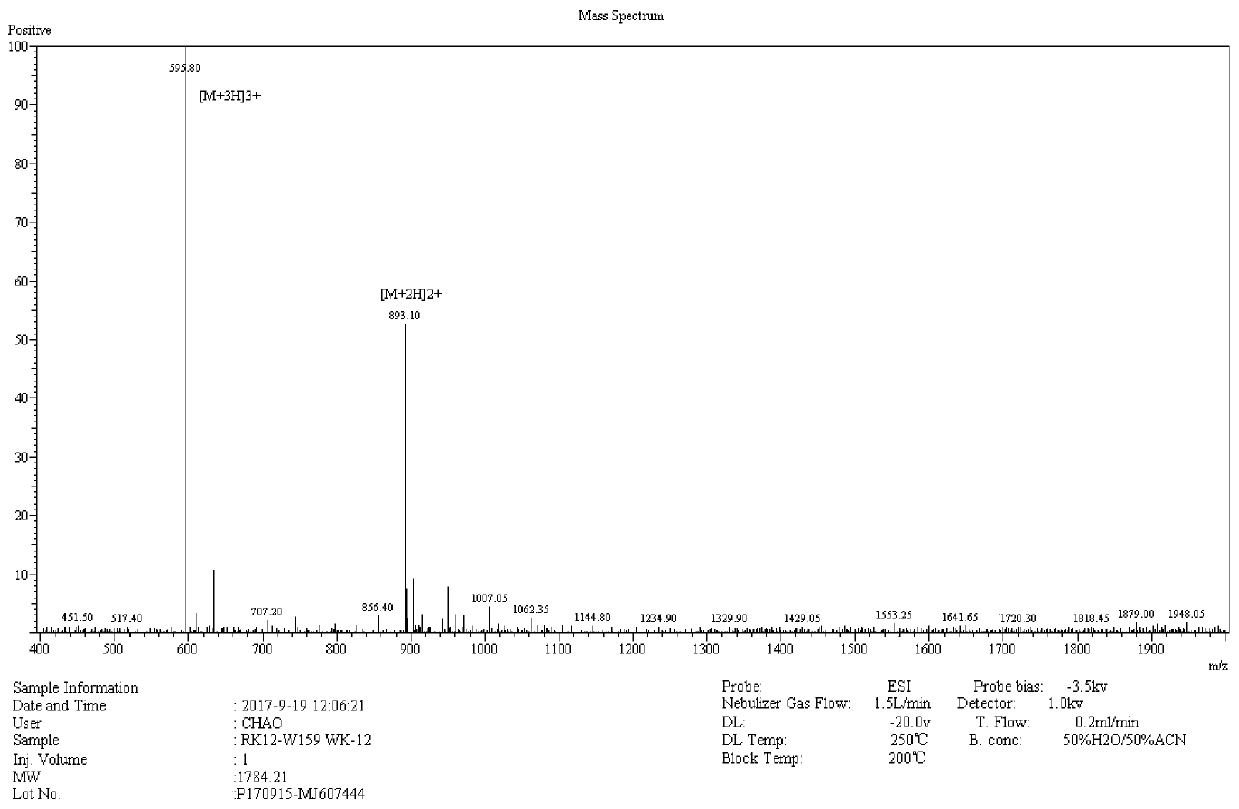
Figure 2 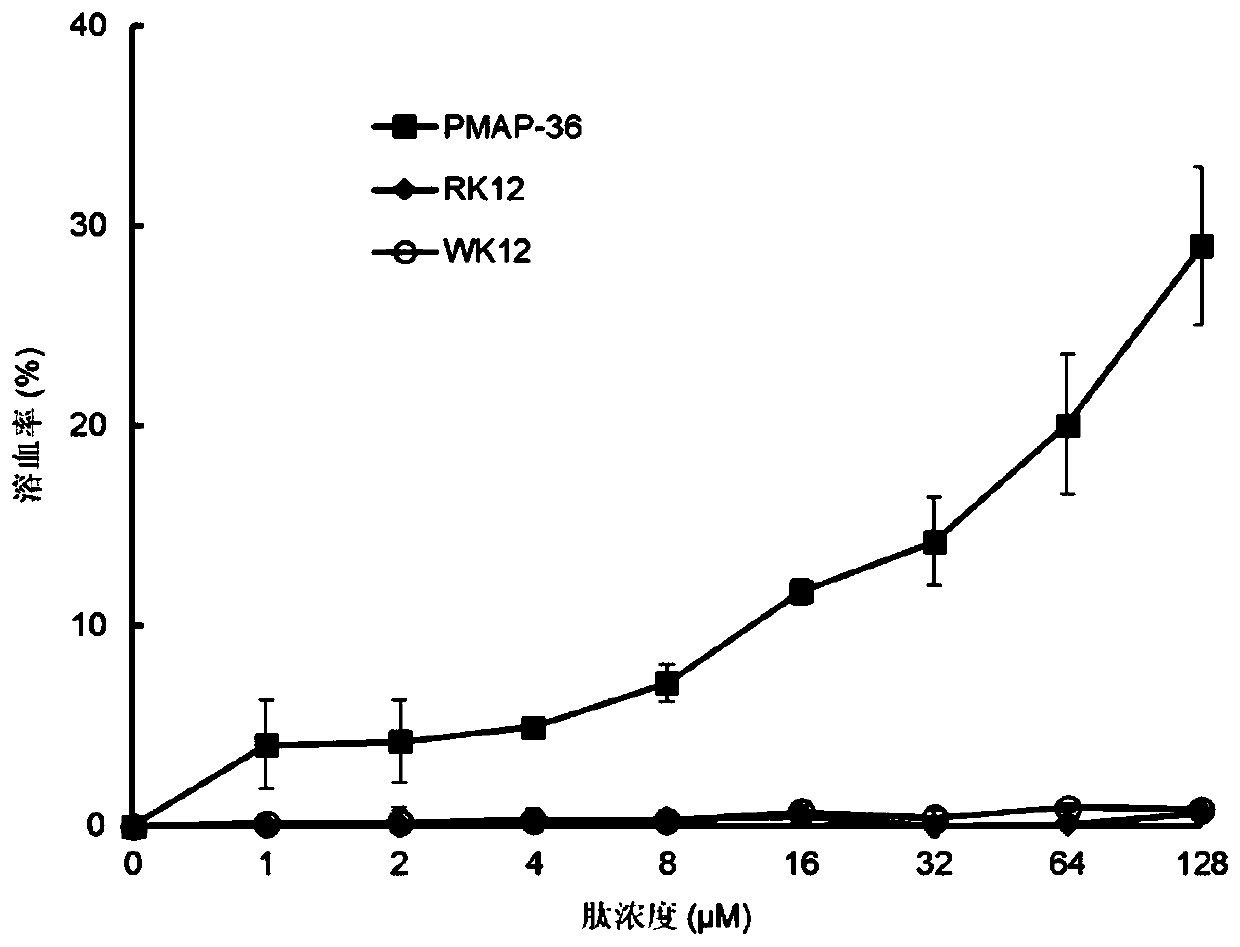
Figure 3
Abstract
Description
technical field
[0001] The invention belongs to the application field of agriculture, animal husbandry and veterinary medicine, and specifically relates to a tryptophan-rich antimicrobial peptide WK12 and its preparation method and application. Background technique
[0002] Antimicrobial peptides are a class of small molecular polypeptides commonly found in the natural immune system of organisms. They have various biological functions such as antibacterial, antifungal, antiviral, and immune regulation, and play an important role in the body's nonspecific immune response. It is considered to be a new type of antibacterial drug with the most potential to replace antibiotics. Antimicrobial peptides also have the characteristics of no pollution and no residue. They mainly exert antibacterial effects by physically destroying the permeability of cell membranes, which greatly reduces the probability of bacterial drug resistance and has extremely broad application prospects. [000...
Examples
Embodiment 1
[0019] Design of Antimicrobial Peptides
[0020] Analysis of the N-terminal amino acid sequence of the antimicrobial peptide PMAP-36 revealed a 12-peptide RK12 repeating three times with XXYX as the backbone sequence, where X is a positively charged amino acid and Y is a hydrophobic or neutral amino acid. Replace the first positively charged amino acid in the XXYX backbone sequence with tryptophan (W) to obtain (WXYX) 3 Antimicrobial peptide WK12 as sequence template.
[0021] Table 1 Amino acid sequence, molecular weight, charge, hydrophobic value, hydrophobic moment of antimicrobial peptides
[0022]
[0023] The carboxyl termini of both peptides were amidated to increase a positive charge and increase peptide stability. As shown in Table 1, the molecular weight was analyzed by mass spectrometry, and the theoretical molecular weight was consistent with the actual molecular weight. RK12 contains 10 positive charges, the hydrophobic value is -6.16, and the hydrophobic mo...
Embodiment 2
[0025] Synthesis of Antimicrobial Peptides by Solid Phase Chemical Synthesis
[0026] 1. The preparation of antimicrobial peptides is carried out one by one from the C-terminal to the N-terminal, and is completed by a peptide synthesizer. First, Fmoc-X (X is the first amino acid at the C-terminal of each antimicrobial peptide) is inserted into Wang resin, and then the Fmoc group is removed to obtain X-Wang resin; then Fmoc-Y-Trt-OH (9 -Fmoxy-trimethyl-Y, Y is the second amino acid at the C-terminus of each antimicrobial peptide); according to this procedure, it is synthesized from the C-terminus to the N-terminus until the synthesis is completed, and the side of the Fmoc group is removed chain protection resin;
[0027] 2. Add a cleavage reagent to the peptide resin obtained above, react for 2 hours at 20°C in the dark, filter; wash the precipitate with TFA (trifluoroacetic acid), mix the washing liquid with the above filtrate, concentrate with a rotary evaporator, and then a...
Embodiment 3
[0031] Determination of antimicrobial and hemolytic activity of antimicrobial peptides
[0032] 1. Determination of antibacterial activity: Dissolve the synthesized polypeptide in sterile deionized water to prepare a storage solution with a certain concentration. In a 96-well sterile cell culture plate, using MHB medium as the medium, the antimicrobial peptide stock solution was serially diluted to different concentrations by the two-fold ratio dilution method for later use. Adjust the colony concentration of the bacteria to be tested in the logarithmic growth phase to ~10 in the MHB medium 5 Each / mL, add an equal volume to a 96-well culture plate containing antimicrobial peptides, mix well, and incubate at a constant temperature of 37°C for 18h. The wells without bacteria were set as negative controls, and the wells without antimicrobial peptides were set as positive controls. Taking the bacterial growth characteristics of the negative and positive control wells as a refere...