
High-hydrolysis-resistant back-adhesion-resistant adhesive used for aluminum plastic composite tag and preparation of adhesive
An aluminum-plastic composite and adhesive technology, applied in adhesives, adhesive types, polyurea/polyurethane adhesives, etc., can solve problems such as insufficient bonding strength, inability to store information, and slow curing speed, etc., to achieve Good moisture and heat aging resistance, high bond strength, and the effect of shortening the curing temperature
Patent Information
- Authority / Receiving Office
- CN · China
- Patent Type
- Applications(China)
- Current Assignee / Owner
- Publication Date
- 2019-02-15
Smart Images
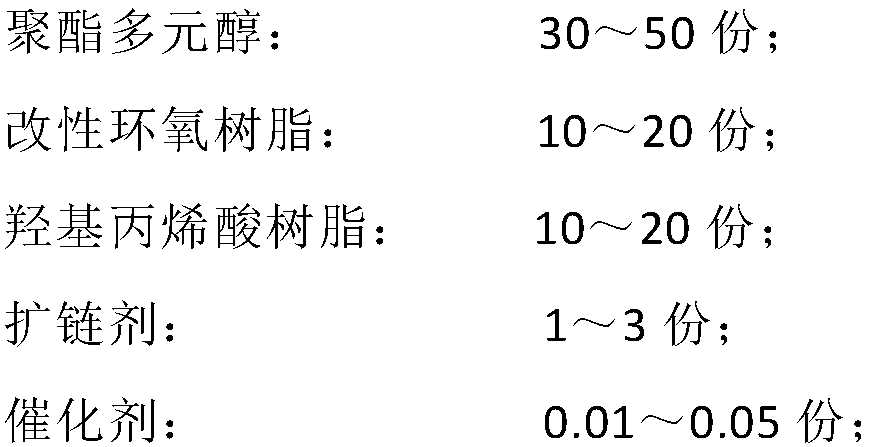
Figure 1 
Figure 2 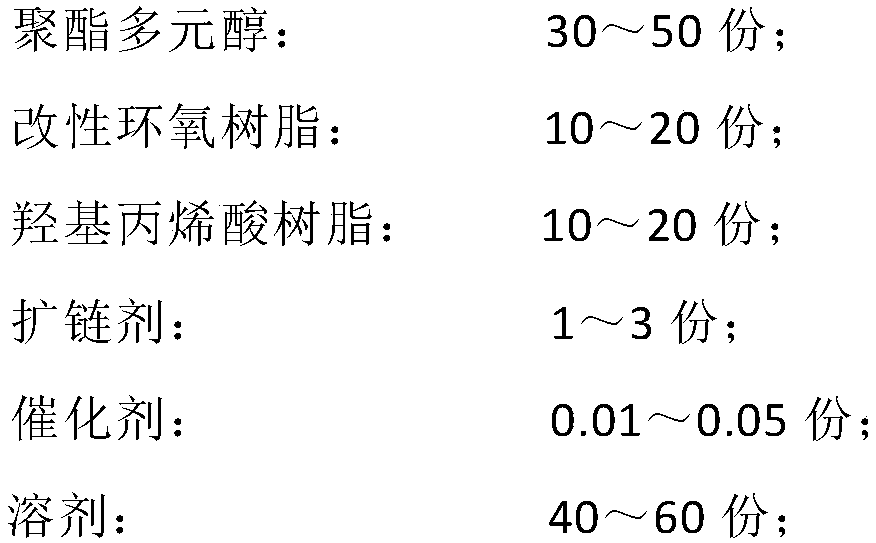
Figure 3
Abstract
Description
technical field
[0001] The invention belongs to the technical field of adhesives, and in particular relates to a highly hydrolysis-resistant and anti-adhesive adhesive for aluminum-plastic composite labels and a preparation method thereof. Background technique
[0002] With the rapid development of Internet of Things technology, the application of electronic tags will be greatly promoted. Among them, the application prospect of aluminum-plastic composite labels is the best. Many domestic companies have introduced international advanced production lines for aluminum-plastic composite labels. The comprehensive performance of the products can reach the industry standard, but some special materials used for aluminum-plastic composite labels Imports are also required, such as special inks, special adhesives, barrier coatings, etc.
[0003] There are very few existing aluminum-plastic composite label adhesives on the market, and only two are widely used, but there are still insuf...
Examples
Embodiment 1
[0032] This embodiment relates to a method for preparing an adhesive for an anti-adhesive aluminum-plastic composite label, comprising the following process steps:
[0033] (1) First put all the solvents, i.e. 49.99 kg of ethyl acetate, into the reaction kettle, and heat to about 40°C for stirring;
[0034] (2) Keep stirring and put 40 kilograms of side vinyl polyester polyols, 10 kilograms of modified epoxy resins, and 10 kilograms of hydroxyl acrylic resins into the reaction kettle in turn, and stir for about 1 hour;
[0035] (3) After being mixed uniformly, 0.01 kilogram of bismuth-zinc composite catalyst and 2 kilograms of chain extender (trimethylolpropane) are slowly dropped into the reactor;
[0036] (4) When all the solids are dissolved and mixed uniformly, measure the solid content and adjust to the theoretical value;
[0037] (5) Stir slowly for about 1 hour, cool, weigh and pack to obtain component A;
[0038] (6) Mix 2 g of azobisisobutyronitrile and 40 g of poly...
Embodiment 2
[0041] This embodiment relates to a preparation method of an anti-sticking aluminum-plastic composite label adhesive, comprising the following process steps:
[0042] (1) First put all the solvents, namely 39.95 kg of ethyl acetate and 10 kg of methyl ethyl ketone into the reaction kettle, and heat to about 50°C for stirring;
[0043] (2) Keep stirring and put 40 kilograms of side propylene-based polyester polyols, 10 kilograms of modified epoxy resins, and 10 kilograms of hydroxyl acrylic resins into the reaction kettle in turn, and stir for about 1 hour;
[0044] (3) After being mixed uniformly, 0.05 kg of bismuth-zinc composite catalyst and 1 kg of chain extender (triethanolamine) are slowly dropped into the reactor;
[0045] (4) When all the solids are dissolved and mixed uniformly, measure the solid content and adjust to the theoretical value;
[0046] (5) Stir slowly for about 1 hour, cool down, weigh and pack.
[0047] (6) Mix 2 g of azobisisobutyronitrile and 40 g of...
Embodiment 3
[0050] This embodiment relates to a preparation method of an anti-sticking aluminum-plastic composite label adhesive, comprising the following process steps:
[0051] (1) First put all the solvent, namely 47.97 kg of butyl acetate, into the reaction kettle, and heat it to about 50°C for stirring;
[0052] (2) Keep stirring and put 40 kilograms of side styrene-based polyester polyols, 10 kilograms of modified epoxy resins, and 20 kilograms of hydroxyl acrylic resins into the reaction kettle in turn, and stir for about 1 hour;
[0053] (3) 0.04 kg of bismuth-zinc composite catalyst and 3 kg of chain extender (dimethylthiotoluenediamine) are slowly dropped into the reactor after being mixed uniformly;
[0054] (4) When all the solids are dissolved and mixed uniformly, measure the solid content and adjust to the theoretical value;
[0055] (5) Stir slowly for about 1 hour, cool down, weigh and pack.
[0056] (6) Mix 2 g of azobisisobutyronitrile and 40 g of polyisocyanate curing...