
Multicolor up-conversion nanoprobe as well as preparation method and application thereof
A nano-probe and nano-particle technology, applied in the field of biomedicine, can solve the problems of low luminous efficiency, lack of self-bleaching, unstable aqueous solution, etc., and achieve the effects of increasing the doping rate, inducing cell apoptosis, and shortening the energy transfer distance.
Patent Information
- Authority / Receiving Office
- CN · China
- Current Assignee / Owner
- Publication Date
- 2019-11-22
- Estimated Expiration
- Not applicable · inactive patent
Smart Images
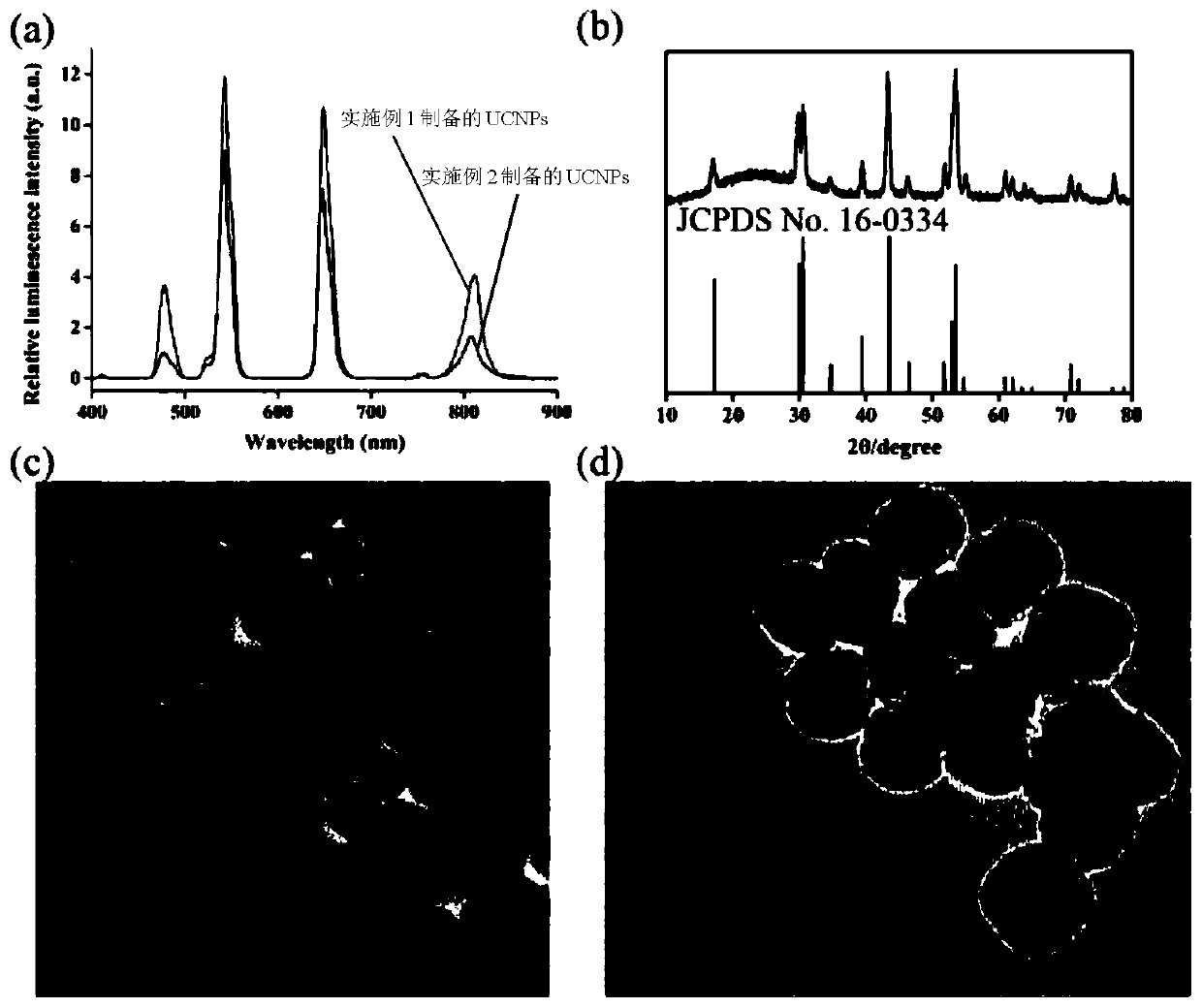
Figure 1 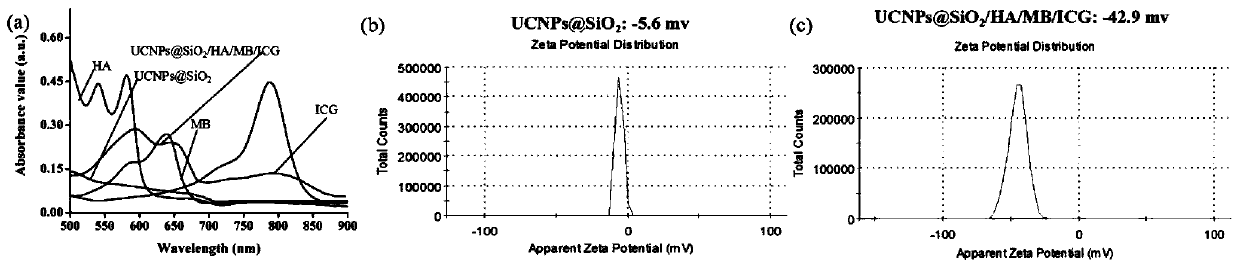
Figure 2 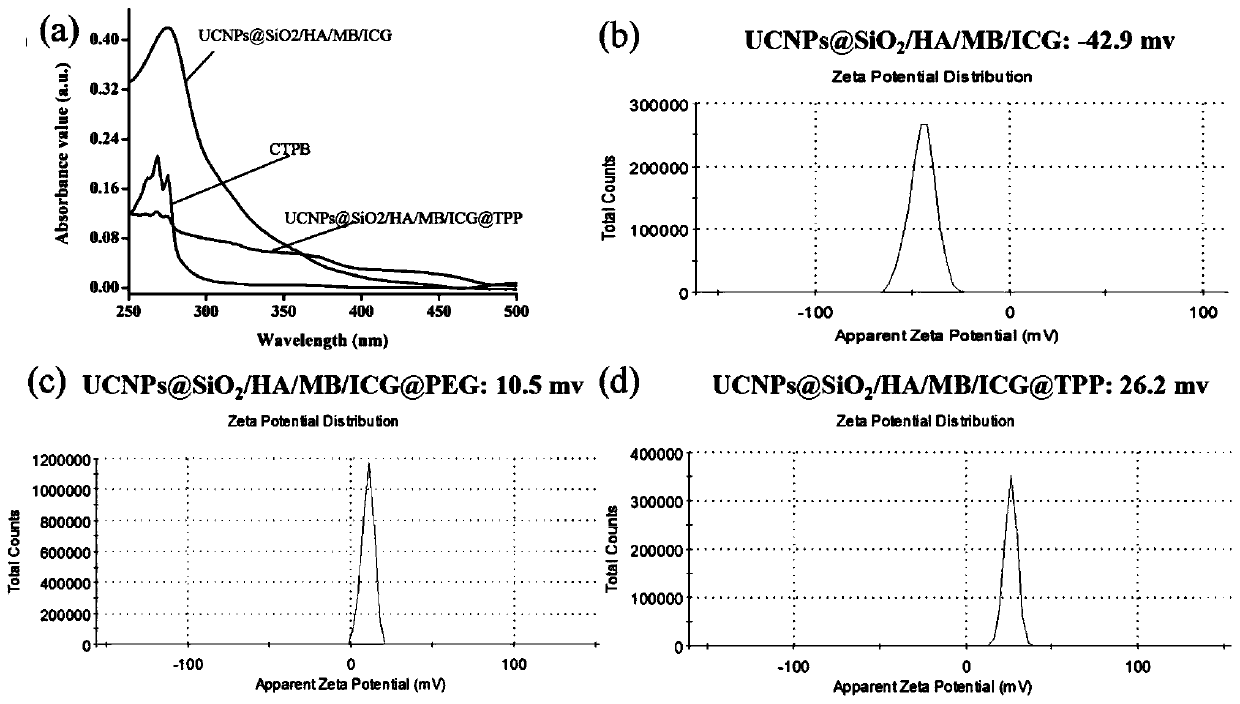
Figure 3
Abstract
Description
technical field
[0001] The disclosure belongs to the technical field of biomedicine, and relates to a multi-color up-conversion nano-probe, a preparation method and an application. Background technique
[0002] The statements herein merely provide background information related to the present disclosure and may not necessarily constitute prior art.
[0003] As an exogenous stimulus that can activate hyperthermia, light has the advantages of high spatiotemporal selectivity and few side effects, and has been widely used in photothermal, photodynamic and light-triggered chemical / gene therapy. Photodynamic therapy (PDT) uses photosensitizers (PS) to generate reactive oxygen species (ROSs), which can selectively and irreversibly destroy cancer cells and tumor tissues without damaging adjacent healthy cells. Its clinical application is mainly limited to short tissue penetration depth, easy aggregation of PS molecules and insufficient generation of ROSs.
[0004] Lanthanide-doped...
Examples
Embodiment 1
[0059] Preparation of rare earth oleate:
[0060] Weigh 1.129g (5mmol) Y 2 o 3 In a single-necked round-bottomed flask, measure 20ml of concentrated HCl into the round-bottomed flask, cover with plastic wrap, prick a few small holes with a needle, let it stir at 60°C, react for 8 hours, remove the plastic wrap after 8 hours, Then raise the temperature to 140°C, evaporate the concentrated HCl to get YCl 3 solid. Synthesized YCl 3 Add 10ml of ultrapure water to the solid, ultrasonically dissolve, then add 5ml of ultrapure water, and filter YCl with a syringe with a filter head 3 The solution was injected into another clean and dry flask, and then 20ml of ethanol, 35ml of n-hexane, and 30mmol of sodium oleate were added, and refluxed at 78°C for 4h. After the reaction, cool down to 30-40°C, transfer the solution to a separatory funnel for extraction, remove the lower layer of the solution after layering, add 20ml of water and 20ml of ethanol, oscillate and shake well, extract ...
Embodiment 2
[0069] This example is the same as Example 1, except that the molar ratio of Y:Yb:Tm:Ho in UCNPs is 77.8:20:0.2:2.
Embodiment 3
[0071] This example is the same as Example 1, except that the concentrations in the HA ethanol solution, ICG ethanol solution and MB aqueous solution are all 2.0 mg / mL.