
Probe, primer and kit for detecting gene polymorphism of methylenetetrahydrofolate reductase (MTHFR)
A methylene tetrahydrofolate and gene polymorphism technology, applied in the field of molecular biology, can solve the problems of time-consuming, labor-intensive, unsuitable for detection, high cost, etc., and achieve the effects of simple operation, clear genotyping and high sensitivity
Patent Information
- Authority / Receiving Office
- CN · China
- Patent Type
- Applications(China)
- Current Assignee / Owner
- Publication Date
- 2021-02-02
- Estimated Expiration
- Not applicable · inactive patent
Smart Images
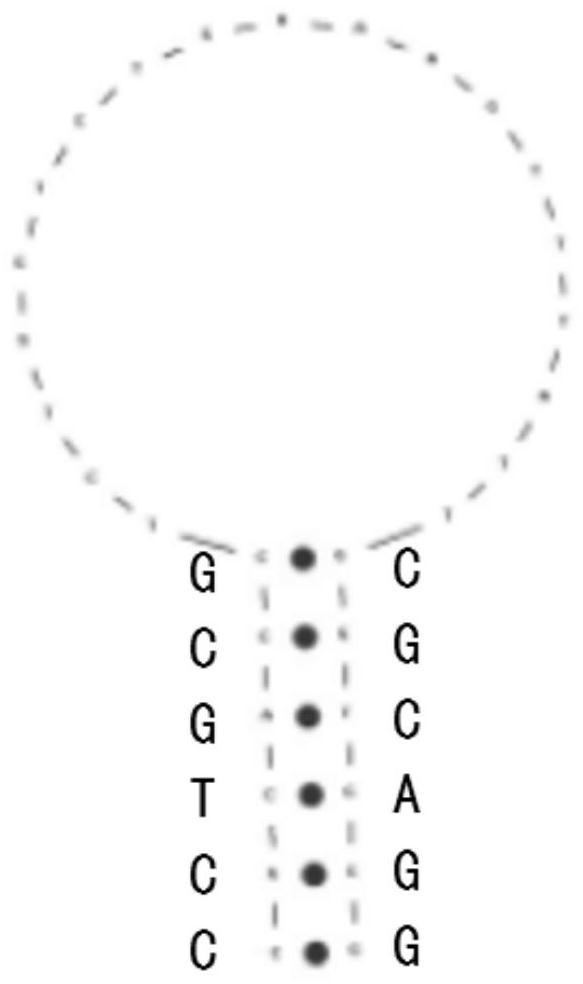
Figure 1 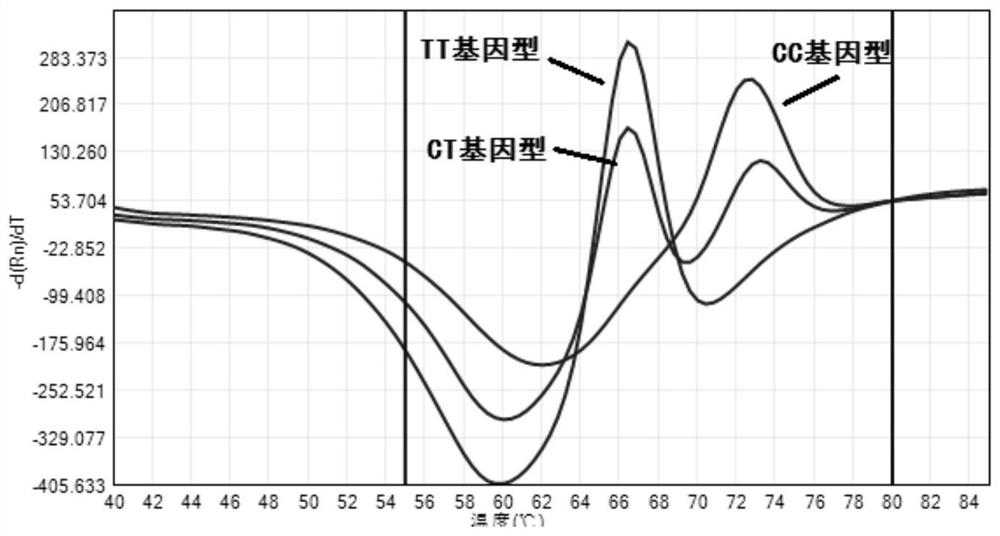
Figure 2 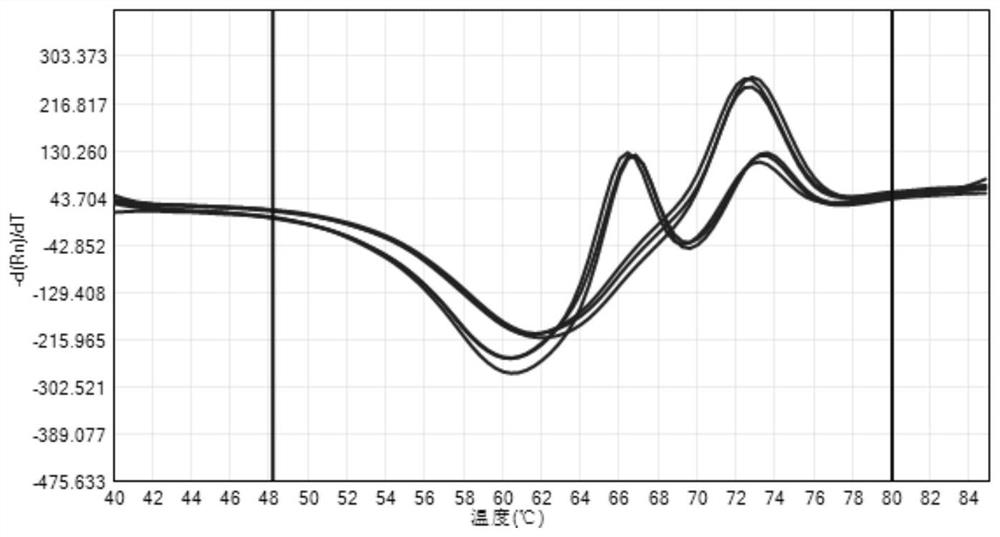
Figure 3
Abstract
Description
technical field
[0001] The invention relates to the field of molecular biology, in particular to a probe, a primer and a kit for detecting the polymorphism of the methylenetetrahydrofolate reductase gene. Background technique
[0002] Folic acid belongs to the B vitamins and is an essential element for the synthesis of nucleic acids, as well as for cell growth and tissue repair. Folic acid and its metabolic intermediates play an important role in the physiological and biochemical reactions of the body. Once folic acid deficiency or folate metabolic enzyme deficiency occurs in the body, it will lead to abnormal cell cycle, abnormal DNA and protein methylation reactions, and DNA base Various biochemical reactions such as inability to synthesize normally are abnormal.
[0003] 5,10-methylenetetrahydrofolate reductase (MTHFR) can catalyze 5,10-methylenetetrahydrofolate to produce 5-methyltetrahydrofolate, which is involved in methyl transfer and nucleotide synthesis, and is the...
Examples
Embodiment 1
[0029] Embodiment 1: probe and primer design
[0030] The present invention designs probe and primer sequences for the MTHFR 677C>T SNP site. The specific principle is to use the conformational change of the fluorescent probe and the target sequence after hybridization to release the fluorescent dye, and judge the genotyping results according to the peak diagrams and Tm values at different temperatures after hybridization. In the absence of target DNA, the fluorophore and quencher can be stably combined together, and no fluorescent signal can be detected; when there is target DNA, the structure of the fluorescently labeled probe is destroyed, and the fluorophore and quencher The extinguishing groups are separated from each other, and the fluorescent signal can be detected.
[0031] Design probes and primers so that in the absence of a template at the annealing temperature, the probe assumes a stem-loop state such as figure 1 , including the loop sequence and its reverse co...
Embodiment 2
[0038] Embodiment 2: Detect different genotype standard products
[0039] 1. Use the plasmid MTHFR 677 to construct and prepare wild-type standard plasmids and mutant standard plasmids containing the rs1801133 site of the target gene (the source of the plasmid, and the synthesis of the plasmid containing the target gene were synthesized by Sangon Bioengineering (Shanghai) Co., Ltd. The accuracy of the sequence was determined by sanger sequencing, the genotype of the wild-type standard plasmid rs1801133 was CC;
[0040] 2. Using the probes and primers in Example 1.
[0041] 3. PCR reaction system:
[0042]1) Add 7.5ul of PCR Mix, 0.5uM of primer 1 solution and 0.5uM of primer 2 solution, and 0.1uM of probe into each PCR reaction well, and then add the wild-type standard plasmid into 3 different PCR reaction wells respectively 2ul each of DNA, mutant standard plasmid DNA, mixed DNA (wild type standard plasmid and mutant standard plasmid are mixed at a ratio of 1:1), make up 15...
Embodiment 3
[0045] Embodiment 3: detection method performance analysis experiment
[0046] 1. Precision experiment
[0047] Take a copy of wild-type standard plasmid DNA and mixed-type DNA (the wild-type standard plasmid and mutant standard plasmid are mixed at a ratio of 1:1), and test 3 times a day for 5 consecutive days. The method in example 2, see the result image 3 . It shows that the fluorescent PCR amplification reaction of the present invention has good repeatability (the coincidence rate is greater than 95%, and the coefficient of variation CV of the Ct value of the detection result is less than 5%).
[0048] 2. Conformity rate experiment
[0049] Select 20 cases of DNA samples from healthy volunteers in Shanghai, apply the method of Example 2 to detect the rs1801133 locus, and apply the Sanger sequencing method to verify at the same time, compare the consistency of the detection results of the two methods, and the results show that the method of Example 2 can be classified ...