
Positive plate, preparation method thereof and lithium ion battery
A technology for lithium-ion batteries and positive plates, applied in the direction of positive electrodes, electrode manufacturing, secondary batteries, etc., can solve the problems of high stirring requirements, high production costs, and low production efficiency, and achieve simplified stirring processes, reduced dosage, and improved The effect of production efficiency
Patent Information
- Authority / Receiving Office
- CN · China
- Current Assignee / Owner
- Publication Date
- 2021-02-05
- Estimated Expiration
- Not applicable · inactive patent
Smart Images
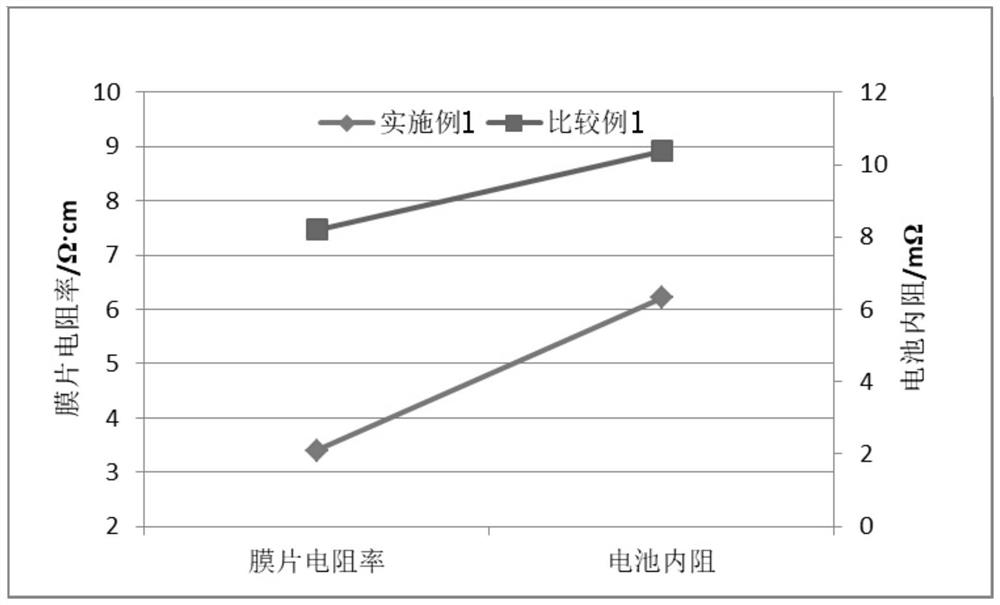
Figure 1 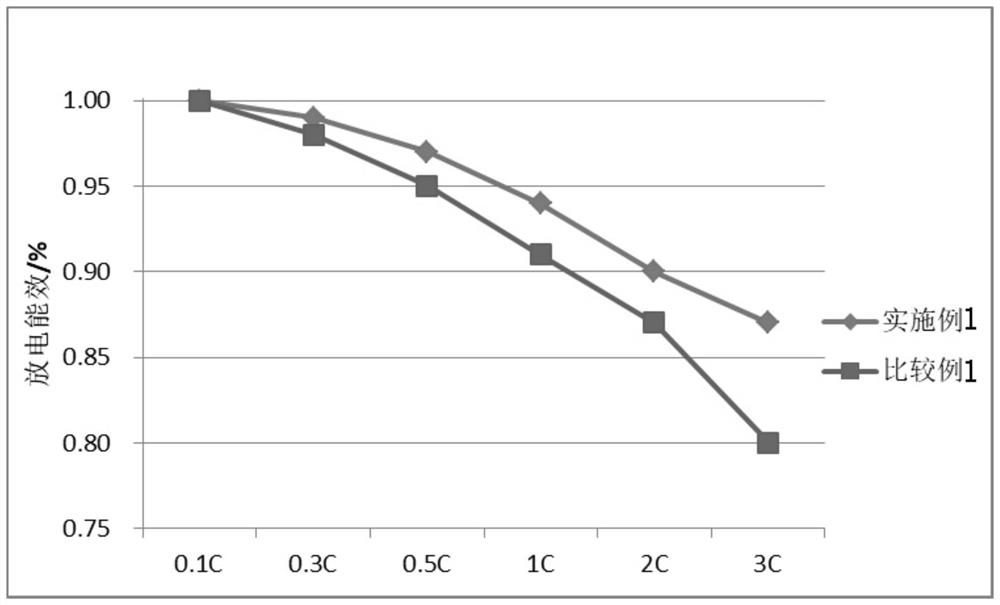
Figure 2 
Figure 3
Abstract
Description
technical field
[0001] The invention belongs to the field of batteries, and relates to a pole piece, a preparation method thereof, and a lithium ion battery, in particular to a positive pole piece, a preparation method thereof, and a lithium ion battery. Background technique
[0002] With the social development and the increasingly serious environmental pollution problems, the development of new energy has attracted more and more attention. Lithium-ion batteries have become one of the research hotspots of scientific researchers in recent years, and the cathode materials of lithium-ion batteries are the focus of people's attention. . At present, the positive electrode materials used in commercial lithium-ion batteries mainly include LiCoO 2 , lithium nickelate, nickel-cobalt lithium manganate ternary materials and lithium iron phosphate, etc. At present, the positive electrode materials of power batteries used in new energy vehicles in the market are mainly NCM ternary mate...
Examples
Embodiment 1
[0064] In this embodiment, the positive electrode sheet is prepared according to the following method:
[0065] (1) Conducting agent composite positive electrode material, binder PVDF and solvent NMP (without adding conductive agent, taking the total mass of conductive agent composite positive electrode material and binder as 100%, the mass fraction of binder is 1% , the mass fraction of the conductive agent composite positive electrode material is 99%) and stirred and mixed at 45°C for 3h to obtain a positive electrode slurry with a solid content of 60% and a viscosity of 15000mPa·s;
[0066] (2) Coating the positive electrode slurry described in step (1) on the surface of the current collector aluminum foil, after drying, cold pressing at a temperature of 25°C and a pressure of 30t to obtain the positive electrode sheet;
[0067] The pressing method of the cold pressing treatment is rolling, and the size of the roll gap is 120 μm.
[0068] In this embodiment, the conductive...
Embodiment 2
[0075] In this embodiment, the positive electrode sheet is prepared according to the following method:
[0076] (1) Composite positive electrode material with conductive agent, binder PVDF and solvent NMP (do not add conductive agent, take the total mass of conductive agent composite positive electrode material and binder as 100%, and the mass fraction of binder is 0.5% , the mass fraction of the conductive agent composite positive electrode material is 99.5%) and stirred and mixed for 5 hours at 25°C to obtain a positive electrode slurry with a solid content of 50% and a viscosity of 8000mPa·s;
[0077] (2) coating the positive electrode slurry described in step (1) on the surface of the current collector aluminum foil, after drying, cold pressing at a temperature of 15° C. and a pressure of 10 tons to obtain the positive electrode sheet;
[0078] The pressing method of the cold pressing treatment is rolling, and the size of the roll gap is 50 μm.
[0079] The conductive age...
Embodiment 3
[0081] In this embodiment, the positive electrode sheet is prepared according to the following method:
[0082] (1) Composite positive electrode material with conductive agent, binder PVDF and solvent NMP (do not add conductive agent, take the total mass of conductive agent composite positive electrode material and binder as 100%, and the mass fraction of binder is 5% , the mass fraction of the conductive agent composite positive electrode material is 95%) and stirred and mixed at 60°C for 2h to obtain a positive electrode slurry with a solid content of 70% and a viscosity of 25000mPa·s;
[0083] (2) Coating the positive electrode slurry described in step (1) on the surface of the current collector aluminum foil, after drying, cold pressing at a temperature of 35° C. and a pressure of 50 tons to obtain the positive electrode sheet;
[0084] The pressing method of the cold pressing treatment is rolling, and the size of the roll gap is 200 μm.
[0085] The conductive agent comp...