
One-pot synthesis method for substituted indane compounds
The technology of a compound, dihydroindane, is applied in the field of synthesis of pharmaceutical intermediates, which can solve the problems of low yield and cumbersome reaction process, and achieve the effects of shortened routes, mild reaction conditions, and shortened labor time
Patent Information
- Authority / Receiving Office
- CN · China
- Patent Type
- Applications(China)
- Current Assignee / Owner
- Publication Date
- 2021-03-30
Smart Images
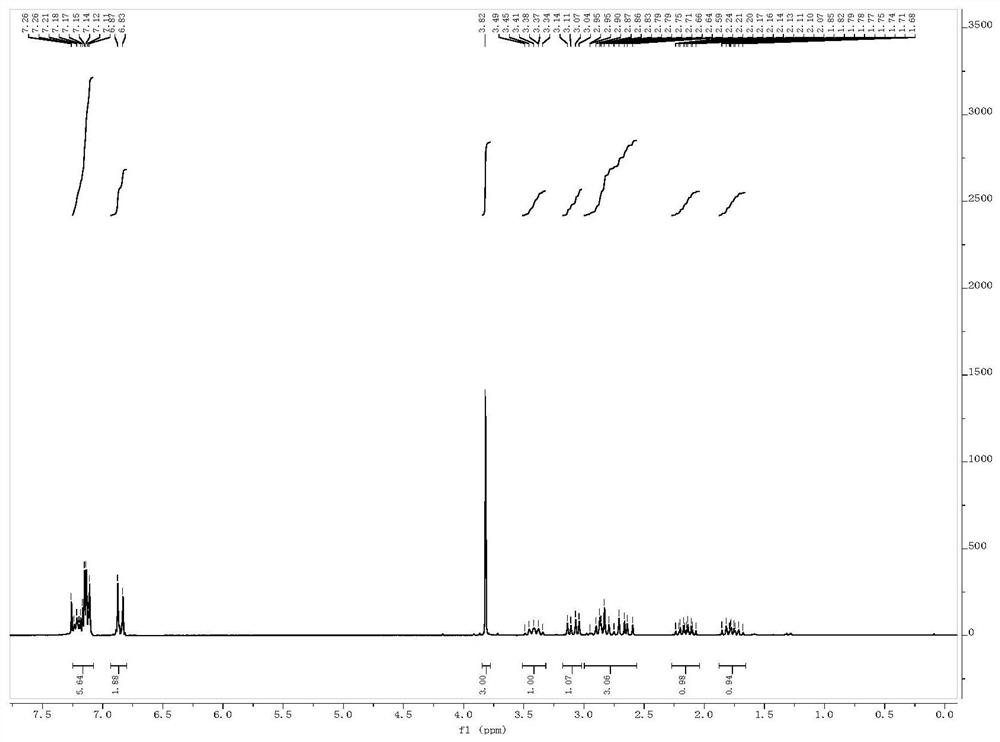
Figure 1 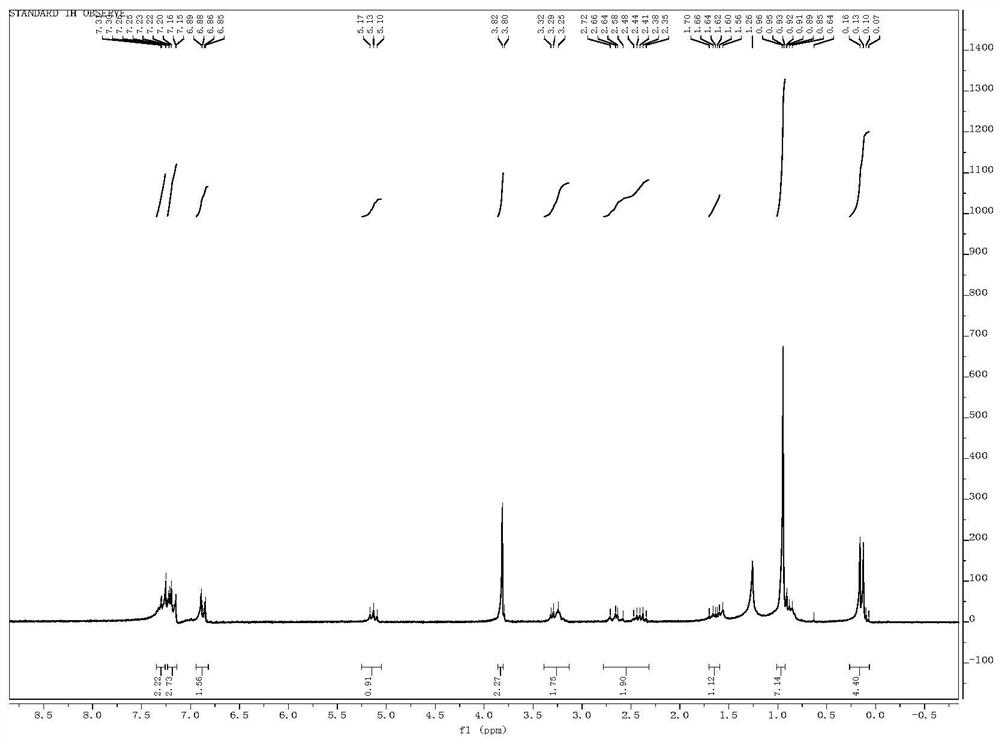
Figure 2 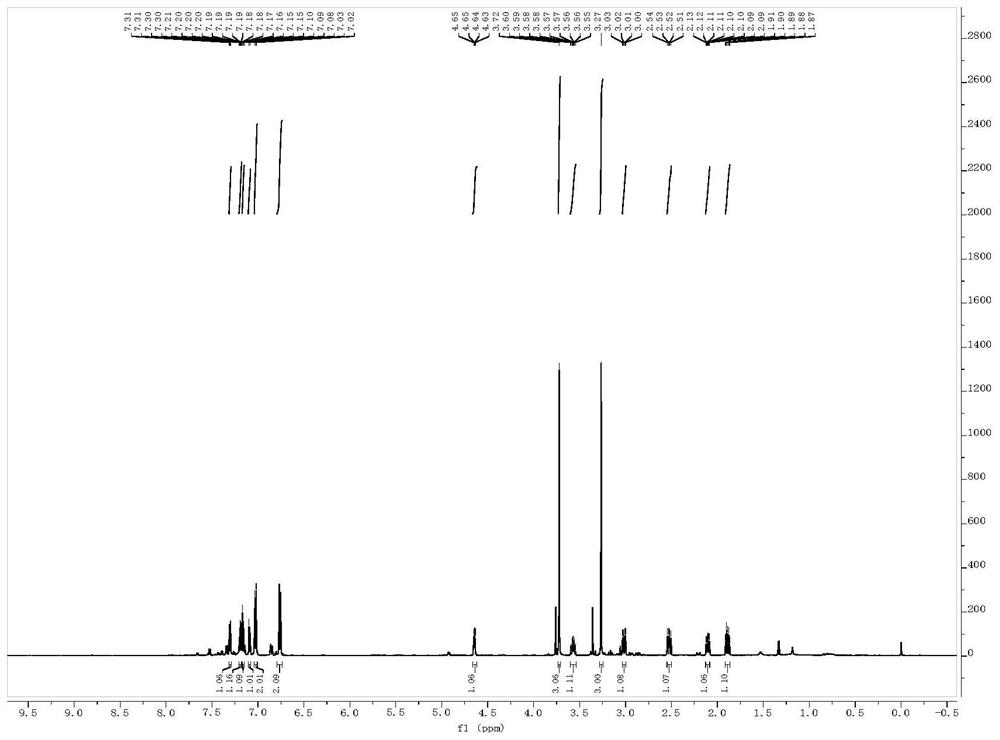
Figure 3
Abstract
Description
technical field
[0001] The invention relates to the technical field of synthesis of pharmaceutical intermediates, in particular to a transition metal palladium-catalyzed free radical cyclization coupling reaction, that is, a preparation method for selectively constructing substituted dihydroindene compounds in one pot. Background technique
[0002] Substituted indanes are an important class of pharmaceutical intermediates, and they have a wide range of pharmaceutical activities. The substituted dihydroindane derivatives shown below have been proven to have a high inhibitory effect on the calcium influx of nerve cells (see: B.S.Orlek, J.D.Harling, WO 9621641, 1996), so these compounds can be used as nerve cells. Calcium influx inhibitors have potential pharmacological activity on mammals, especially human brain cells related diseases caused by calcium accumulation, such as migraine, epilepsy, paralytic dementia, senile dementia, and emotional disorders.
[0003]
[0004] ...
Examples
Embodiment 1
[0036] Example 1 Synthesis of 1-(4-methoxybenzyl)-2,3-dihydro-1H-indene (1)
[0037]
[0038] Slowly add the compound 1-(3-ene-butyl )-2-iodobenzene (633mg, 3mmol) and PEPPSI (40.8mg, 0.06mmol) in 3mL THF mixed solution, the reaction solution was stirred at room temperature for 5 minutes. The reaction solution was saturated with NH 4 Cl solution was quenched, extracted with ethyl acetate, the organic phase was washed with saturated brine, dried over anhydrous sodium sulfate, the organic phase was concentrated, and the crude product was separated by column chromatography (eluent: PE:EA=100:1) to obtain compound 1 (489mg, 85%) as a colorless oil. 1 H NMR (CDCl 3 ,400MHz,ppm):δ=7.23-6.83(m,8H),3.81(s,3H), 3.46-3.36(m,1H),3.07(dd,J=13.7Hz; 5.8Hz,1H),2.93- 2.74 (m,2H),2.65(dd,J=13.7Hz;9.3Hz,1H),2.20-2.09(m,1H), 1.82-1.69(m,1H).
Embodiment 2
[0039] Example 2 Synthesis of tert-butyl((3-(4-methoxybenzyl)-2,3-dihydro-1H-inden-1-yl)oxy)dimethylsilane(2)
[0040]
[0041] The compound tert-butyl ((1-(2- A mixed solution of iodophenyl)but-3-en-1-yl)oxy)dimethylsilane (250mg, 0.64mmol) and PEPPSI (17.4mg, 0.025mmol) in 4mL THF was stirred at room temperature for 5 minutes. The reaction solution was saturated with NH 4 The Cl solution was quenched, extracted with ethyl acetate, the organic phase was washed with saturated brine, dried over anhydrous sodium sulfate, the organic phase was concentrated, and the crude product was separated by column chromatography (eluent: PE:EA=100:1) to obtain compound 2 (114mg, 50%) as a colorless oil. 1H NMR (CDCl 3 ,400MHz,ppm): δ=7.28-6.76(m,8H),5.01(t,J=7.4Hz,1H),3.79(s,3H), 3.20-2.92(m,3H),2.10-1.54(m ,2H),0.98(s,9H),0.21(s,6H).
Embodiment 3
[0042] Example 3 Synthesis of 1-methoxy-3-(4-methoxybenzyl)-2,3-dihydro-1H-indene(3)
[0043]
[0044] Add compound 1-iodo-2-(pent-4-ene-2- Base) a mixed solution of benzene (237mg, 0.82mmol) and PEPPSI (11.1mg, 0.0164mmol) in 3 mL THF, and the reaction solution was stirred at room temperature for 5 minutes. The reaction solution was saturated with NH 4 Cl solution was quenched, extracted with ethyl acetate, the organic phase was washed with saturated brine, dried over anhydrous sodium sulfate, the organic phase was concentrated, and the crude product was separated by column chromatography (eluent: PE:EA=100: 1) to obtain compound 3 (82mg, 45%) as a colorless oil. 1 H NMR (CDCl 3 , 400MHz,ppm):δ=7.62-6.86(m,8H),5.81-5.06(m,1H),5.81-5.06(m,2H),4.49-4.38(m,1H),3.90(s,3H) ,3.17(s,3H),2.50- 2.26(m,2H).
[0045] The transition metal salt PEPPSI ([1,3-bis(2,6-diisopropylphenyl) imidazol-2-yl subunit] (3-chloropyridyl) palladium dichloride (II) in the catalytic system of this...