
Bioactivity of methyl palmitate obtained from a mangroove plant Salvadora persica L
a technology of methyl palmitate and mangroove, which is applied in the field of bioactivity of methyl palmitate obtained from a mangroove plant salvadora persica l, can solve the problem of not having a patent available for the antimuscarinic activity of methyl palmita
Patent Information
- Authority / Receiving Office
- US · United States
- Patent Type
- Applications(United States)
- Current Assignee / Owner
- Publication Date
- 2002-12-05
- Estimated Expiration
- Not applicable · inactive patent
Smart Images
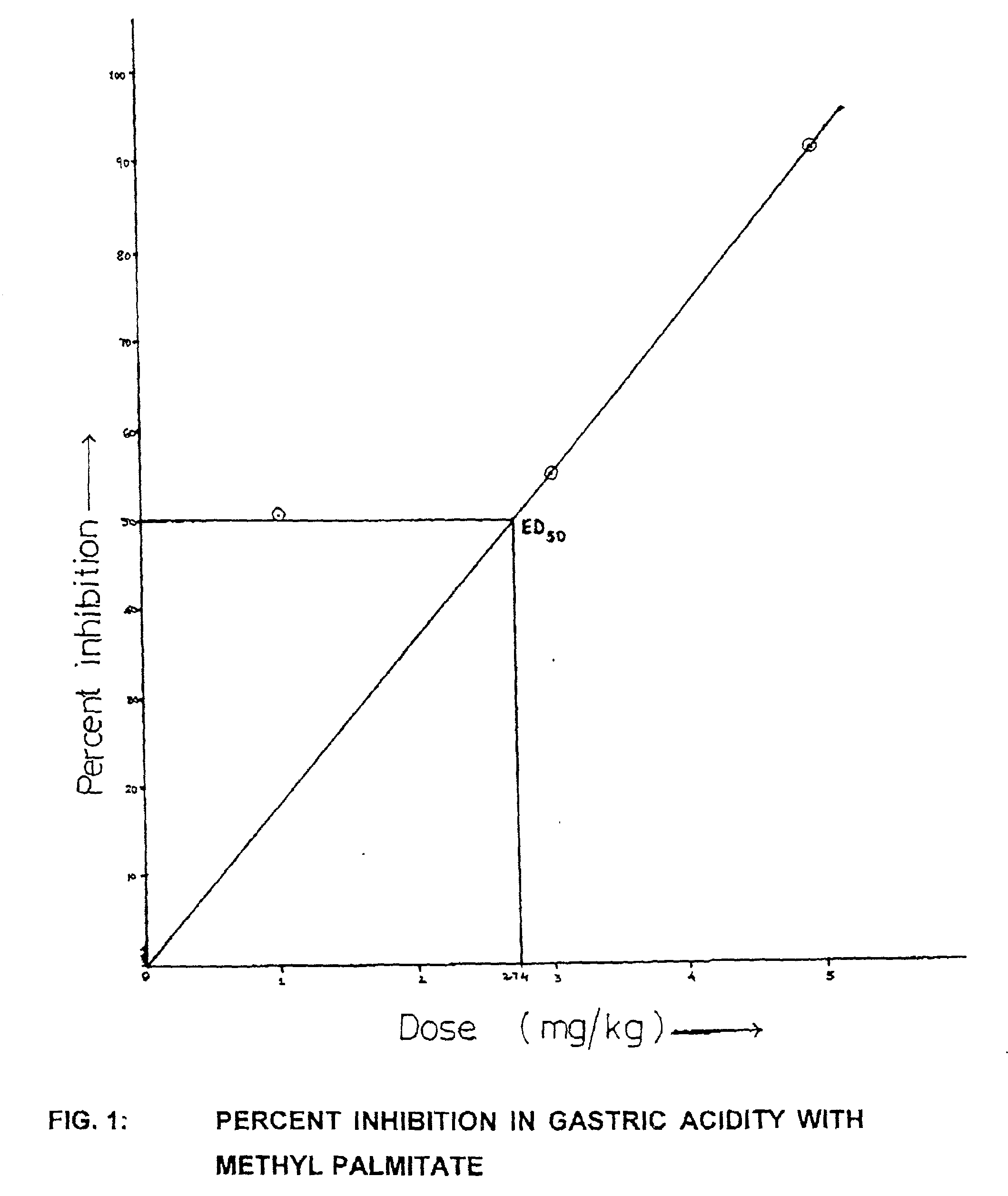
Figure 1 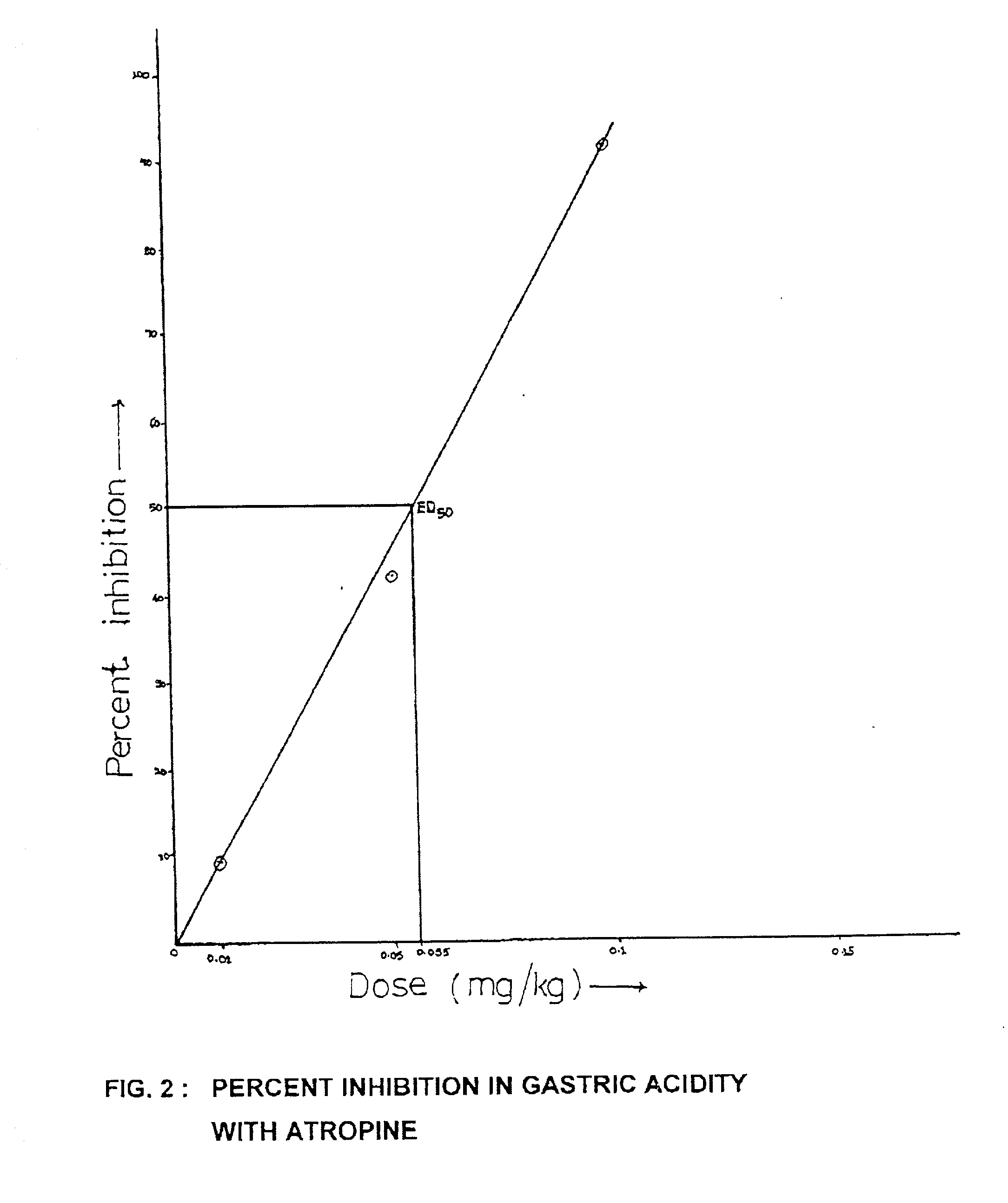
Figure 2 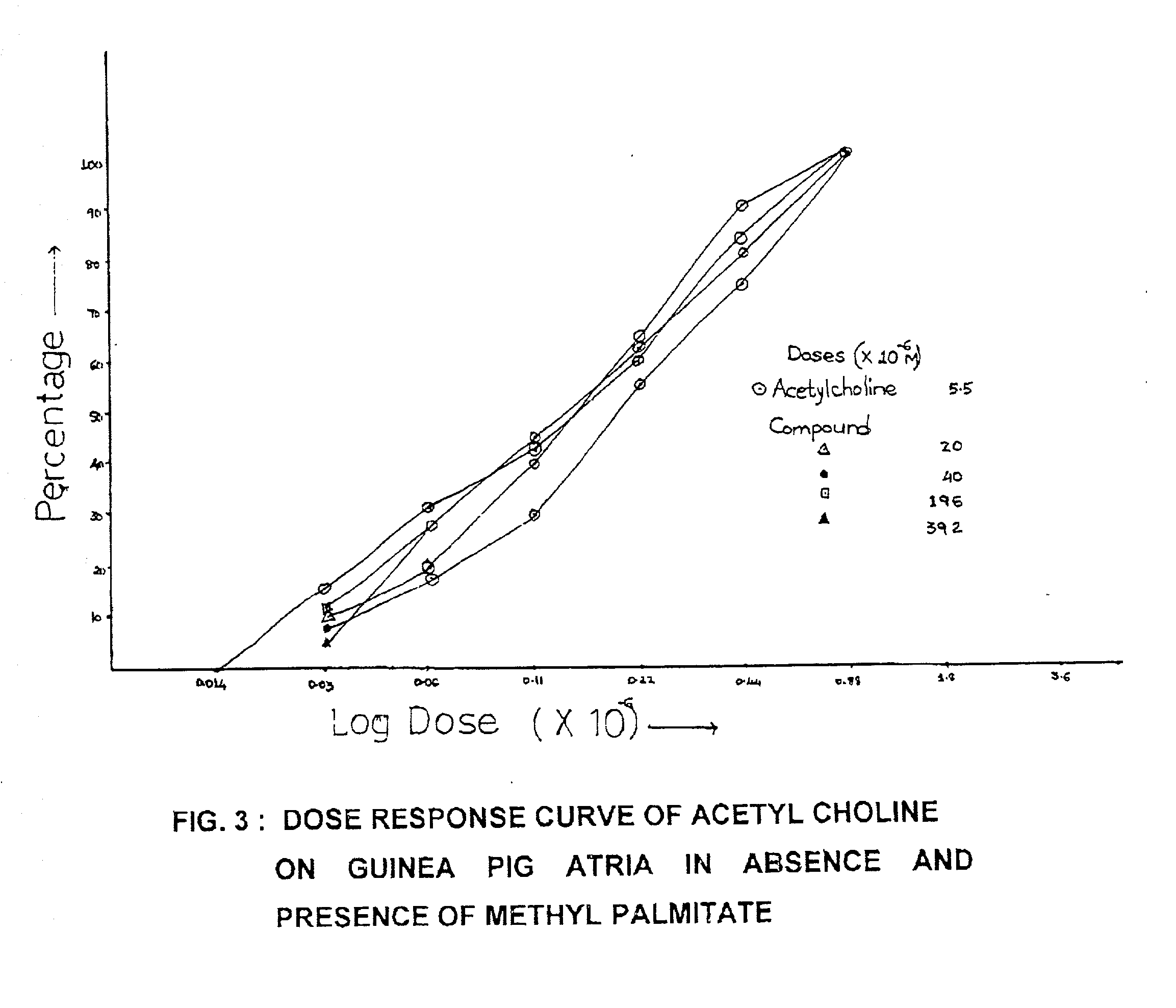
Figure 3
Abstract
Description
[0001] The present invention relates to a novel muscurine antagonist obtained from an associated mangrove plant called Salvadora persica Linneaus 1753 collected from estuarine mangrove swamps of Goa, India. Particularly, the present invention relates to the use of methyl palmitate isolated from the plant Salvadora persica as a muscurine antagonist.
[0002] Methyl palmitate is a fatty acid methyl ester. It is prepared commercially from naturally occurring edible fats and oils. These compounds are widely used indirectly in a wide range of food, pharmaceutical, cosmetic and industrial applications (Pearson, R. Report of the FAME (Fatty acid Methyl Esters) Task Force, Jan. 9, 1997). In the same report methyl esters including methyl palmitate, tested for oral toxicity in rats is given. It was proved to be nontoxic. It is also described that administration of an emulsion of methyl palmitate to mice by oral intubation or intraperitoneal injection produced no alteration in organ weight or pha...
Examples
example 2
[0094] Collection of the mangrove plant Salvadora persica L from the coast of Goa was along Ribandar, near the mouth of the Mandovi estuary, upstream. This species is ubiquitous to the coastal areas of Goa and was collected manually from the intertidal banks.
example 3
[0095] Processing of the collected mangroves were washed first with seawater followed by tap water. The undesired materials were sifted out while washing with tap water to get rid of the salts. The leaves, stems, and flowers of the associated mangrove plant were air dried. After drying, the plant material was cut into small pieces and immersed in the solvent 90% aqueous methanol for a week for extraction. Care was taken that these were properly soaked / dipped in the solvent so as to check putrefaction.
example 4
[0096] Extraction and preparation of crude extract was carried out by cold percolation method at room temperature and by solvent evaporation at a water bath (temperature 50.degree. C.) under reduced pressure. This helps in protection of any heat labile metabolite present in it. Re-extraction was done twice until the extract was concentrated under vacuum to obtain the crude extract.