
Ceramic Discharge Vessel Having a Sealing Composition
a ceramic discharge and composition technology, applied in the manufacture of cold cathode, electric discharge tube/lamp, electrode system, etc., can solve the problems of restricting the types of lamp configurations, corroding iodide salts with respect to some lamp materials, etc., to achieve less expensive, wider range of sizes, complexity and/or functionality
Patent Information
- Authority / Receiving Office
- US · United States
- Patent Type
- Applications(United States)
- Current Assignee / Owner
- Publication Date
- 2008-08-28
- Estimated Expiration
- Not applicable · inactive patent
Smart Images
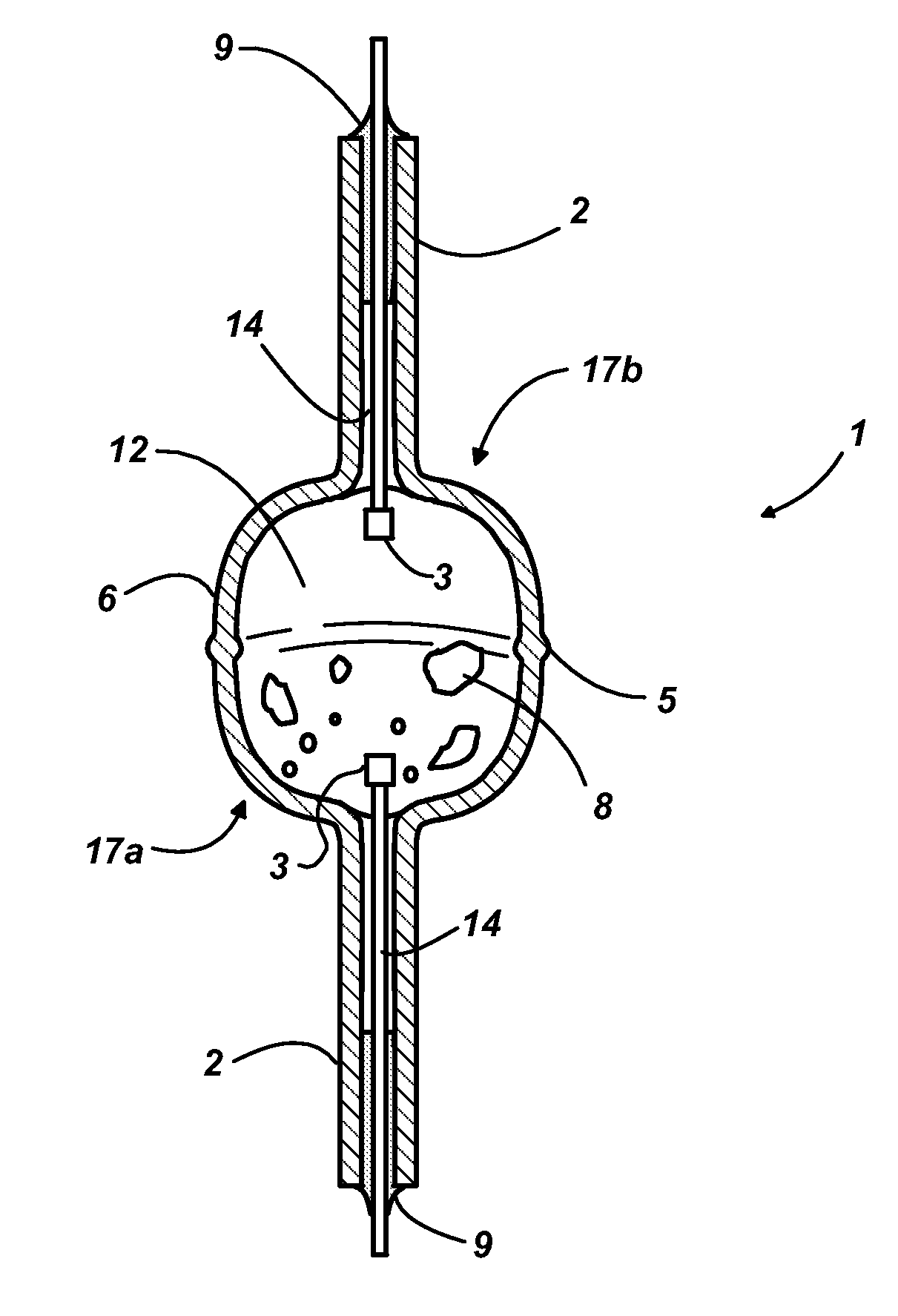
Figure 1 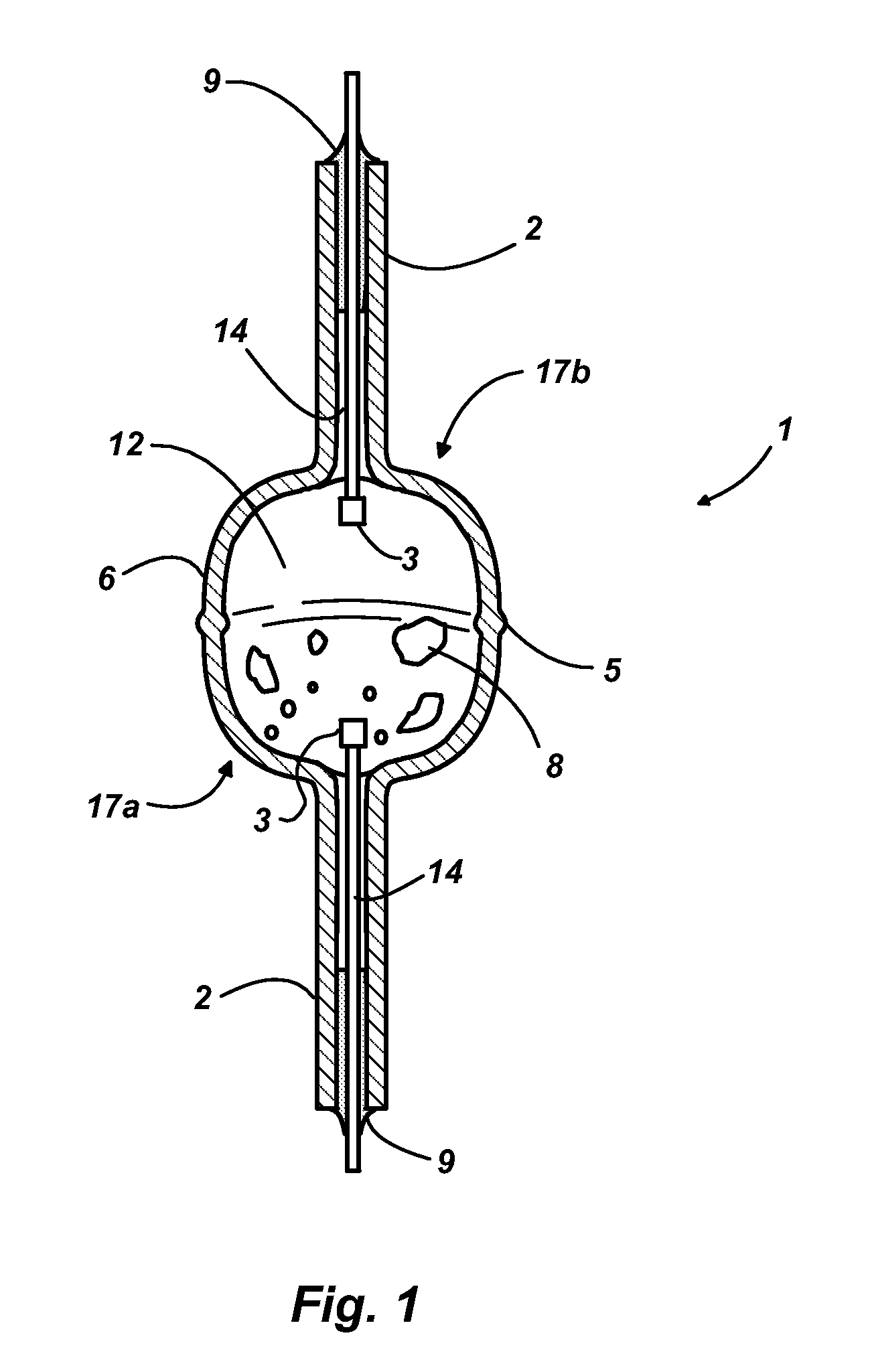
Figure 2 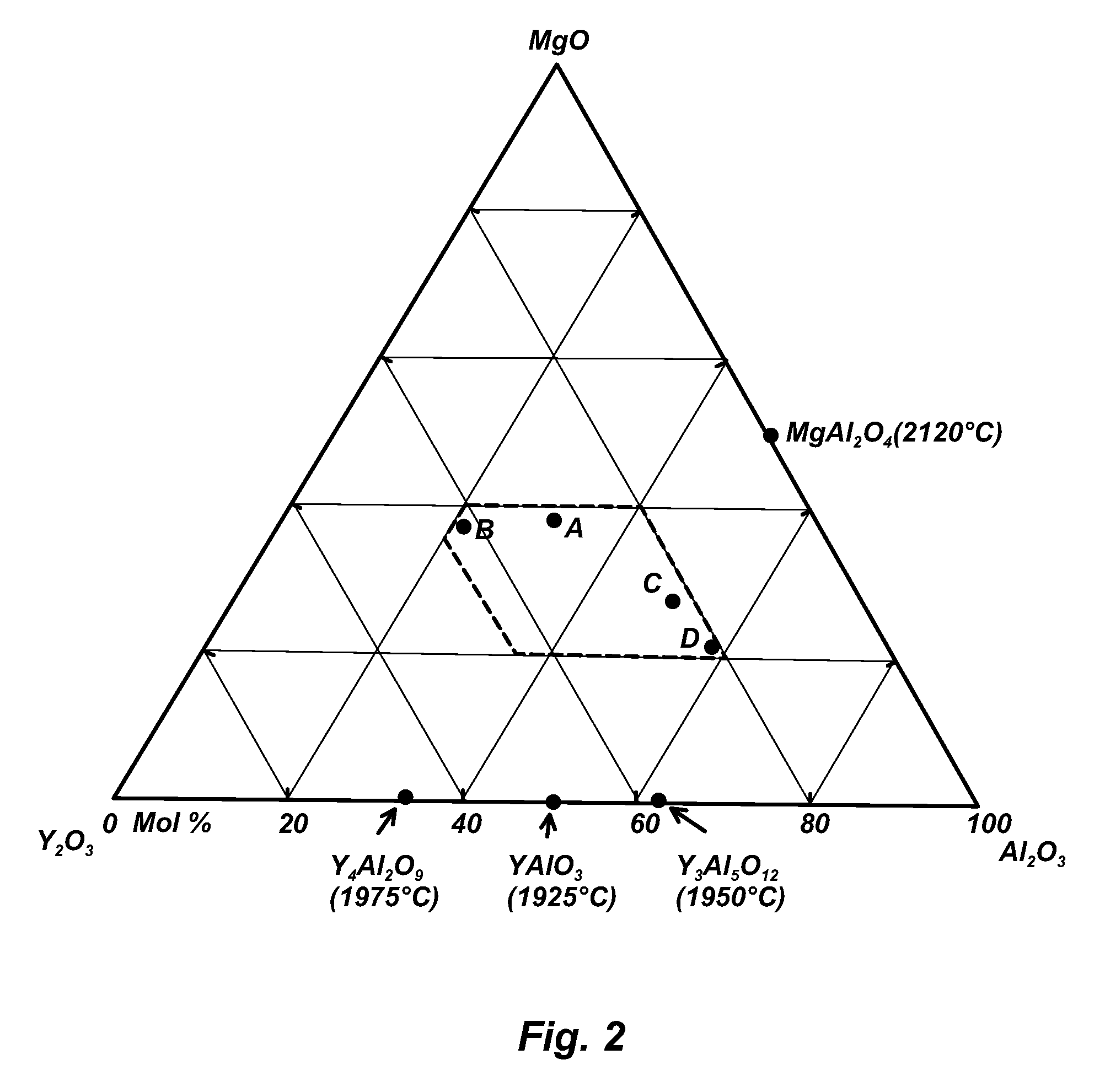
Figure 3
Abstract
Description
BACKGROUND OF THE INVENTION
[0001] Metal halide and high-pressure sodium lamps are two examples of lamps which use a discharge vessel, also known as an arc tube, made of a ceramic material. The preferred ceramic material for these arc tubes has been polycrystalline alumina (PCA). The robustness of the ceramic material permits the use of more corrosive chemical fills and allows the discharge vessels to be operated at higher temperatures. A sealing composition, commonly referred to as a frit, is used to form a hermetic seal between the feedthrough sections of the electrodes and the ceramic body of the discharge vessel. The sealing composition may also be used to join together the ceramic pieces which form the discharge vessel. The sealing composition is designed to have a lower melting point than the ceramic components so that the seals may be formed without additional sintering / shrinkage of the ceramic vessel. The sealing composition must be resistant to attack by the chemical fill whi...
Examples
example
[0015]A sealing composition corresponding to quasibinary eutectic A was made by combining, in percent by weight, yttrium oxide (59.9%), aluminum oxide (27.0%), and magnesium oxide (13.1%) powders. The oxide mixture was mixed by ball milling in a plastic jar with de-ionized water and high-purity alumina media. After mixing, the oxide mixture was dried and fired in air at 900° C. to partially sinter the oxide particles together so that the mixture would remain homogeneous during the remaining processing steps. The fired mixture was then mixed with a polyvinyl alcohol binder and pressed into small rings suitable for sealing ceramic metal halide lamps. The sealing rings were partially sintered in air at 1250° C. prior to sealing tests.
[0016]Sealing / joining tests were performed using three different types of heating equipment: a tungsten-coil furnace, RF heating, and laser heating. Crack-free seals were made on 70 W discharge vessels having multi-strand electrode feedthroughs. Tungsten c...