

Clay product and uses thereof
a clay and clay technology, applied in the field of clay products, can solve the problems of affecting the economic burden of anaerobic bacterial pathogens on the agricultural industry, and the disease is much more financially damaging to the producer, so as to improve the health or function of the gastrointestinal tract and reduce the effect of clostridia
Patent Information
- Authority / Receiving Office
- US · United States
- Patent Type
- Applications(United States)
- Current Assignee / Owner
- Publication Date
- 2014-04-10
Smart Images
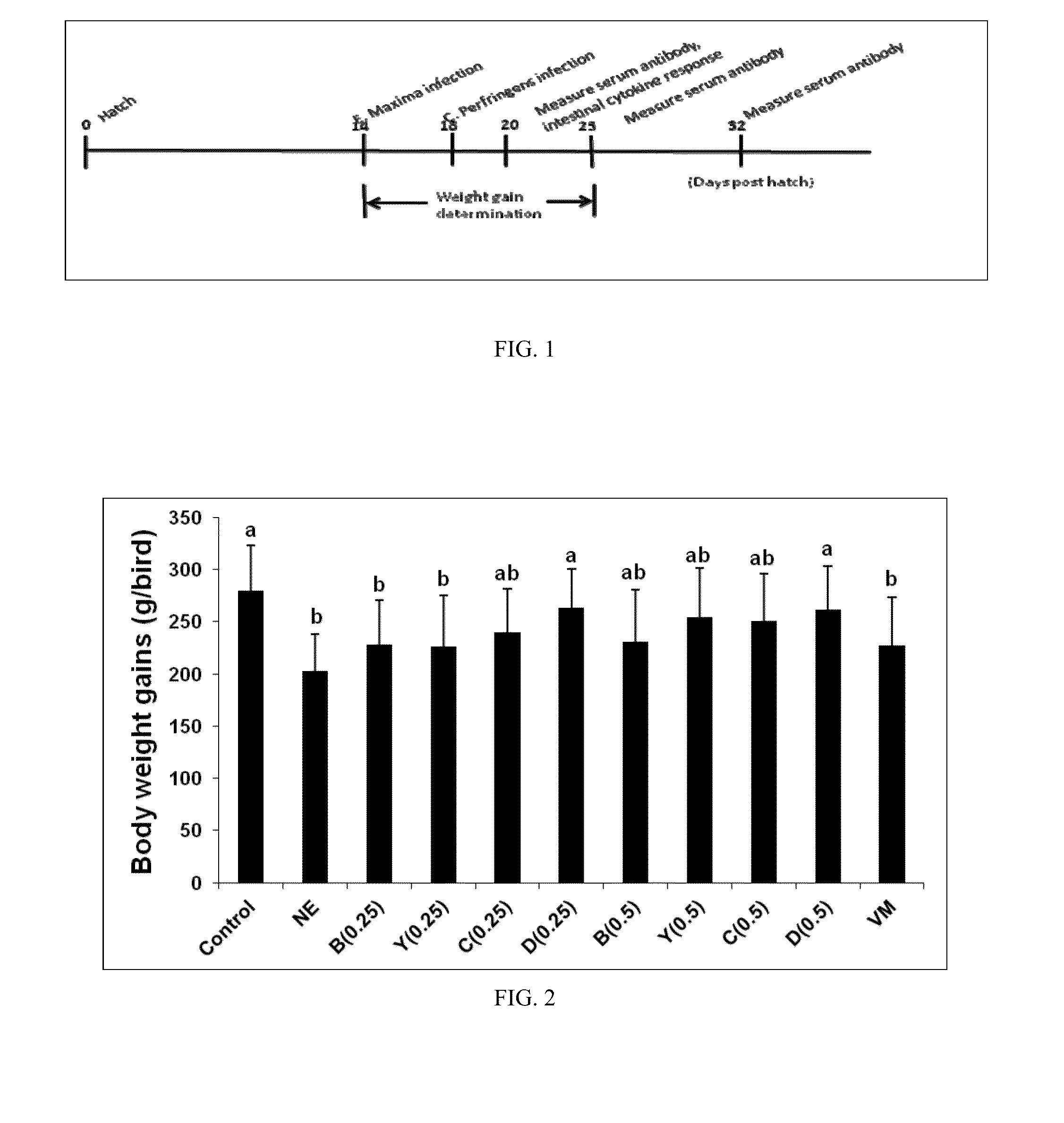
Figure 1 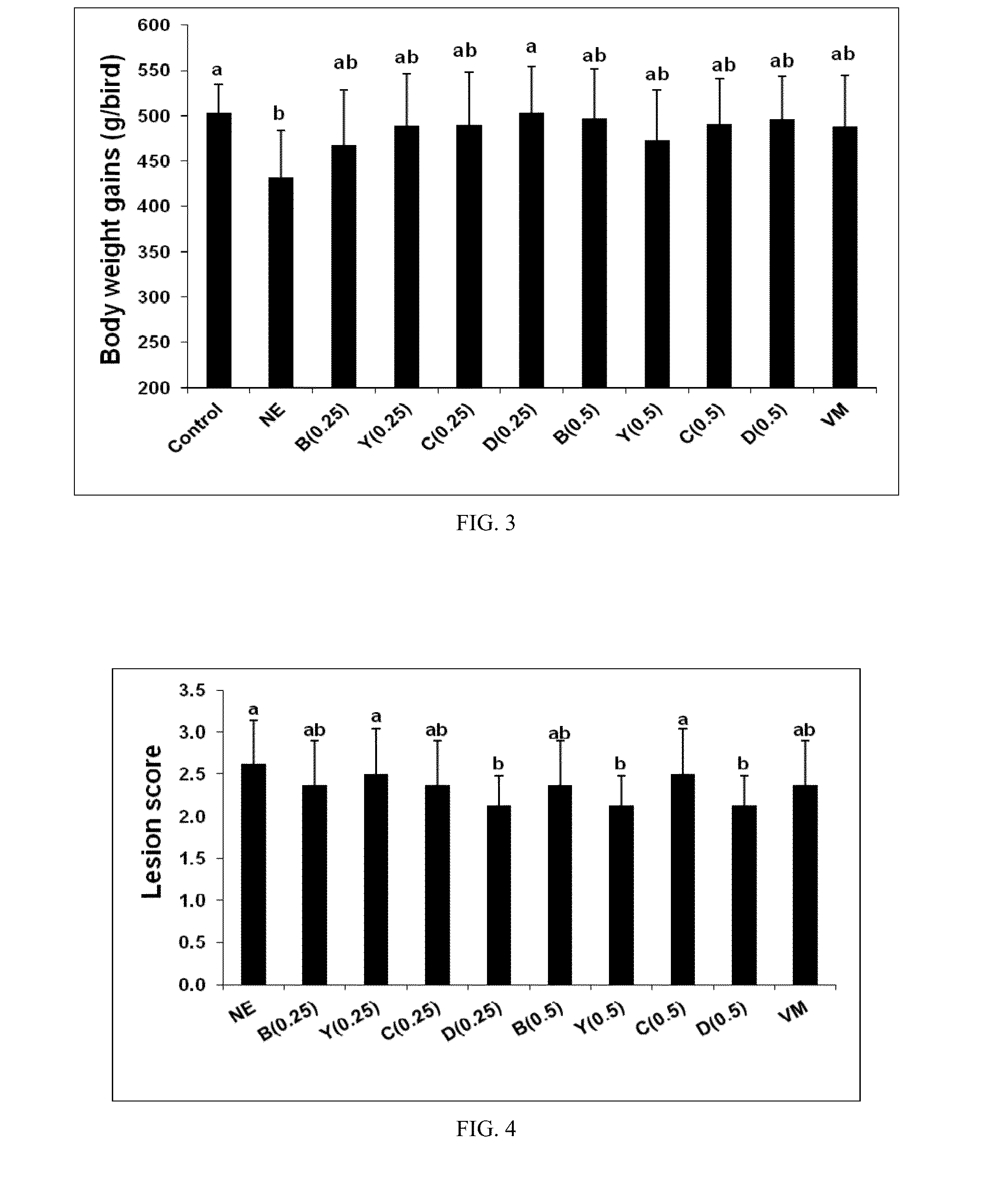
Figure 2 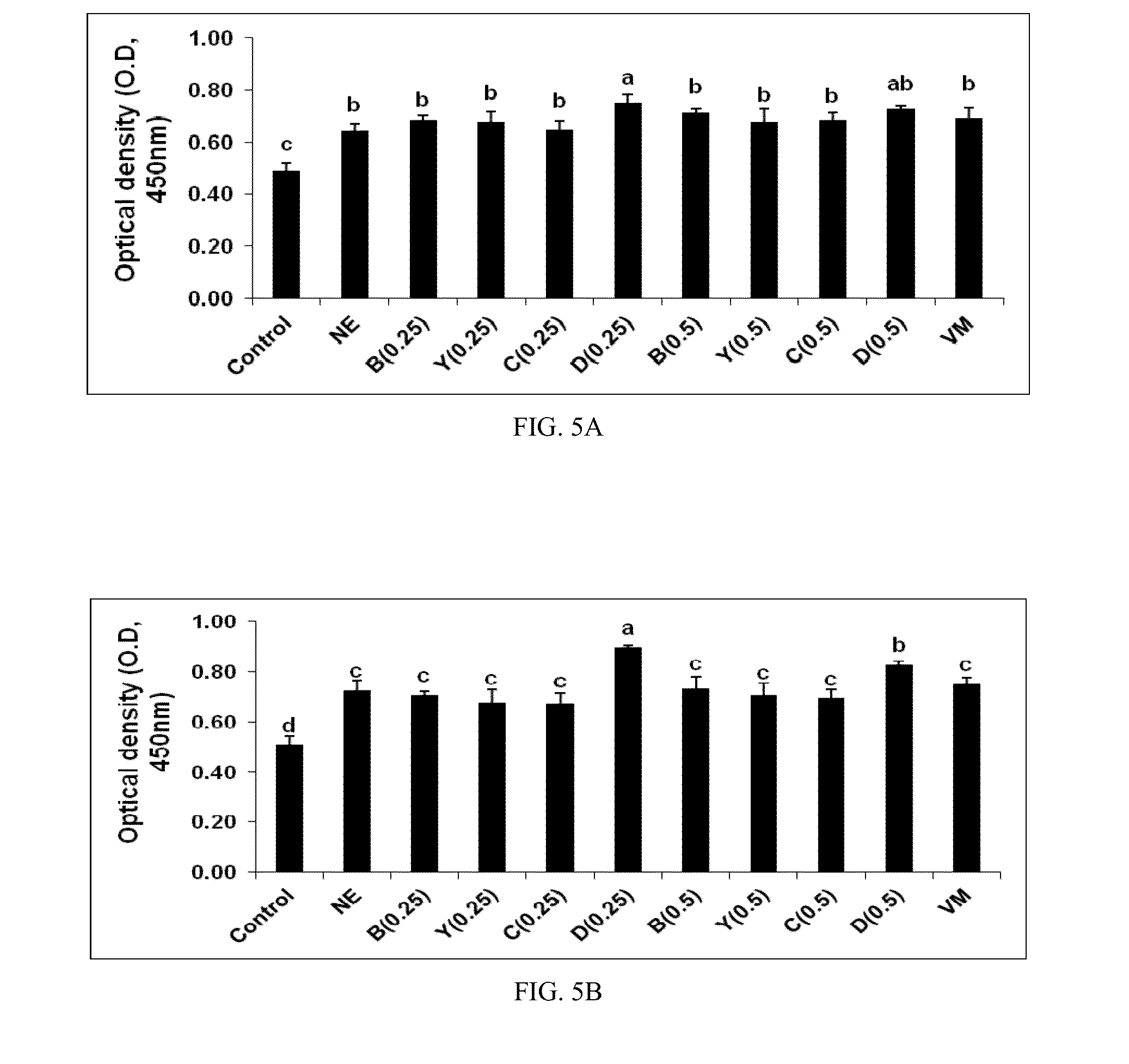
Figure 3
Abstract
Description
RELATED APPLICATIONS AND INCORPORATION BY REFERENCE
[0001] This application claims benefit of and priority to U.S. provisional patent application Ser. Nos. 61 / 708,763 and 61 / 792,382 filed Oct. 2, 2012 and Mar. 15, 2013, respectively and entitled “CLAY-CONTAINING COMPOSITION THAT ALLEVIATES EFFECTS OF BACTERIAL EXOTOXIN-ASSOCIATED DISEASE” and “CLAY, A YEAST PRODUCT AND GLUTAMATE BLENDED PRODUCT AND USES THEREOF”, respectively.
[0002] The foregoing applications, and all documents cited therein or during their prosecution (“appln cited documents”) and all documents cited or referenced in the appln cited documents, and all documents cited or referenced herein (“herein cited documents”), and all documents cited or referenced in herein cited documents, together with any manufacturer's instructions, descriptions, product specifications, and product sheets for any products mentioned herein or in any document incorporated by reference herein, are hereby incorporated herein by reference, and may...
Examples
example 1
Summary of Clostridial Toxins / Disease, Prototype Product Efficacy
[0096]Several toxin adsorbents against 2 Clostridium spp. were tested in vitro and in vivo.
[0097]An in vitro adsorption assay with alpha-toxin was conducted with three samples of pulverized clays: a calcium bentonite (CBEN), an attapulgite-type Fullers Earth (AFE), and a heat treated Fullers Earth (HTF). Alpha-toxin is produced by C. perfringens, in the intestines of poultry during stressed conditions, resulting in necrotic enteritis. Five levels of toxin (0, 5, 10, 50, & 100 μg / ml) and three levels of each clay (0, 0.5%, & 1.0%) were tested together in 50 μl of phosphate buffer solution, incubated, centrifuged, and binding was determined by measuring hydrolysis of egg yolk lecithin agar resulting from the unbound alpha-toxin. All the products bound the toxin at some level. Table 1 shows summary results Decreasing the binder to toxin ratio resulted in separation of binding efficiencies of the clays, with CBEN having gr...
example 2
The Effects of Necrotic Enteritis and Aflatoxin on Growth Performance, Lesion Scores, and Mortality in Young Broilers and Products to Alleviate them
[0108]Little is known about possible necrotic enteritis / aflatoxin interactions. A study was conducted to investigate possible interactions, and the ability of several prototype products to lessen disease. The product key B=LVM clay; Y=B+organic acid+plant extract; C=B+yeast product; The 3 test materials lessened disease.
[0109]Cobb 500 chicks (2,640, male) were used to determine the effects of disease challenge and products to decrease those effects. Three challenge levels were used; 1) no challenge; 2) necrotic enteritis (CPP) challenge; and 3) CPP+1 ppm aflatoxin B1. Products tested to alleviate disease challenges were: 1) no product (NP); 2) a proprietary clay-based product (B); 3) (Y); 4) C); and 5) virginiamycin (VM). In the 24 d study, 22 chicks (equalized to 20 on d-7) per pen were allotted to 15 treatments (3×5 factorial arrangeme...
example 3
The Effects of Necrotic Enteritis and Aflatoxin on Growth Performance, Lesion Scores, and Mortality in Young Broilers and Products to Alleviate them
[0111]Cobb 500 chicks (2,640, male) were used to determine the effects of disease challenge and products to decrease those effects. Three challenge levels were used; 1) no challenge; 2) necrotic enteritis (CPP) challenge; and 3) CPP+1 ppm aflatoxin B1. Products tested to alleviate disease challenges were: 1) no product (NP); 2) a proprietary clay-based product (B); 3) a second proprietary clay-based product (Y); 4) a third proprietary clay-based product (C); and 5) virginiamycin (VM). In the 24 d study, 22 chicks (equalized to 20 on day7) per pen were allotted to 15 treatments (3×5 factorial arrangement) with 8 replications (experimental unit=pen). Significant difference was set at P<0.05. Weights were taken on day 0, 10, and 24 for calculation of feed intake, gain, and feed:gain. Birds consumed feed and water ad libitum. Increased negat...