
Functionally-modified oligonucleotides and subunits thereof
a technology of oligonucleotides and subunits, applied in the field of oligonucleotide compounds, can solve the problems of affecting the performance of antibacterial agents, hampered the performance of such nucleic acid analogues as antisense or antigene drugs, and hampered the use of stereoisomeric complexity, etc., to achieve enhanced cell delivery, potency and/or tissue distribution, and effective delivery to the target organs
Patent Information
- Authority / Receiving Office
- US · United States
- Patent Type
- Applications(United States)
- Current Assignee / Owner
- Publication Date
- 2014-11-06
Smart Images
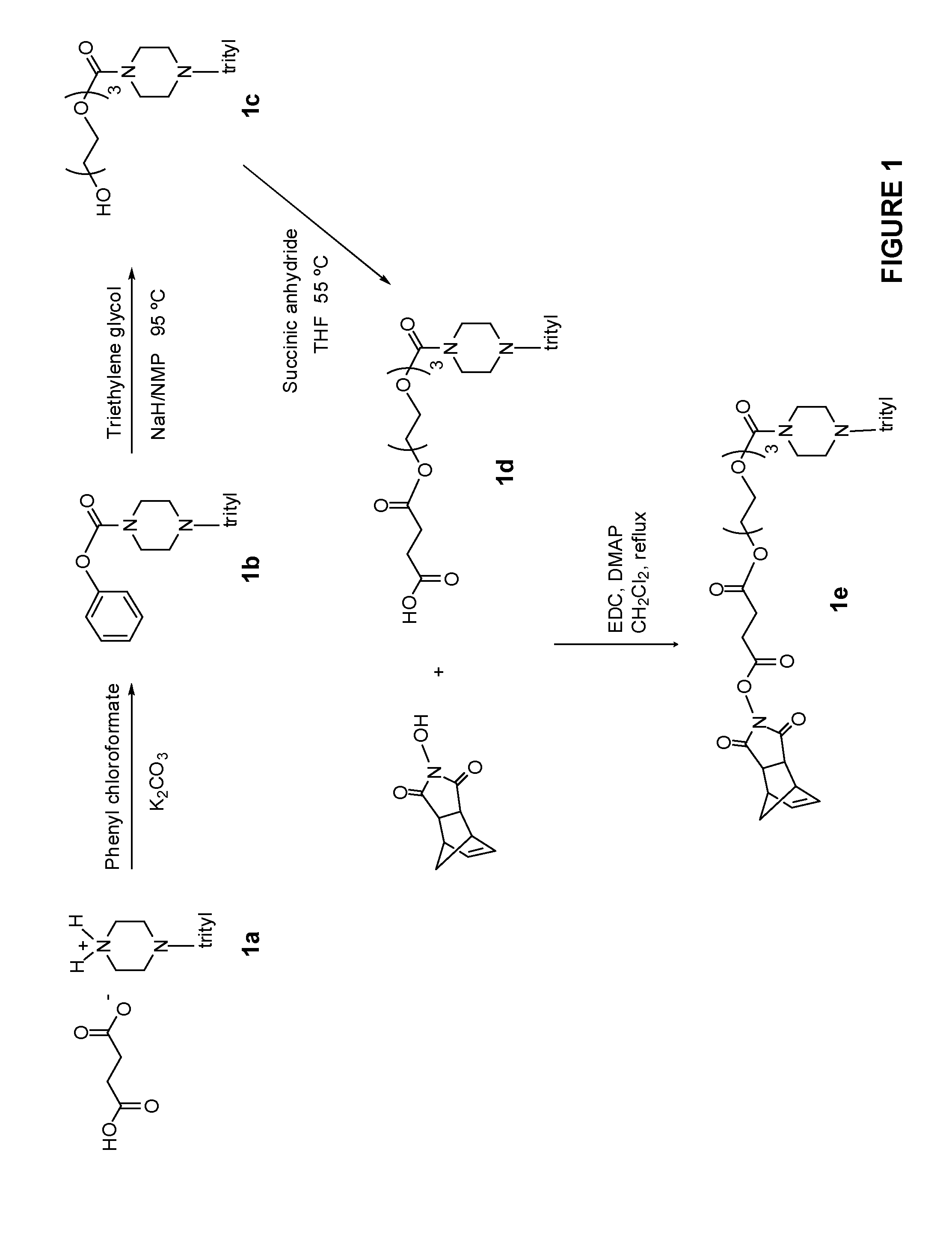
Figure 1 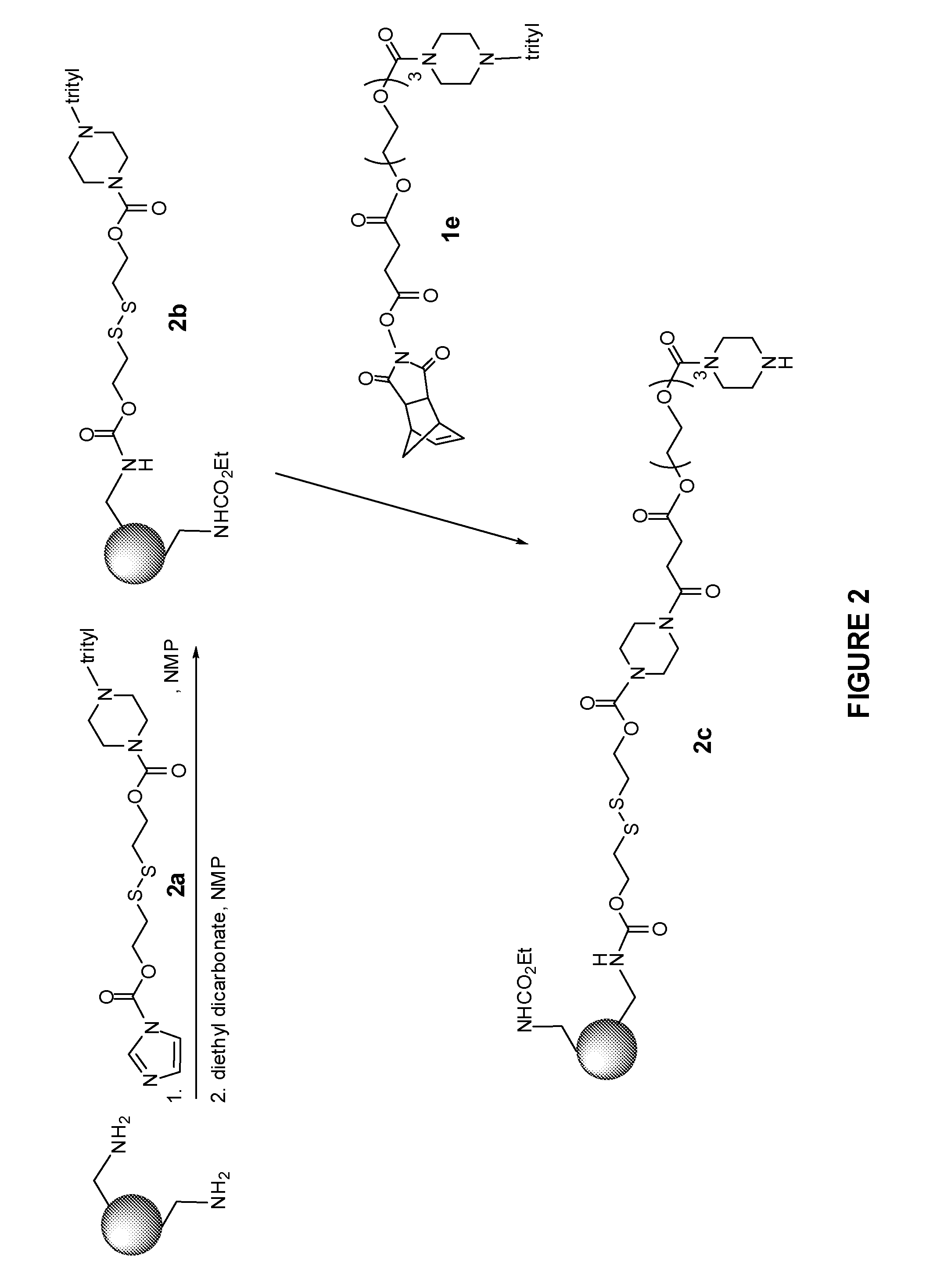
Figure 2 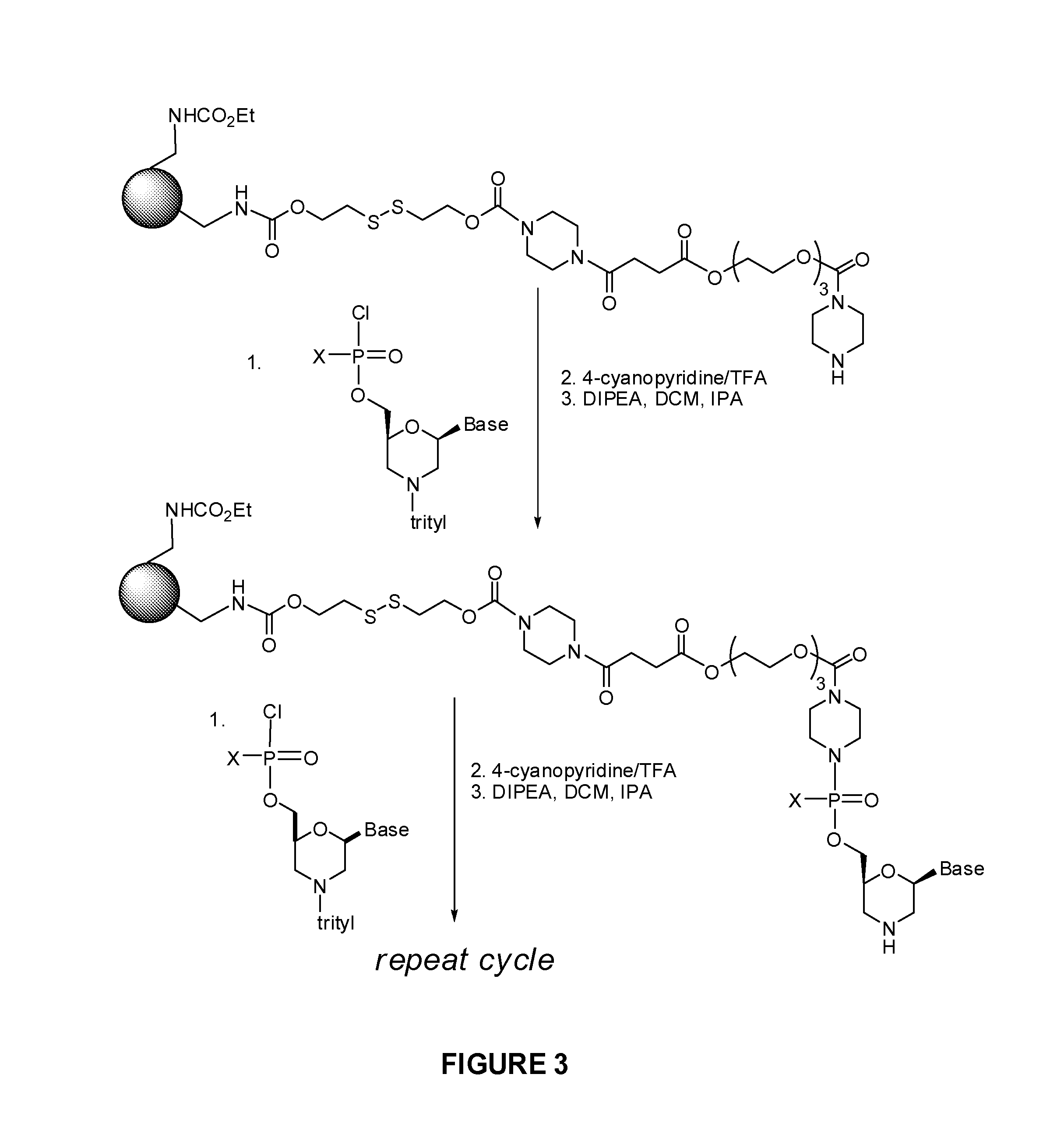
Figure 3
Abstract
Description
STATEMENT REGARDING SEQUENCE LISTING
[0001] The sequence listing associated with this application is provided in text format in lieu of a paper copy, and is hereby incorporated by reference into the specification. The name of the text file containing the sequence listing is 120178—498WO_SEQUENCE_LISTING.txt. The text file is about 13 KB, was created on Nov. 15, 2012, and is being submitted electronically via EFS-web.BACKGROUND OF THE INVENTION
[0002] 1. Technical Field
[0003] The present invention is generally related to oligonucleotide compounds (oligomers) useful as antisense compounds, and more particularly to oligomer compounds comprising modified intersubunit linkages and / or terminal groups, and the use of such oligomer compounds in antisense applications.
[0004] 2. Description of the Related Art
[0005] Antisense oligomers are generally designed to bind in a sequence specific manner to DNA or RNA regions and alter the expression of disease-causing proteins. Requirements for successful im...
Examples
example 3
1-(1-(Chloro((6-(5-Methyl-2,4-Dioxo-3,4-Dihydropyrimidin-1(2H)-yl)-4-Tritylmorpholin-2-yl)Methoxy)Phosphoryl)Piperidin-4-yl)-1-Methylpyrrolidin-1-Ium Chloride
[0790]
[0791]The title compound was synthesized in a manner analogous to that described in Example 2 to afford the title compound (0.6 g) as a white solid. ESI / MS calcd. for 1-(4-nitrophenyl)piperazine derivative C49H60N8O7P 903.4. found m / z=903.7 (M+).
example 4
((2S,6R)-6-(5-Methyl-2,4-Dioxo-3,4-Dihydropyrimidin-1(2H)-yl)-4-Tritylmorpholin-2-yl)Methyl (4-Methylpiperazin-1-yl)Phosphonochloridate
[0792]
[0793]To a cooled (ice / water bath) DCM solution (10 mL) of phosphorus oxychloride (1.02 mL, 11.0 mmol) was added dropwise 2,6-lutidine (3.49 mL, 29.9 mmol) then a DCM solution (10 mL) of methyl piperazine (1.00 g, 10.0 mmol) was added dropwise and stirring continued for 1 h. A DCM solution (10 mL) of Mo(Tr)T (2) (4.82, 10.0 mmol) and NMI (79 μL, 1.0 mmol) was added and stirred 4 h then loaded directly onto column. Chromatography [SiO2 column (80 g), DCM / Acetone with 2% TEA eluant (gradient 1:0 to 0:1)] to afford the title compound (0.8 g) as a white foam. ESI / MS calcd. for 1-(4-nitrophenyl)piperazine derivative C43H48N7O8P 834.4. found m / z=835.5 (M+1).
example 5
((2S,6R)-6-(5-Methyl-2,4-Dioxo-3,4-Dihydropyrimidin-1(2H)-yl)-4-Tritylmorpholin-2-yl)Methyl Morpholinophosphonochloridate
[0794]
[0795]To a cooled solution (ice / water bath) of phosphorus oxychloride (19.1 mL, 205 mmol) in DCM (410 mL) was added dropwise 2,6-lutidine (54.2 mL, 465 mmol) then Mo(Tr)T (2) (90.0 g, 186 mmol) portionwise over 15 min (int. temp. 0-10° C.) and stirred. After 5 min, a DCM solution (205 mL) of morpholine (17.9 mL, 205 mmol) was added dropwise over 15 min (int. temp. 0-8° C.) and stirred. After 15 min, additional DCM solution (10 mL) of morpholine (0.500 mL) was added, stirred 5 min then washed with citric acid solution (300 mL×3, 10% w / v aq), dried (MgSO4), filtered and concentrated to a viscous oil which was loaded directly onto column. Chromatography [SiO2 column (330 g), hexanes / EtOAc eluant (gradient 1:0 to 0:1)] to afford the title compound (78.5 g, 65% yield) as a white foam. ESI / MS calcd. for 1-(4-nitrophenyl)piperazine derivative C43H48N7O8P 821.3. fou...