

Containers intended for moisture-sensitive products
a technology for moisture-sensitive products and containers, applied in the field of rigid containers and reclosable containers, can solve the problems of hazard for users, adverse effects on the use of medicinal products and other ingestible or non-ingestible consumer products, and the risk of remaining products being damaged by moisture, etc., and achieve the effect of rigidity and desired strength
Patent Information
- Authority / Receiving Office
- US · United States
- Patent Type
- Patents(United States)
- Current Assignee / Owner
- Publication Date
- 2012-02-07
Smart Images
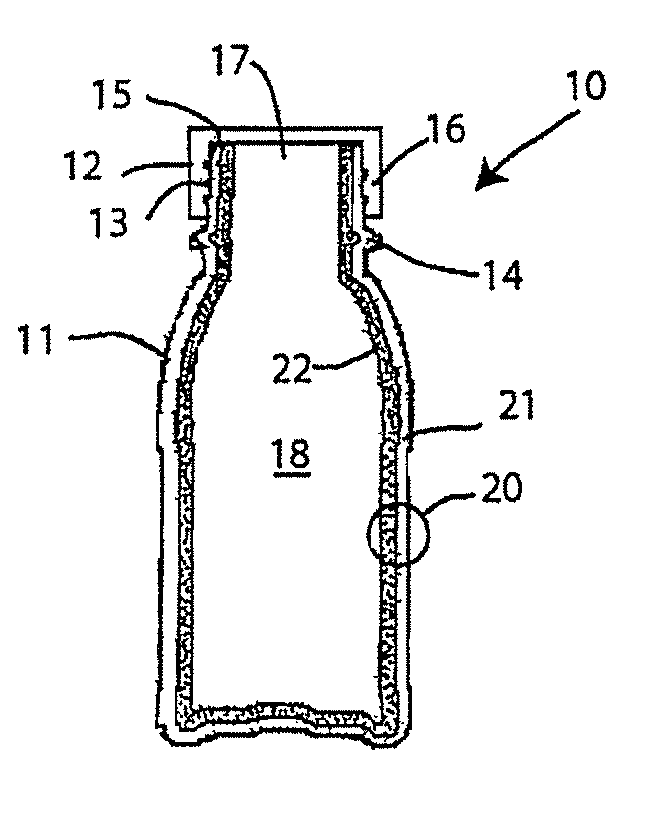
Figure 1 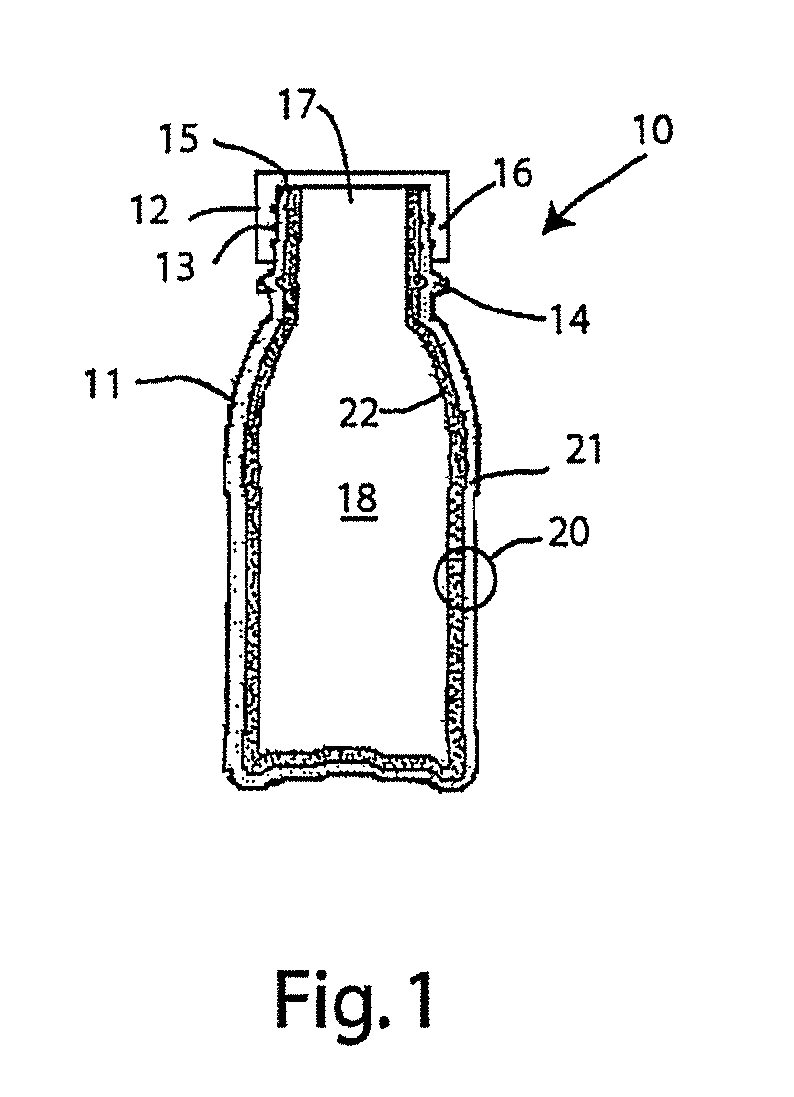
Figure 2 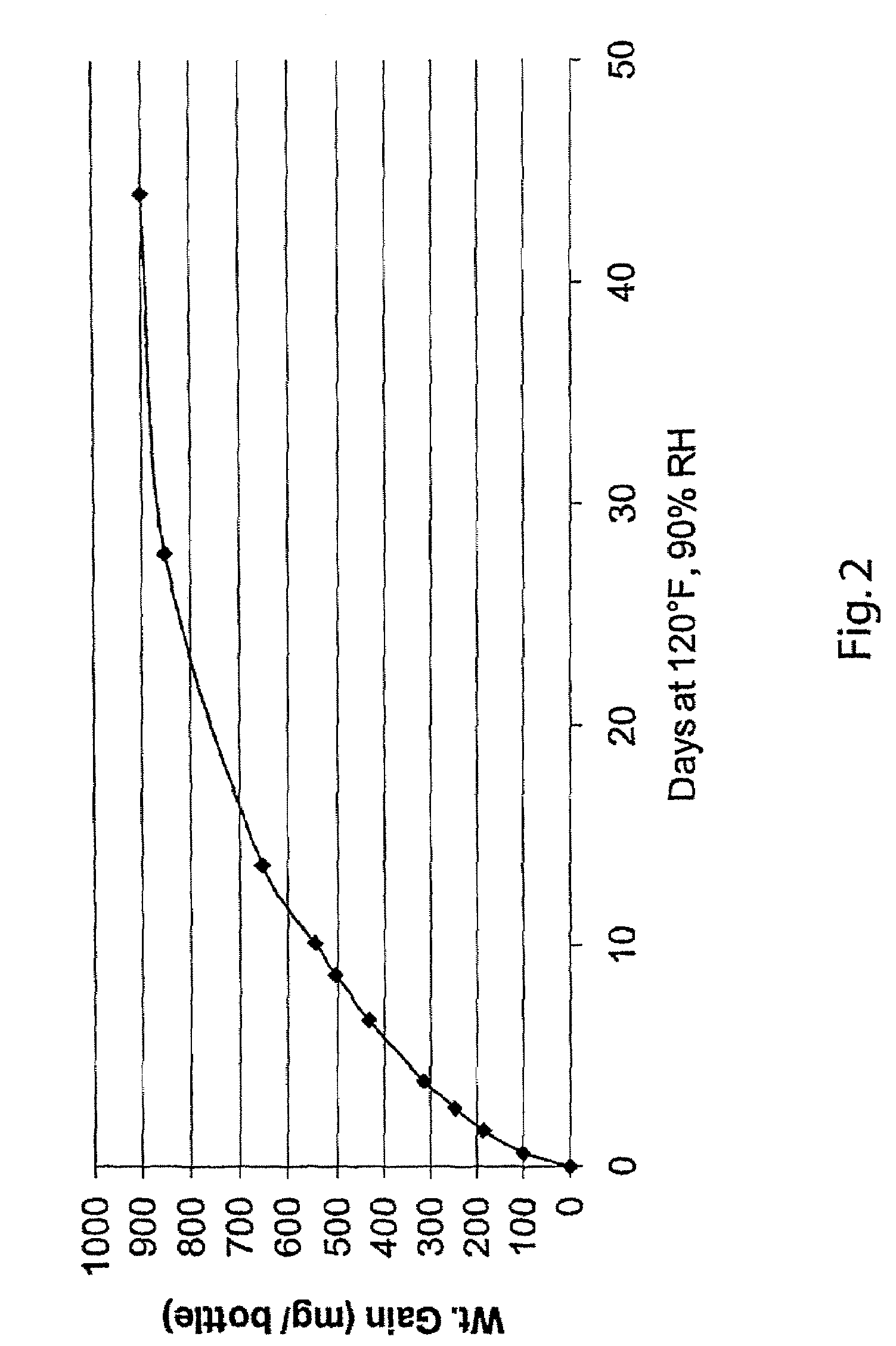
Figure 3
Abstract
Description
FIELD OF THE INVENTION
[0001] This disclosure relates to the packaging of products that are sensitive to moisture, such as medicines or consumer goods produced in powder, pill, tablet, capsule, pastille, granule, gelcap or other forms, and which can become damaged or deteriorated if exposed to moist air over time. More particularly, the present disclosure relates to rigid containers used for packaging such products, particularly re-closable containers, and to methods for production of such containers.BACKGROUND OF THE INVENTION
[0002] Many medicaments and other ingestible or non-ingestible consumer products are adversely affected if exposed to moisture or moist air for a period of time and must be protected against such exposure between production and consumption. The damage may take the form of moisture absorption that changes the physical properties of the products (e.g. making pills or particles of powder clump together) or even chemical change or corrosion. When such products are pr...
Examples
example 1
[0046]A plastic bottle of the type shown in FIG. 1 was prepared by co-extrusion and blow-molding two resin layers as described above. The outer layer 21 was 30 mils in thickness and consisted of high density polyethylene (HDPE) sold under the trademark Exxon AD-60007. The inner layer 22 was 15 mils in thickness and consisted of a 50 / 50 by weight blend of the same high density polyethylene and a desiccant masterbatch. The masterbatch was a 50 / 50 by weight blend of calcium oxide (Ampacet™ grade 101499) and 21 melt index linear low density polyethylene. The inner layer 22 was 25% by weight calcium oxide.
[0047]The resulting bottle was subjected to tests to determine desiccant capacity, recovery from opening and projected product moisture gain, etc.
[0048]FIG. 2 is a graph illustrating weight gain versus time for a test carried out on a container of the kind shown in FIG. 1 at 90% relative humidity and at 120° F.
[0049]FIG. 3 is graph illustrating weight gain versus time at various relativ...
example 2
[0063]A plastic bottle of the type shown in FIG. 1 was prepared by co-extrusion and blow-molding resin layers as described above. Four (4) multilayer structures were made, as identified below. In each structure, the HDPE resin was Chevron-Phillips Marlex 5502BN. Also, WX0226 (Plastic Color Chip PEC14828 white color concentrate used at 6 pounds per 100 pounds of Chevron Phillips Marlex 5502BN) was added to the outer layer in each variable structure.
[0064]In this example, a similar bottle to that of Example 1 was prepared, except that the desiccant masterbatch used in Example 1 was replaced by a masterbatch containing 20% by weight of a molecular sieve and 80% by weight of 21 melt index linear low density polyethylene. The molecular sieve was found to speed recovery but was consumed at a faster rate than CaO, that is, the molecular sieve reached its saturation point faster than CaO.
[0065]Wall thickness approximately 50 mils.
[0066]Molding Process: Co-extrusion Blow Molding: 3 Extruders...