
Nitrogen-containing six-membered aromatic ring derivatives and pharmaceutical products containing the same
a technology of six-membered aromatic rings and derivatives, which is applied in the direction of biocide, cardiovascular disorders, drug compositions, etc., can solve the problems of inability to provide a fundamental treatment, difficult orally administration, and no fundamental treatment of these medicines, so as to promote axonal outgrowth, promote angiogenesis, and promote axonal outgrowth.
Patent Information
- Authority / Receiving Office
- US · United States
- Patent Type
- Patents(United States)
- Current Assignee / Owner
- Publication Date
- 2013-11-26
- Estimated Expiration
- Not applicable · inactive patent
Smart Images
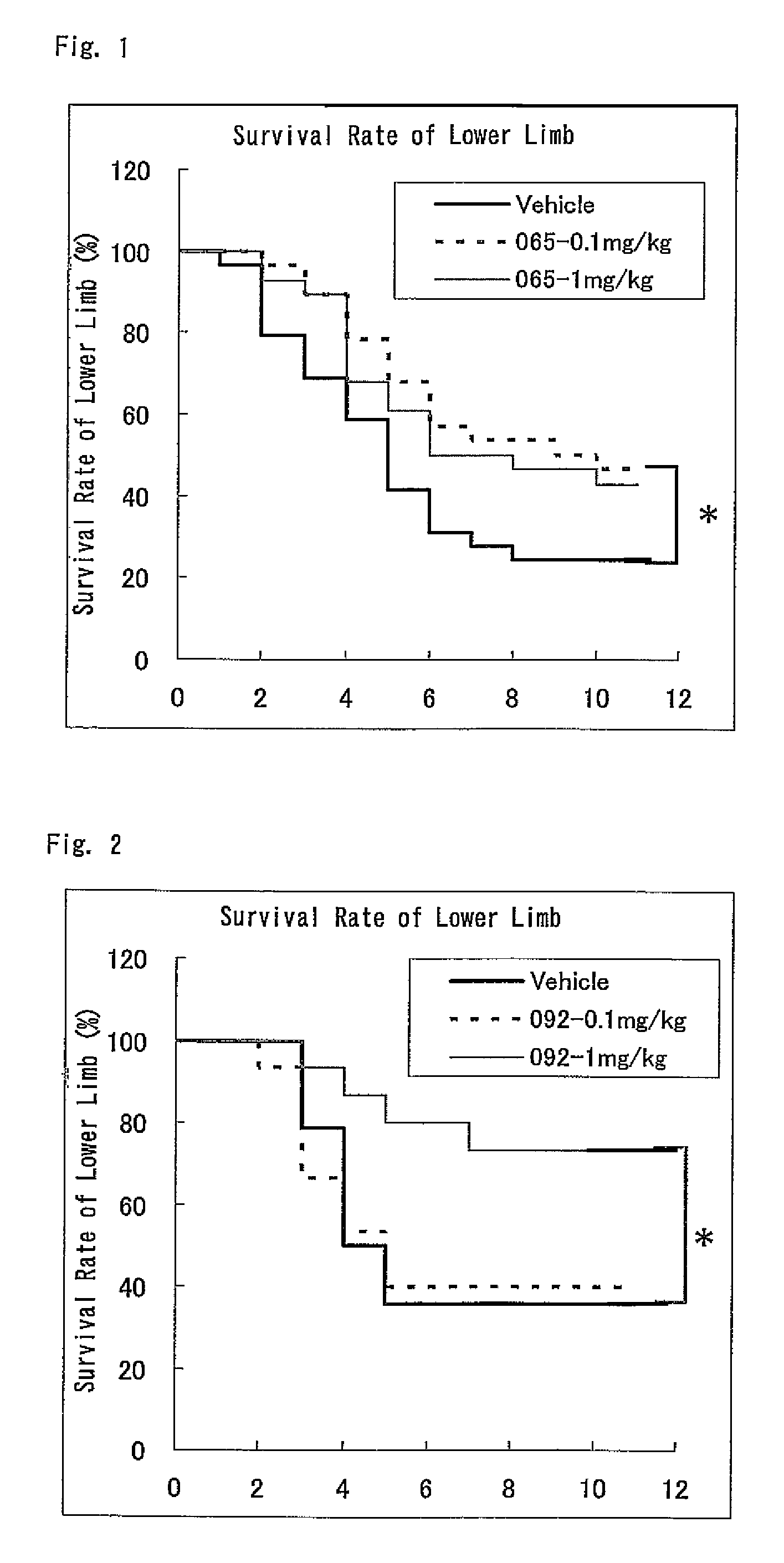
Figure 1 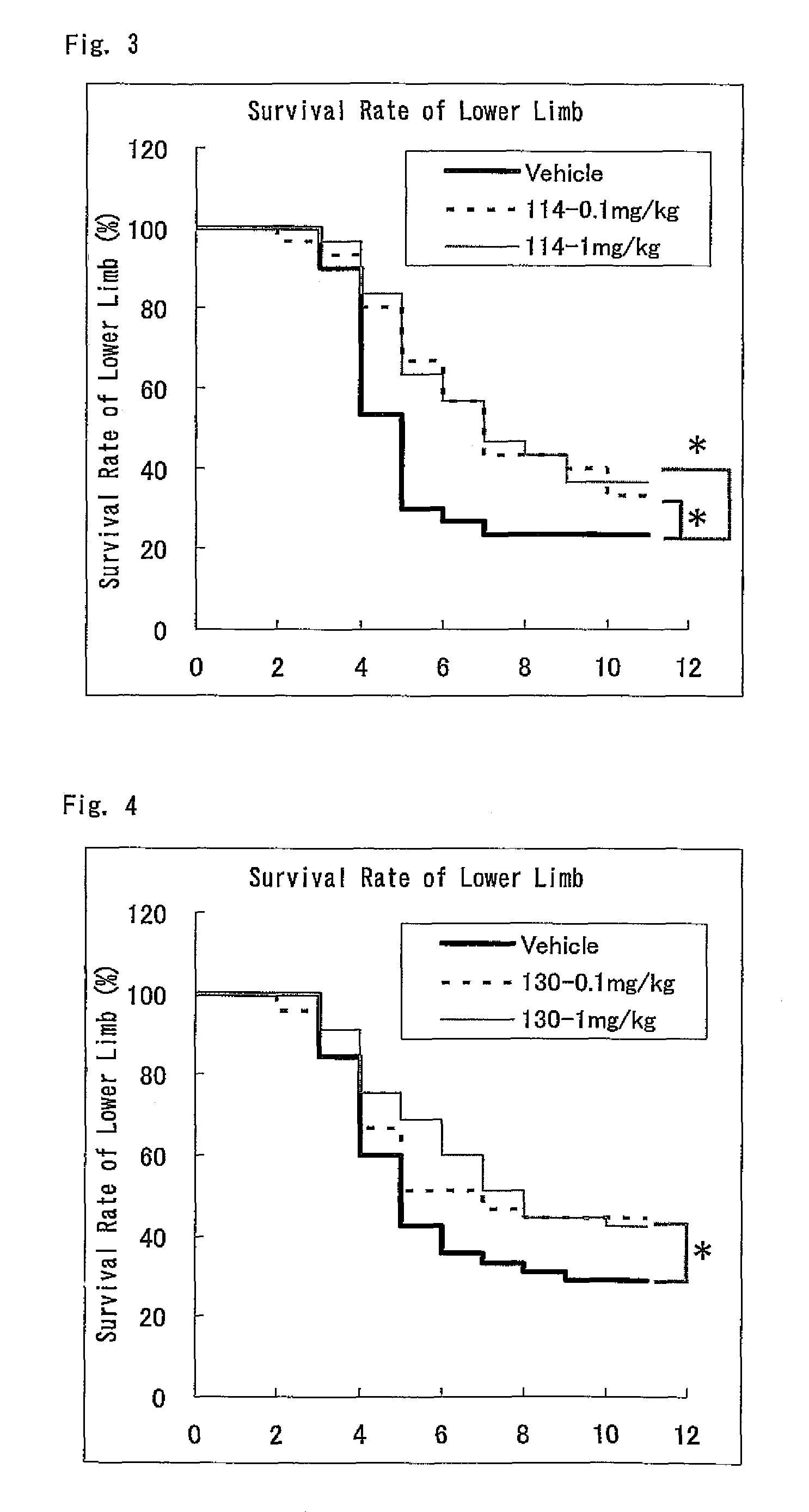
Figure 2 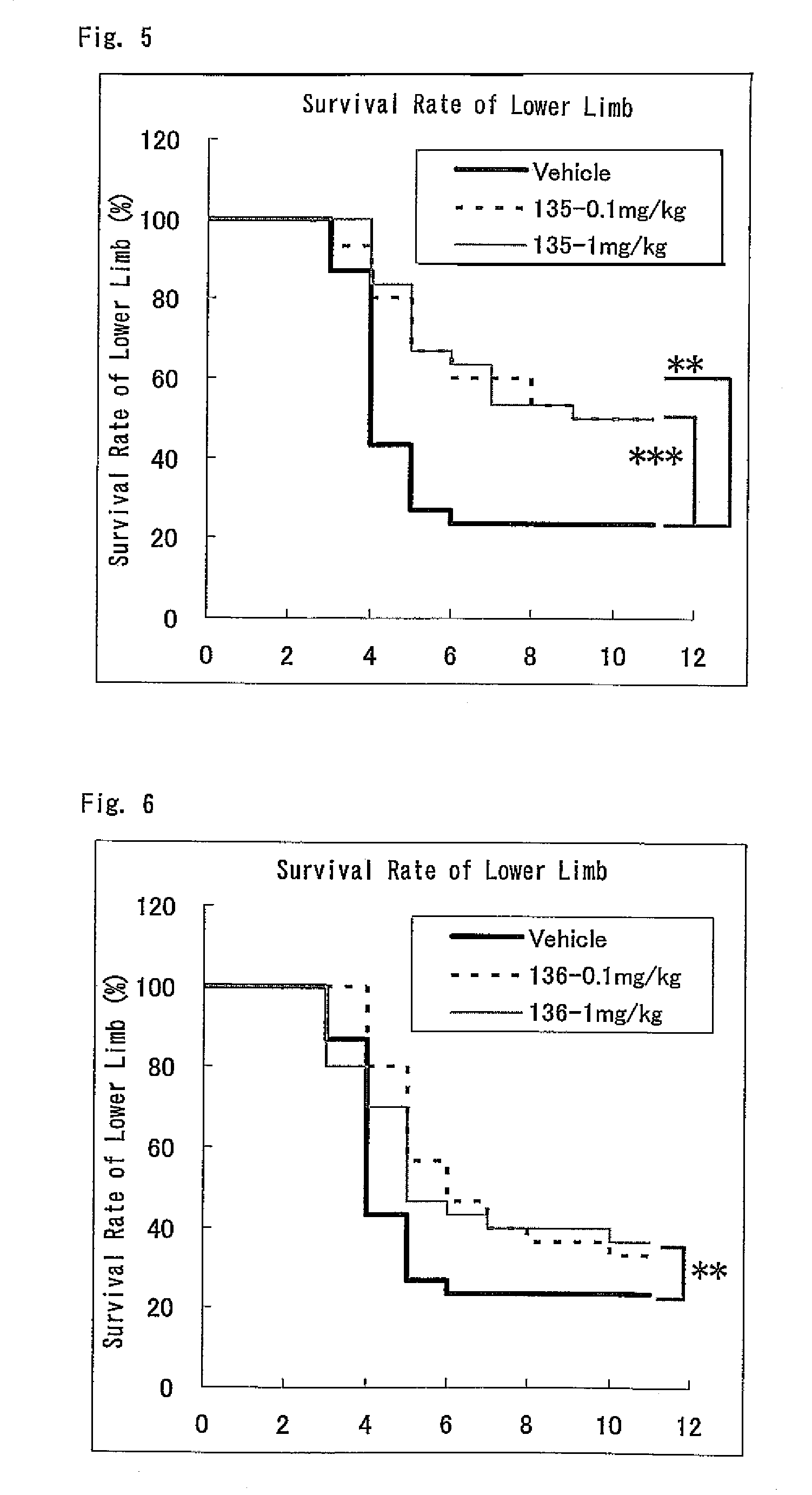
Figure 3
Abstract
Description
CROSS REFERENCE TO RELATED APPLICATIONS
[0001] This application is a National Stage of International Application No. PCT / JP2008 / 058081 filed Apr. 25, 2008, and which claims benefit of Japanese Patent Application No. 2007-118768 filed Apr. 27, 2007, both of which are herein incorporated by reference in their entirety.TECHNICAL FIELD
[0002] The present invention relates to a novel compound and a pharmaceutically acceptable salt thereof that have the ability to promote axonal outgrowth in combination with the ability to promote angiogenesis and are thus effective in reducing or treating central nerve injuries such as head injury and spinal cord injury, cerebral infarction, ischemic heart diseases such as myocardial infarction and organic angina, peripheral arterial occlusive diseases such as critical limb ischemia, or after-effects of these diseases, or other diseases against which the compounds of the present invention are considered effective.BACKGROUND ART
[0003] Japanese Patent Applicati...
Examples
example 1
Production of 4,6-dimethyl-5-nitropyrimidine-2-ol (Compound 1)
[0177]4,6-Dimethylpyrimidine-2-ol hydrochloride (20.0 g) was added to concentrated sulfuric acid (94.2 g) while cooled with ice. To this mixture, fuming nitric acid (15.7 g: d=1.52) was added while being stirred and cooled with ice at 5° C. or below. The resulting mixture was allowed to be slowly warmed to room temperature (20 to 30° C.), and subsequently kept stirred at room temperature (20 to 30° C.) over night. The reaction mixture was poured into ice (340 g) and neutralized with a 10N aqueous sodium hydroxide solution to a pH of approx. 2.5 (at 20° C. or below). The mixture was then extracted twice with isopropanol (225 mL) and the organic layer was concentrated under reduced pressure to obtain 33.1 g of a residue. To the resulting residue, 660 mL of chloroform and 66 mL of methanol were added and the mixture was refluxed for 30 min, followed by stirring at 50° C. for 30 min. Subsequently, the insoluble material was r...
example 2
Production of 2-chloro-4,6-dimethyl-5-nitropyrimidine (Compound 2)
[0179]A mixture of Compound 1 (500 mg) and phosphorus oxychloride (3.89 g) was stirred for 3 hours under reflux. After the reaction was completed, the mixture was concentrated under reduced pressure. To the resulting residue, chloroform and water were added and the mixture was cooled and neutralized with a 2N aqueous sodium hydroxide solution to a pH of 5 to 7. The mixture was then extracted with chloroform and the organic layer was concentrated under reduced pressure to obtain 411 mg of the desired product. When necessary, some of the product was purified by silica gel column chromatography (ethyl acetate:hexane=1:1) to give a purified product.
example 3
Production of 5-amino-4,6-dimethylpyrimidine-2-ol (Compound 3)
[0180]Compound 1 (1.0 g), 5% Pd—C (131 mg) were suspended in methanol (60 mL). Evacuation and replacement with hydrogen were repeated three times. Subsequently, the suspension was vigorously stirred at room temperature (20 to 30° C.) for 8 hours under hydrogen atmosphere. After the reaction was completed, the mixture was filtered through Celite and the filtered product was washed with methanol. The filtrate was evaporated under reduced pressure to give 853 mg of a crude desired product of Compound 3 as a yellow solid.