
Induction of innate immunity by vitamin d3 and its analogs
Patent Information
- Authority / Receiving Office
- US · United States
- Current Assignee / Owner
- Publication Date
- 2007-12-27
- Estimated Expiration
- Not applicable · inactive patent
Smart Images
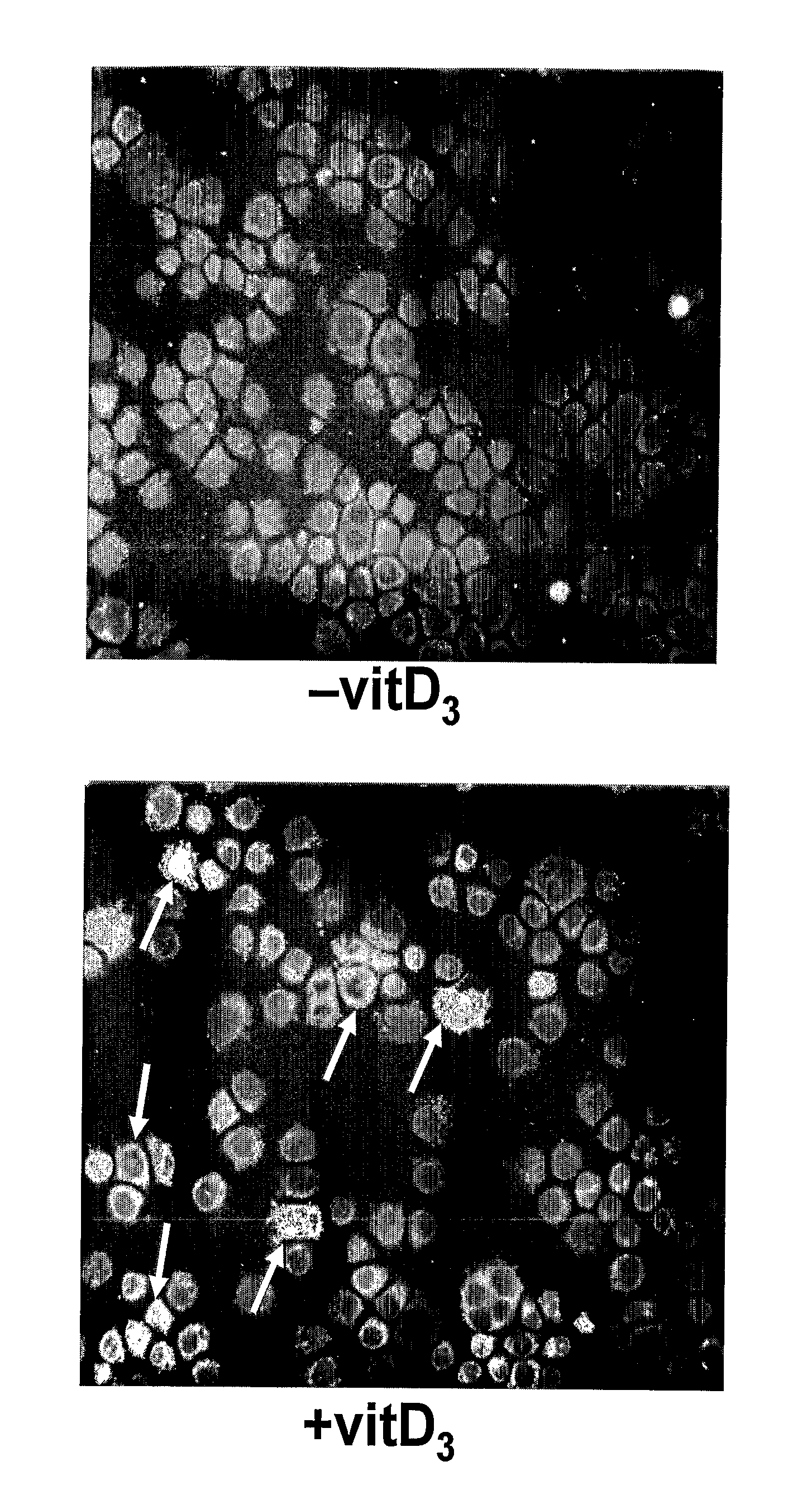
Figure 1 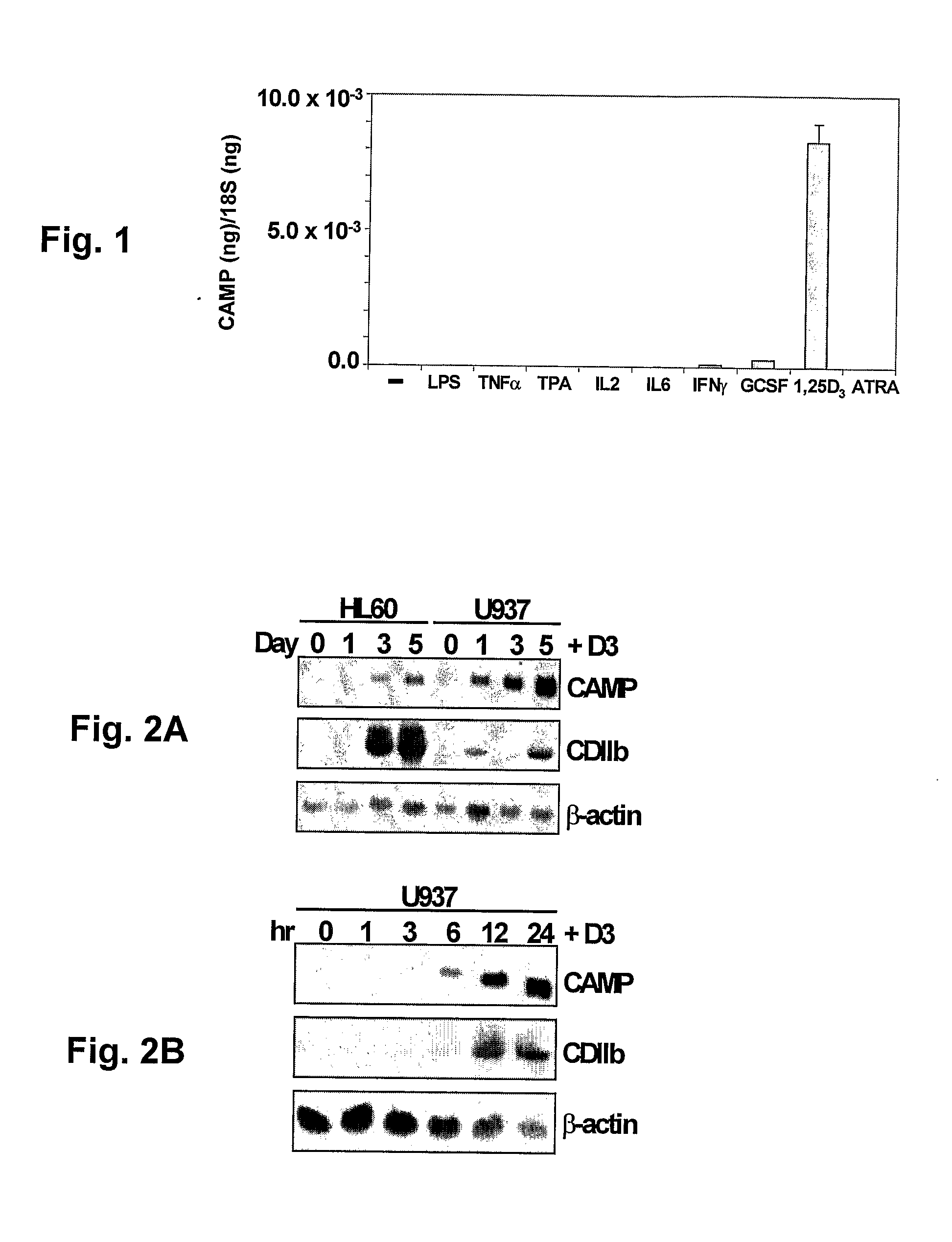
Figure 2 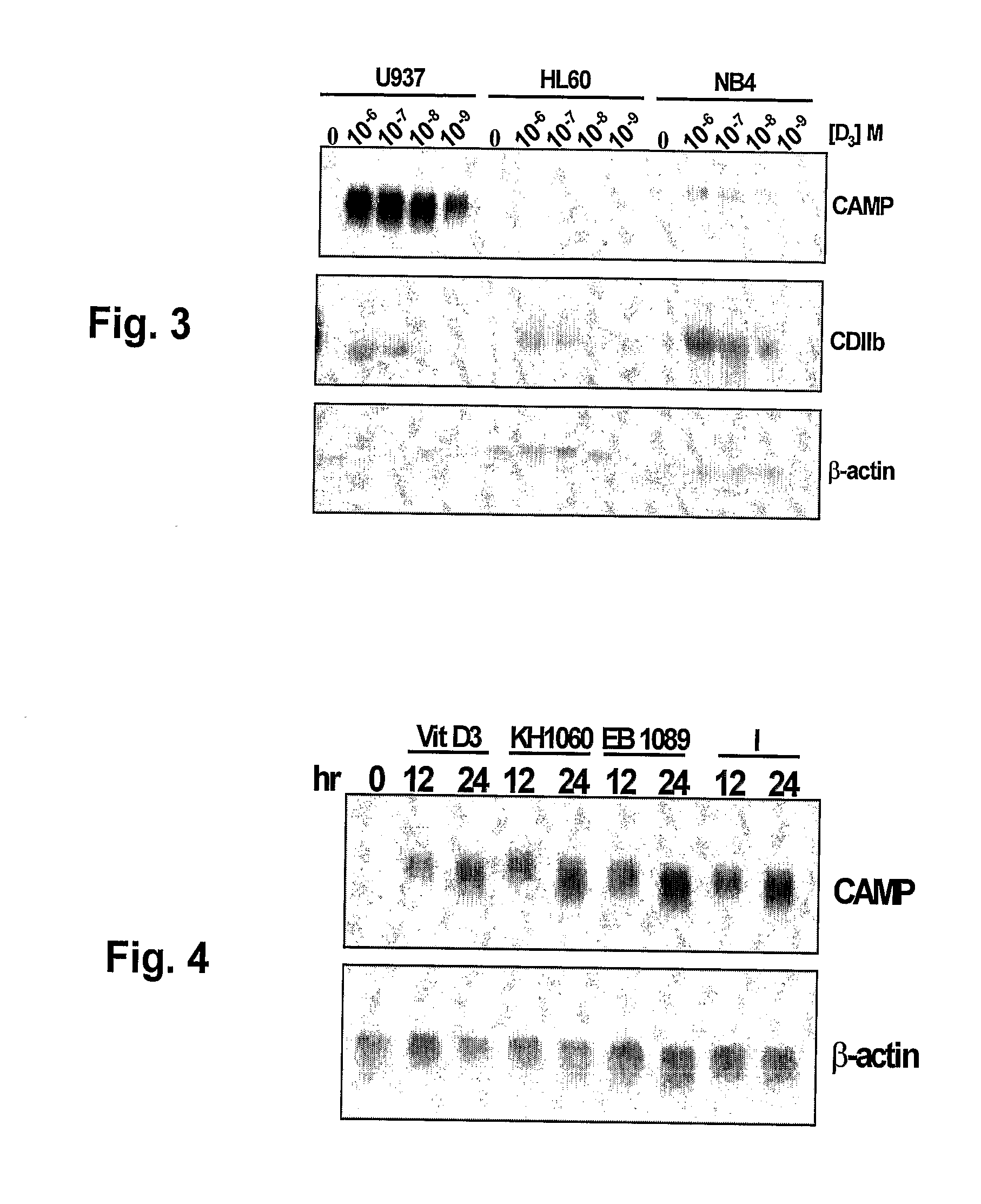
Figure 3
Abstract
Description
GOVERNMENT RIGHTS
[0001] The U.S. Government has certain rights in this invention pursuant to Grant No. CA26038-20 awarded by the NIH.FIELD OF THE INVENTION
[0002] The invention relates to the field of innate immunity; more specifically, to the use of cationic antimicrobial peptides to affect innate immunity. BACKGROUND
[0003] A major concern for public health in both developed and developing countries is the alarming increase of antibiotic resistance in bacteria (Hancock, R. E. et al., “Clinical development of cationic antimicrobial peptides: from natural to novel antibiotics,”Curr Drug Targets Infect Disord, Vol. 2, pp. 79-83 (2002)). Drug resistant bacteria such as Pseudomonas aeruginosa and Staphylococcus aureus pose serious problems for immunocompromised persons and are major sources of life-threatening nosocomial infections. In 2000, nearly 660,000 cases of sepsis developed in the United States. This resulted in an in-hospital mortality rate of nearly 18% (Martin, G. S. et al....
Examples
example 1
Tissue Culture and Reporter Assays
[0063] The human myeloid leukemia cell lines U937, NB4, HL60 and ML1 were cultured in RPMI1640 (obtained from Invitrogen Corp.; Carlsbad, Calif.) containing 10% fetal calf serum (FCS) (obtained from Omega Scientific, Inc.; Tarzana, Calif.). The human bone marrow cells isolated either from two normal or one acute myeloid leukemia patient were cultured in RPMI1640 containing 10% FCS for short-term experiments. Bone marrow (BM)-derived macrophages (Mφ) were obtained by culturing normal human bone marrow (NHBM) cells in RPMI1640 containing 10% FCS, 200 ng / ml GM-CSF and 5% WeHi-3B conditioned medium (source of IL-3) for 14 days. The bone marrow samples were obtained from patients after informed consent was given. The immortalized keratinocyte cell line, HaCat (a kind gift from Dr. Norbert Fusenig, Heidelberg, Germany), and the colon cancer cell line, HT29, were cultured in DMEM containing 10% FCS. All media were supplemented with antibiotics (100 units ...
example 2
Construction of Recombinant Plasmids
[0067] Primers (SEQ ID Nos. 2 and 3) (Table 1) were used to amplify the human CAMP promoter (nucleotides −693 to +14) from human genomic DNA (Larrick, J. W. et al., “Structural, functional analysis and localization of the human CAP18 gene,”FEBS Lett, Vol. 398, pp.74-80 (1996)).
TABLE 1SEQ ID NO.:2SEQ ID NO.:35′-CCGACGCGTCATACTGAGTC5′-CCGCTCGAGGGTCCCCATGTCTGTCACTCTGTTACC-3′CCTC-3′
[0068] This fragment was subcloned into the firefly luciferase reporter plasmid pXP2 (Nordeen, S. K., “Luciferase reporter gene vectors for analysis of promoters and enhancers,”Biotechniques, Vol. 6, pp. 454-458 (1998)) and called pXP2-CAMP-Luc. Subsequently deletion mutants pXP2-CAMP(ΔSmaI)-Luc and pXP2-CAMP(ΔHindIII)-Luc were generated by restriction enzyme digestion, fill-in and religation of the purified linear plasmid. Constructs were verified by nucleotide sequencing.
example 3
Analysis of RNA and Protein Expression
[0069] Total RNA was prepared using Trizol Reagent (obtained from Invitrogen), electrophoresed through a formaldehyde-containing, 1% agarose gel and transferred to a positively charged nylon membrane (Hybond N+) for Northern analysis (obtained from Amersham Pharmacia Biotech; Piscataway, N.J.). The blots were sequentially probed with 32P-labeled DNA probes (Strip-EZ™; obtained from Ambion, Inc.; Austin, Tex.) specific for the CAMP, CDIIb and β-actin mRNAs.
[0070] For quantitative real-time PCR (QRT-PCR), total RNA was prepared, treated with DnaseI (obtained from Invitrogen) and cDNAs were synthesized by reverse transcription using Superscript II reverse transcriptase as described by the manufacturer (obtained from Invitrogen). The cDNAs were then analyzed by QRT-PCR using a fluorescent probe (obtained from Applied Biosystems; Foster City, Calif.) against either CAMP (5′-6fam-[SEQ ID NO.: 4]-tamra-3′) (Table 2) or 18S (Tsukasaki, K. et al., “Ide...