
Goat mTOR gene cDNA encoding zone 3í» terminal nucleotide sequence
A technology of nucleotide sequence and coding region, applied in the field of cDNA, can solve the problems of no goat mTOR gene cDNA nucleotide sequence, no mTOR research report, etc.
- Summary
- Abstract
- Description
- Claims
- Application Information
AI Technical Summary
Problems solved by technology
Method used
Image

Examples
Embodiment 1
[0029] Embodiment 1: Cloning of the cDNA coding region 3' end fragment of goat mTOR gene
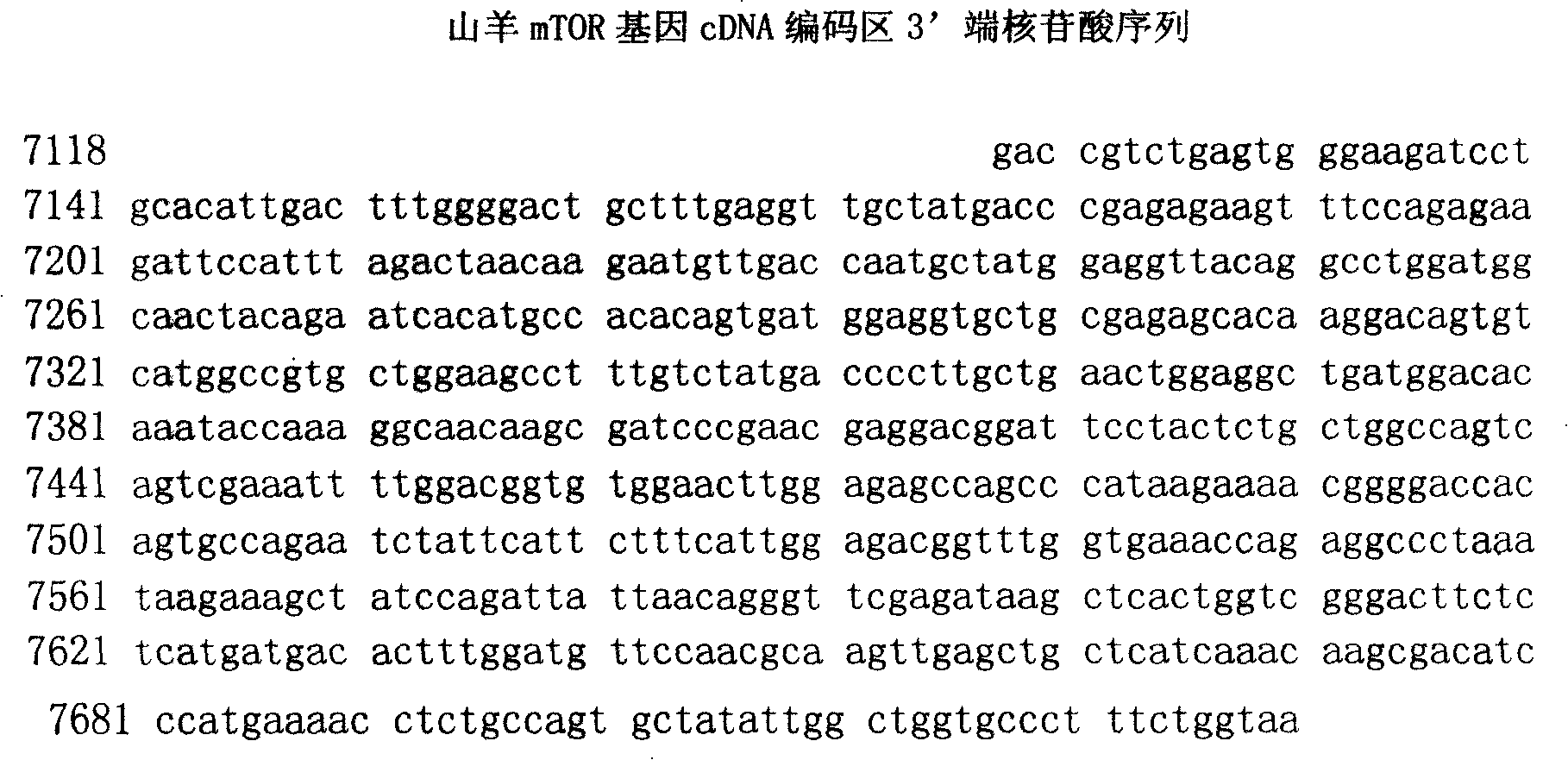
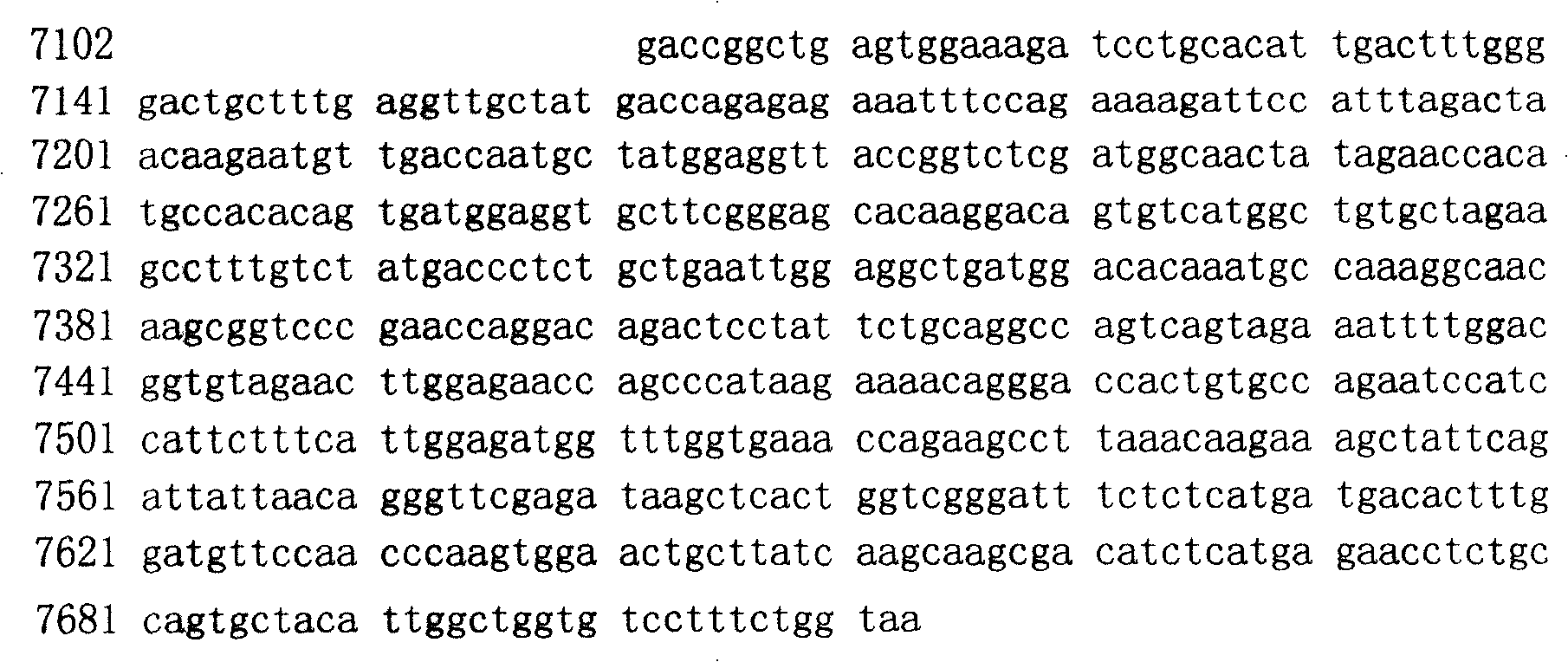
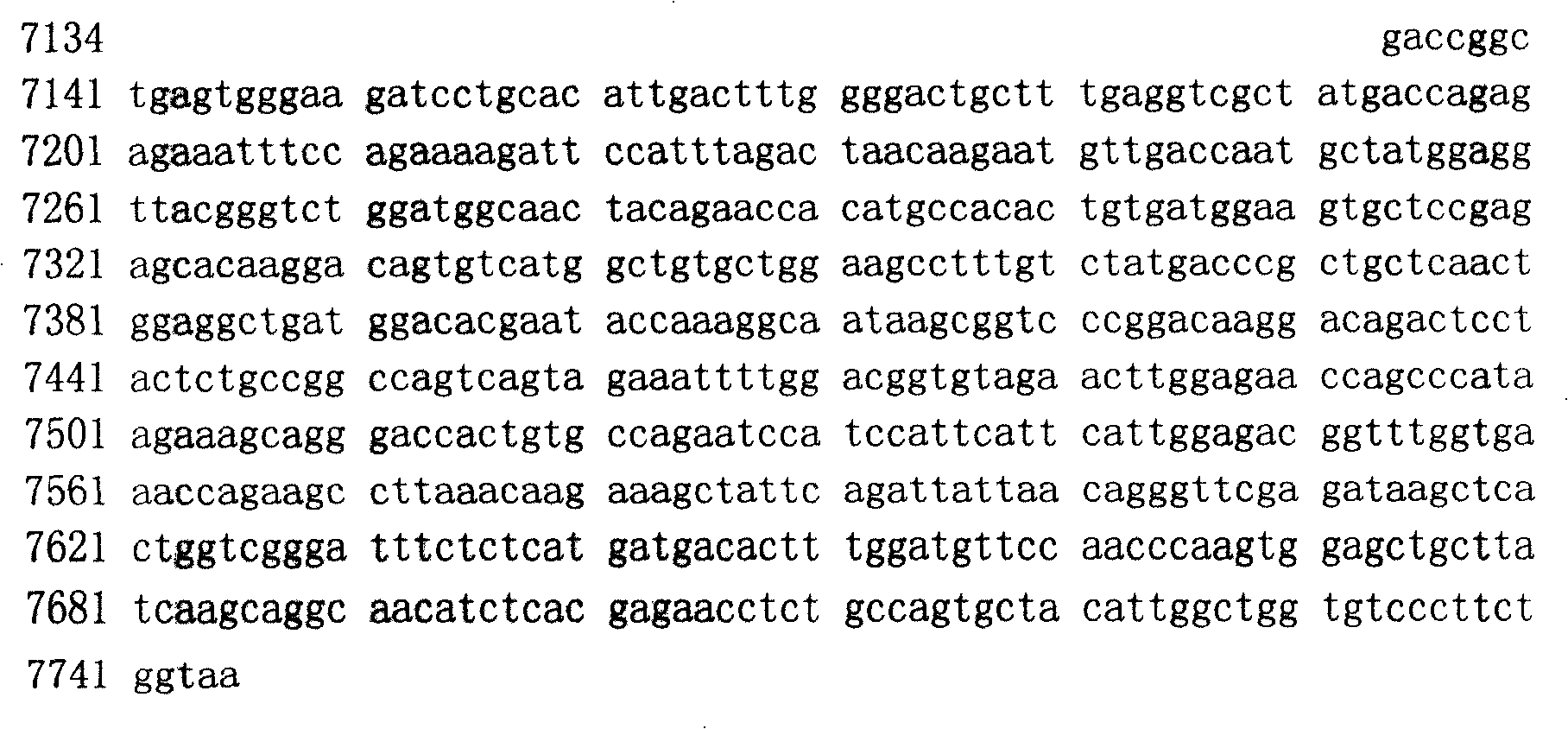
[0030] In order to clone the cDNA containing the 3' end coding region of mTOR from goat testicular tissue cells, according to the nucleotide sequences (NM004958, NM019906, NM020009) disclosed in Figure 1 (A, B, C), first prepare the cDNA that allows amplification of 612bp PCR degenerate primers, that is, the upstream primer 5'-GAC CGT / G CTG AGT GGG / A AAG-3' and the downstream primer 5'-TTA CCA GAA A / GGGG / ACA CCA G-3'. Then add a BamH I restriction site at the 5' end of the upstream primer, and add an Xba I restriction site at the 5' end of the downstream primer, that is, the upstream primer P15'GC GGATCC GAC CGT / G CTG AGT GGG / AAAG 3' , downstream primer P25'GC TCTAGATTA CCA GAAA / GGG G / ACA CCA G 3'.
[0031] In order to clone the cDNA of mTOR by RT-PCR, goat total RNA was isolated from goat testis tissue, and the total RNA of goat testis tissue was extracted by using TaKaRa Total RNA Ext...
Embodiment 2
[0036] Embodiment 2: the nucleotide sequence of the cDNA of goat mTOR gene
[0037] Fig. 2 shows the nucleotide sequence (SEQ ID NO: 1) of the cDNA clone obtained in Example 1, and the amino acid sequence (SEQ ID NO: 2) deduced therefrom. In Fig. 2, the sequence shown is the nucleotide sequence of mTOR, which includes a 612 bp nucleotide sequence at the 3' end of the cDNA coding region, encoding 203 amino acids forming a mature protein with an inferred molecular weight of 23.1 KDa.
[0038] Figure 6 (A, B, C) shows the comparison of the nucleotide sequence of goat mTOR gene cDNA with the nucleotide sequence of human (NM004958), rat (NM019906) and mouse (NM020009) mTOR cDNA. Show that: 1) the nucleotide sequence of goat mTOR gene cDNA has 93% homology with the human mTOR gene cDNA nucleotide sequence; it has 90% homology with the rat mTOR gene cDNA nucleotide sequence; It has 89% homology with mouse mTOR nucleotide sequence. The amino acid sequence deduced from this nucleotid...
PUM
 Login to View More
 Abstract
Description
Claims
Application Information
 Login to View More