
Electric control light modulation automobile sun-shading board
A car sun visor and dimming technology, applied in optics, vehicle parts, nonlinear optics, etc., to achieve the effect of enhancing comfort, small working current, and improving aesthetics
- Summary
- Abstract
- Description
- Claims
- Application Information
AI Technical Summary
Problems solved by technology
Method used
Image

Examples
Embodiment Construction
[0025] The present invention will be described in further detail below in conjunction with the accompanying drawings.
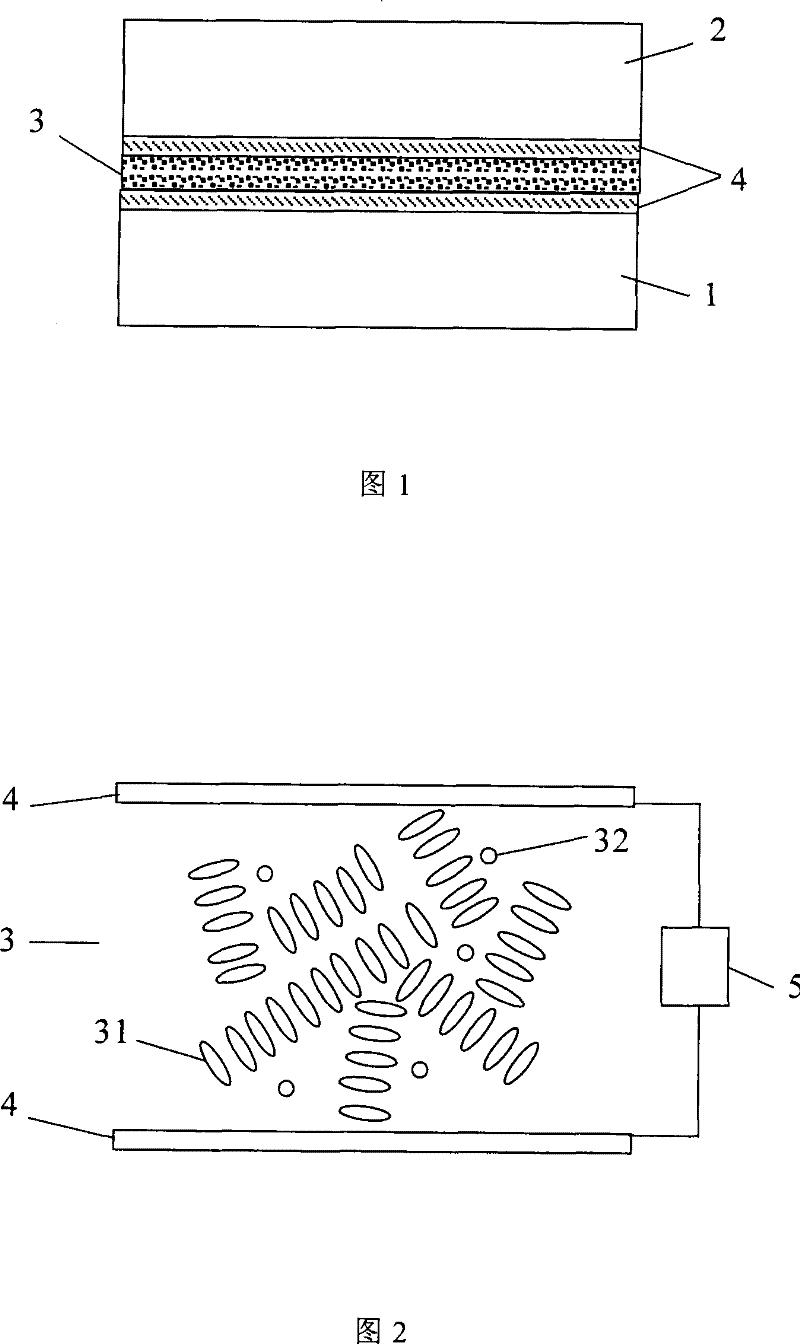
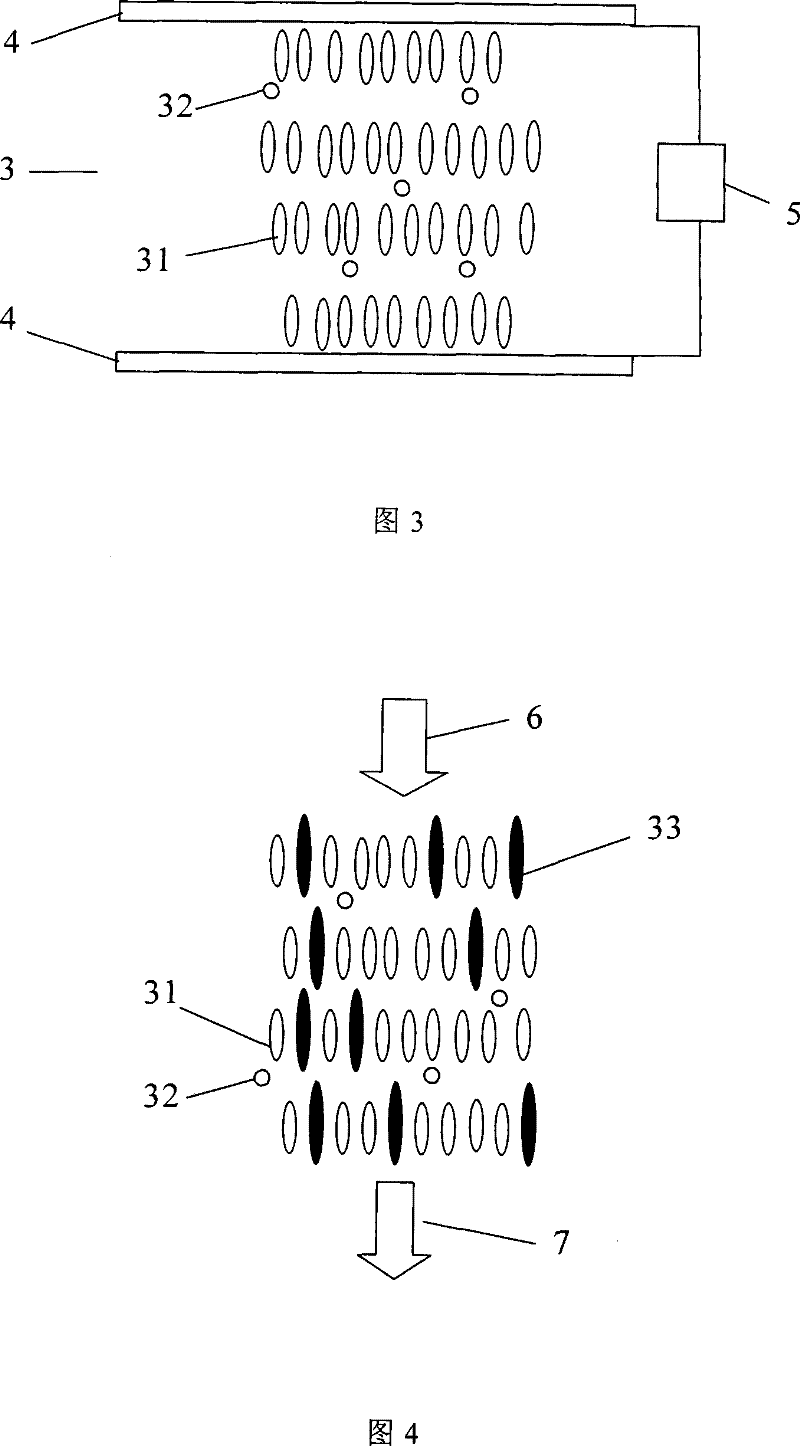
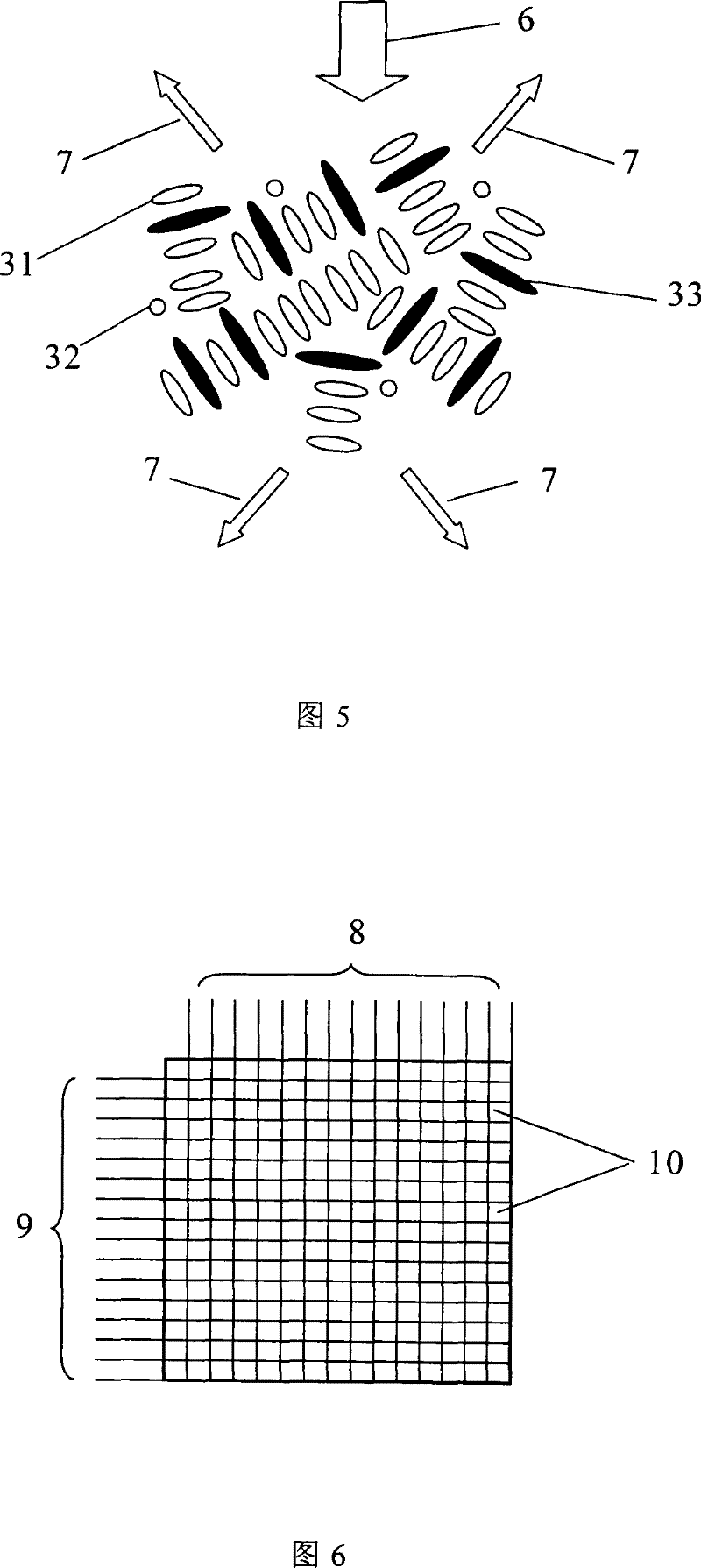
[0026] Such as Figure 1 to Figure 3 As shown, the electronically controlled dimming automotive sun visor of the present invention includes a main body plate, which includes a glass body 1 and a base layer 2, and the base layer 2 is glass or plastic, such as a transparent plastic film or a transparent hard plastic plate. A mixed layer 3 is arranged between the glass body 1 and the matrix layer 2, and the mixed layer 3 is formed by mixing smectic liquid crystals and additives. Generally, the thickness of the mixed layer 3 is controlled at 2 microns to 30 microns. In the mixed layer 3, the smectic liquid crystals account for 90% to 99.999% of the total weight of the mixture, and the additives account for 0.001% to 10% of the total weight of the mixture. Usually, at room temperature ± 50°C, the molecular clusters of smectic liquid crystals are arranged in a lay...
PUM
| Property | Measurement | Unit |
|---|---|---|
| thickness | aaaaa | aaaaa |
| transmittivity | aaaaa | aaaaa |
Abstract
Description
Claims
Application Information
 Login to View More