
Uplink MIMO-LDPC modulation and demodulation system
A demodulation system, LDPC code technology, applied in diversity/multi-antenna systems, error correction/detection using block codes, space transmit diversity, etc., can solve the problems of non-convergence, reduced data transmission rate, occupancy, etc.
- Summary
- Abstract
- Description
- Claims
- Application Information
AI Technical Summary
Problems solved by technology
Method used
Image

Examples
Embodiment Construction
[0114] Specific embodiments of the present invention will be described in detail below in conjunction with the accompanying drawings.
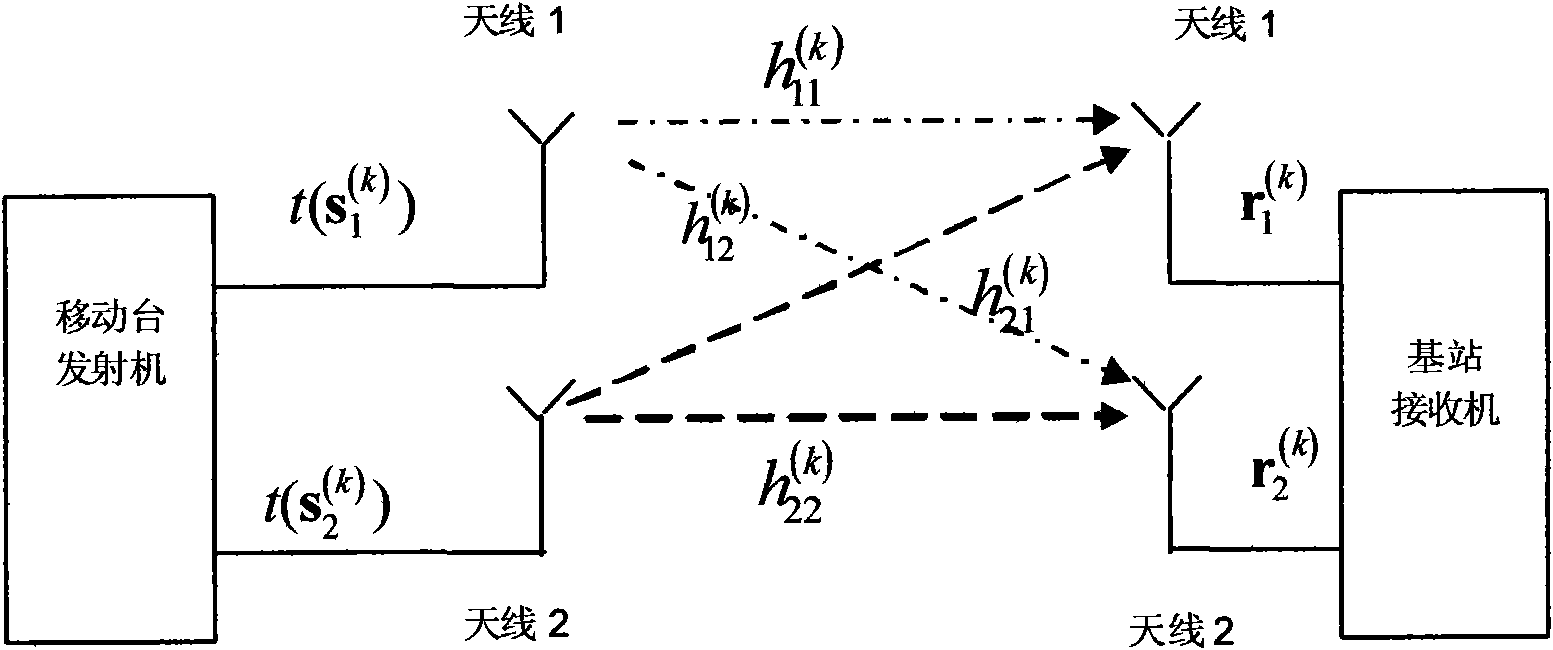
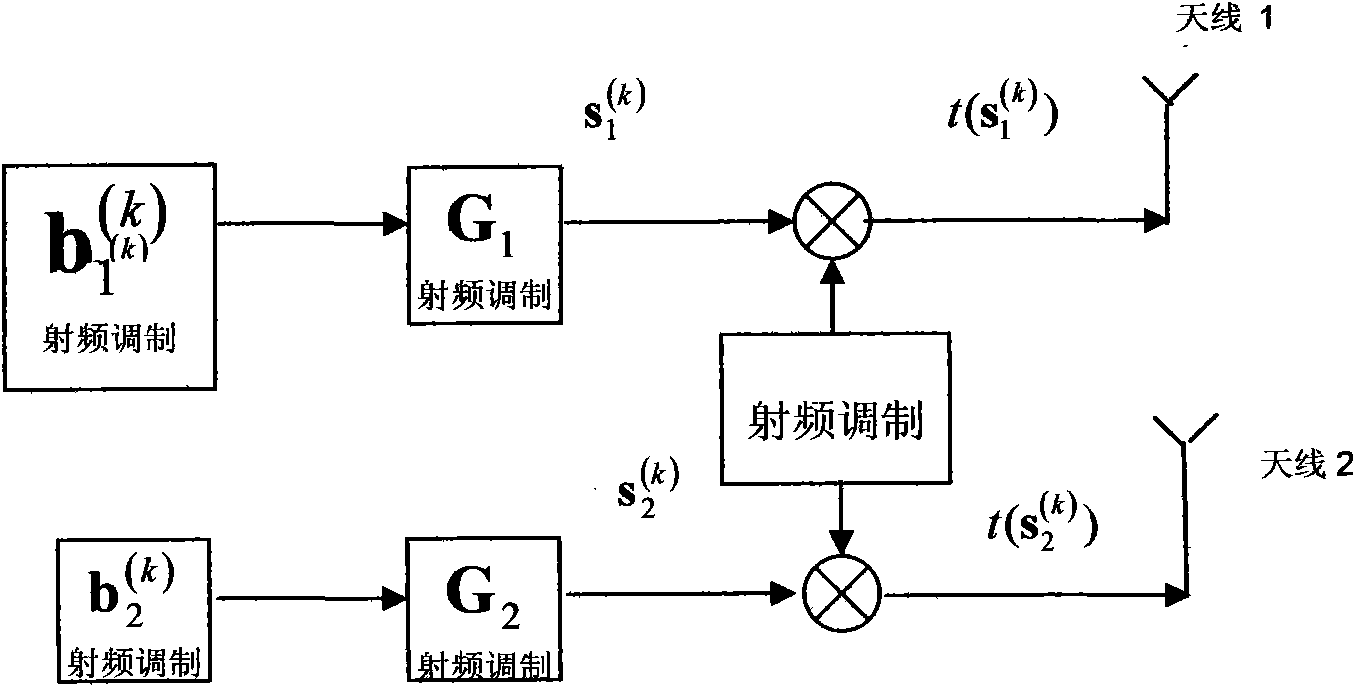
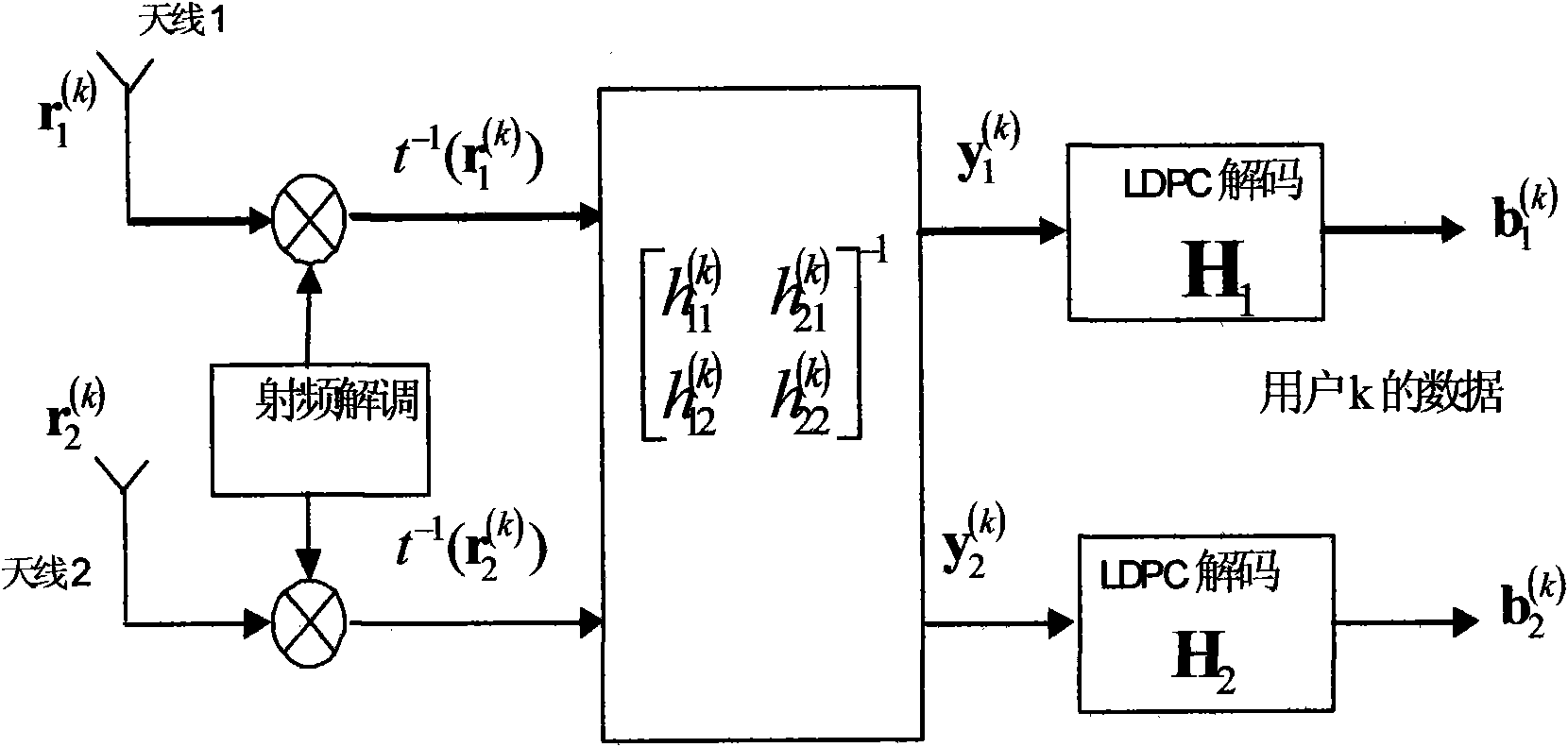
[0115] figure 1 It is a block diagram of MIMO channel and uplink MIMO-LDPC modulation and demodulation system. Such as figure 1 As shown, the mobile station transmitter transmits the radio frequency modulation signal t(s 1 (k) ) and t(s 2 (k) ), where s 1 (k) and s 2 (k) For encoding signals with LDPC codes, see figure 2 ,
[0116] s 1 ( k ) = b 1 ( k ) G 1 = p 1 ( k ) ...
PUM
 Login to View More
 Abstract
Description
Claims
Application Information
 Login to View More