
Method for fast identifying harmful algae
A red tide algae, rapid technology, applied in the direction of biochemical equipment and methods, microbial determination/inspection, etc., can solve the problems of loss of offshore aquaculture, hindered respiration, etc., and achieve the effect of rapid and simple preliminary identification
- Summary
- Abstract
- Description
- Claims
- Application Information
AI Technical Summary
Problems solved by technology
Method used
Image

Examples
Embodiment Construction
[0072] The invention provides a method for rapid identification of red tide algae species, which comprises the following steps:
[0073] a. Preparation of experimental algal species f / 2 and its derivative medium
[0074] b. Primer design and verification
[0075] c. Obtaining 18S rDNA fragments of experimental algae species
[0076] d. PCR optimization and amplification
[0077] e. Simulated enzyme digestion and actual enzyme digestion control experiment
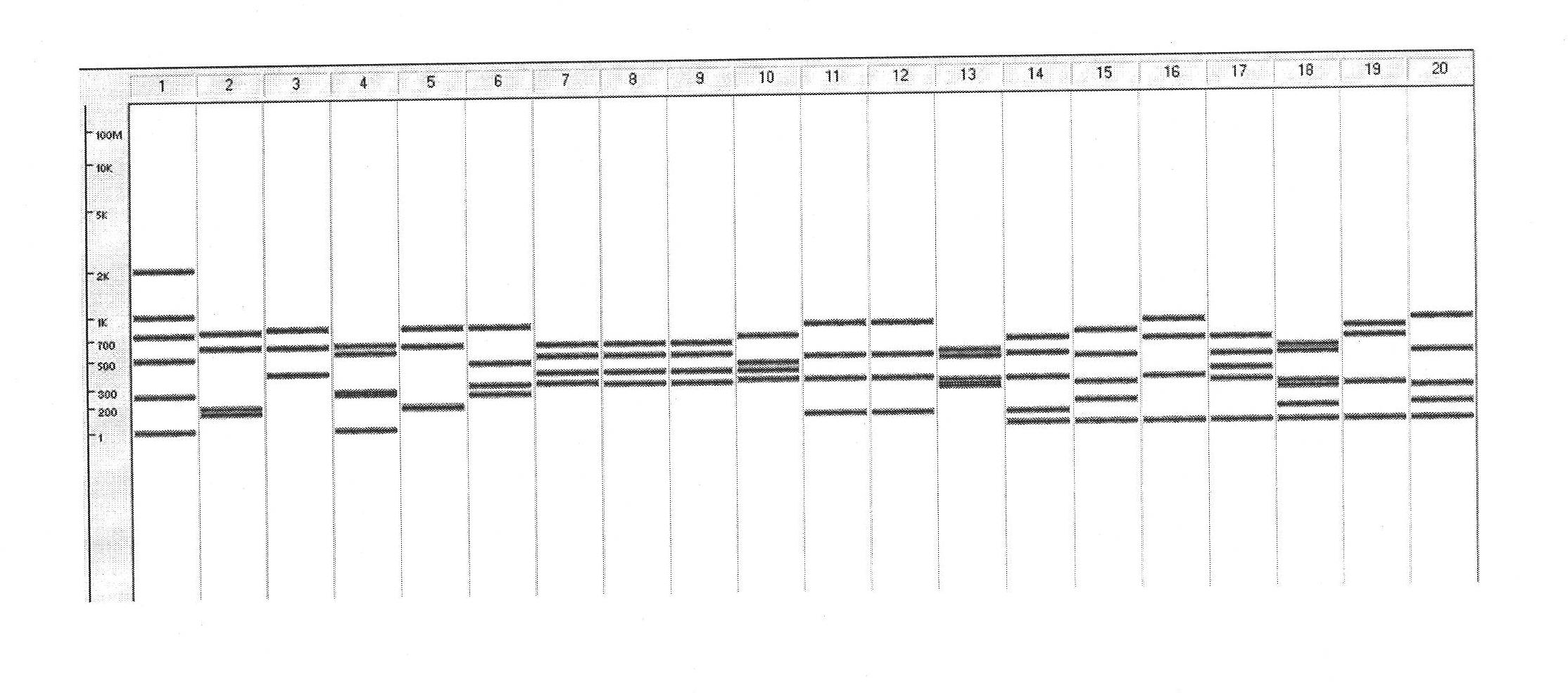
[0078] f. RFLP distinguishes and identifies red tide algae species.
[0079] Described step a is:
[0080] f / 2 Trace element solution: Add ingredients to 950mL double distilled water: FeCl3·6H2O, Na2EDTA·2H2O, CuSO4·5H2O, Na2MoO4·2H2O, ZnSO4·7H2O, CoCl2·6H2O, MnCl2·4H2O, set the volume to 1L, extinguish at high temperature bacteria. ;
[0081] f / 2 vitamin solution: add 200mg vit.B1 to 950mL distilled water, add 1ml vit.H and vit.B12 storage solution, dilute to 1L, filter and sterilize, and place at 4°C;
[0082] f / 2 ...
PUM
 Login to View More
 Abstract
Description
Claims
Application Information
 Login to View More