Supercharge Your Innovation With Domain-Expert AI Agents!

Method for performing catalytic synthesis of maltose stearate by using yeast display lipase

A technology of stearate and lipase, applied in the field of bioengineering, can solve the problems of limited commercial application, high production cost, lengthy protection and deprotection steps, etc., and achieves the effects of improving operational stability and suppressing side reactions.

Inactive Publication Date: 2013-07-31
ZHEJIANG UNIV
View PDF1 Cites 0 Cited by
  • Summary
  • Abstract
  • Description
  • Claims
  • Application Information

AI Technical Summary

Problems solved by technology

[0003] The currently commercially available sugar ester products are basically chemically synthesized, and the products are complex mixtures. Complicated separation work is required to obtain high-purity products
Moreover, the site of the esterification reaction is difficult to control, and it is very difficult to obtain a single product with a specified structure, often requiring lengthy protection and deprotection steps
Lipase is currently the most widely used enzyme in the synthesis of sugar esters, but its commercial application is greatly limited by the high production cost and complicated and time-consuming immobilization process.

Method used

the structure of the environmentally friendly knitted fabric provided by the present invention; figure 2 Flow chart of the yarn wrapping machine for environmentally friendly knitted fabrics and storage devices; image 3 Is the parameter map of the yarn covering machine
View more

Image

Smart Image Click on the blue labels to locate them in the text.
Viewing Examples
Smart Image
  • Method for performing catalytic synthesis of maltose stearate by using yeast display lipase
  • Method for performing catalytic synthesis of maltose stearate by using yeast display lipase

Examples

Experimental program
Comparison scheme
Effect test

Embodiment 1

[0019] Example 1 Preparation of Yeast Displaying Lipase

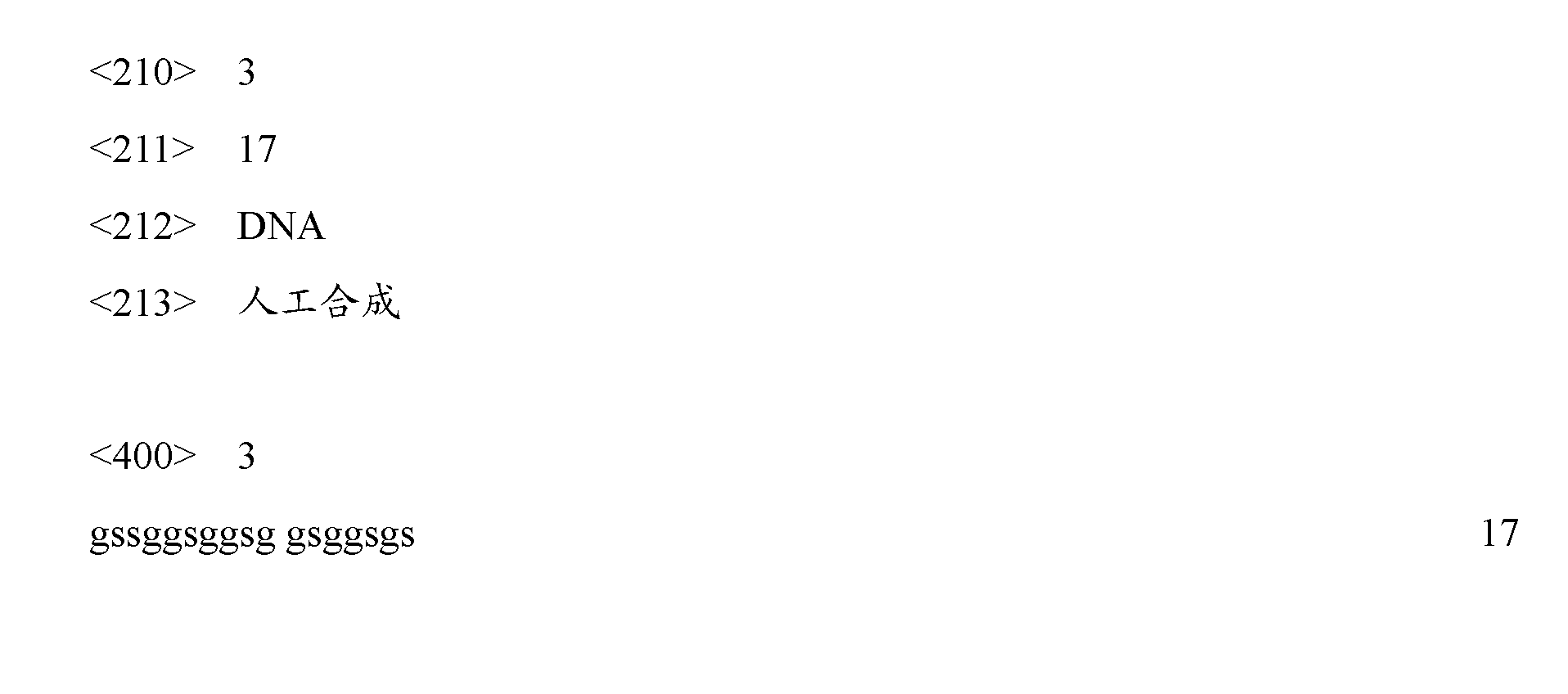
[0020] Synthesize the lipase gene (Genbank number: AF229435) of Rhizopus oryzae and the cell wall α-lectin gene of Pichia pastoris GS115 (Genbank number: M28164) by artificial synthesis, and add Connect the peptide sequence GSSGGSGGSGGSGGSGS(linker), and get the nucleotide sequence pro-ROL-linker-α-agglutinin after connection, and add EcoR I and Not I restriction sites at both ends of the sequence, where pro-ROL is the lipase gene , α-agglutinin is the cell wall α lectin gene.

[0021] Using the above artificially synthesized sequence as a template, PCR amplification was performed using the following primer pair,

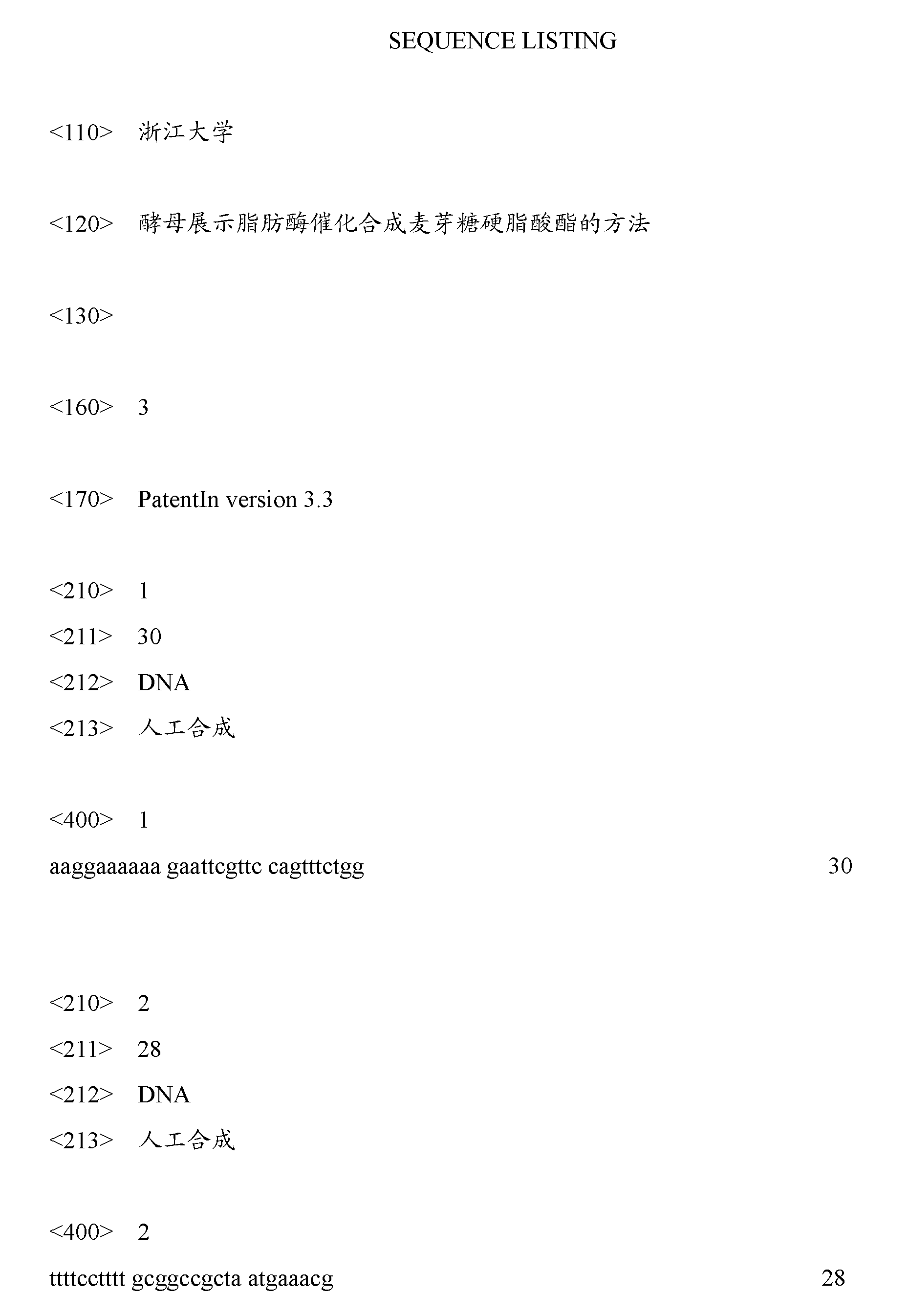
[0022] Upstream primer: 5'-AAGGAAAAAAAGAATTCGTTCCAGTTTCTGG-3';

[0023] Downstream primer: 5'-TTTTCCTTTTGCGGCCGCTAATGAAACG-3'

[0024] The PCR reaction system is: 1 μl of template DNA, 0.5 μl of high-fidelity DNA polymerase, 0.4 μl of dNTP (50 mM), 0.5 μl of upstream and downstream primers, 5 μl of 10×PCR ...

Embodiment 2

[0028] Example 2 Yeast shows lipase catalyzed synthesis of maltose stearate

example 1

[0029] Example 1 Take 0.2g of maltose and 0.5g of stearic acid, put them into a stoppered Erlenmeyer flask containing 10mL of tert-butanol, mix and preheat for 10min, then add 0.01g of yeast display lipase, place in a water bath shaker to start the reaction, the speed is 200 rpm, keep the reaction temperature at 50°C, add 0.5g molecular sieve (pore size less than 2nm) after 12 hours of reaction, continue the reaction for 12 hours, remove the yeast-displayed lipase and molecular sieve by centrifugal precipitation, take the supernatant and carry out rotary evaporation to remove the organic solvent , washed with water for 3 times, added n-hexane to crystallize at 4°C to obtain maltose stearate product, dried and pulverized.

the structure of the environmentally friendly knitted fabric provided by the present invention; figure 2 Flow chart of the yarn wrapping machine for environmentally friendly knitted fabrics and storage devices; image 3 Is the parameter map of the yarn covering machine
Login to View More

PUM

No PUM Login to View More

Abstract

The invention discloses a method for performing catalytic synthesis of maltose stearate by using yeast display lipase. The method comprises the following steps: dissolving maltose and stearic acid in organic solvent, adding yeast display lipase, reacting at 50-60 DEG C for 10-14 hours, separating, and purifying to prepare maltose stearate. The preparation method of yeast display lipase comprises the following steps: delivering the linearized recombinant plasmid in Pichia pastoris GS115, inoculating the obtained transformants in BMMY culture medium, inducing and culturing for 72-144 hours, centrifuging to collect bacteria, washing the bacteria, and performing bioimprinting and freeze drying to prepare yeast display lipase. In the method, lipase is displayed outside cells and the enzyme preparation is utilized to perform the catalytic synthesis of maltose stearate, thus the conversion efficiency can be increased, the reaction time can be shortened and the production cost can be reduced.

Description

technical field [0001] The invention relates to the technical field of bioengineering, in particular to a method for synthesizing maltose stearate catalyzed by yeast display lipase. Background technique [0002] Fatty acid sugar ester is a kind of non-toxic and biodegradable non-ionic surfactant synthesized from renewable resources. It has good emulsification, thickening and swelling properties. It is used in food, cosmetics, pharmaceuticals and washing products , is a type of emulsifier that has developed rapidly in the past 20 years, mainly based on sucrose esters, and maltose stearate is a new type of sugar ester emulsifier. Although there are not many research reports on maltose esters, it has broad application potential in food, cosmetics and other fields. [0003] The currently commercially available sugar ester products are basically chemically synthesized, and the products are complex mixtures. Complicated separation work is required to obtain high-purity products. ...

Claims

the structure of the environmentally friendly knitted fabric provided by the present invention; figure 2 Flow chart of the yarn wrapping machine for environmentally friendly knitted fabrics and storage devices; image 3 Is the parameter map of the yarn covering machine
Login to View More

Application Information

Patent Timeline
no application Login to View More
Patent Type & Authority Patents(China)
IPC IPC(8): C12P19/12C12N15/63C12N1/19C12N9/20C12R1/84
Inventor 阮晖周陈伟迪拉热木徐娟王睿之林吉恒何国庆
Owner ZHEJIANG UNIV
Features
  • R&D
  • Intellectual Property
  • Life Sciences
  • Materials
  • Tech Scout
Why Patsnap Eureka
  • Unparalleled Data Quality
  • Higher Quality Content
  • 60% Fewer Hallucinations
Social media
Patsnap Eureka Blog
Learn More