
Real-name system ticketing system based on radio frequency identification (RFID) technique
An RFID tag, real-name system technology, applied in ticketing equipment, instruments, induction record carriers, etc., can solve problems such as difficulty in refilling tickets, passenger inconvenience, and prolonged real-name ticket purchase time, to improve traffic efficiency and prevent privacy leakage.
- Summary
- Abstract
- Description
- Claims
- Application Information
AI Technical Summary
Problems solved by technology
Method used
Image

Examples
Embodiment Construction
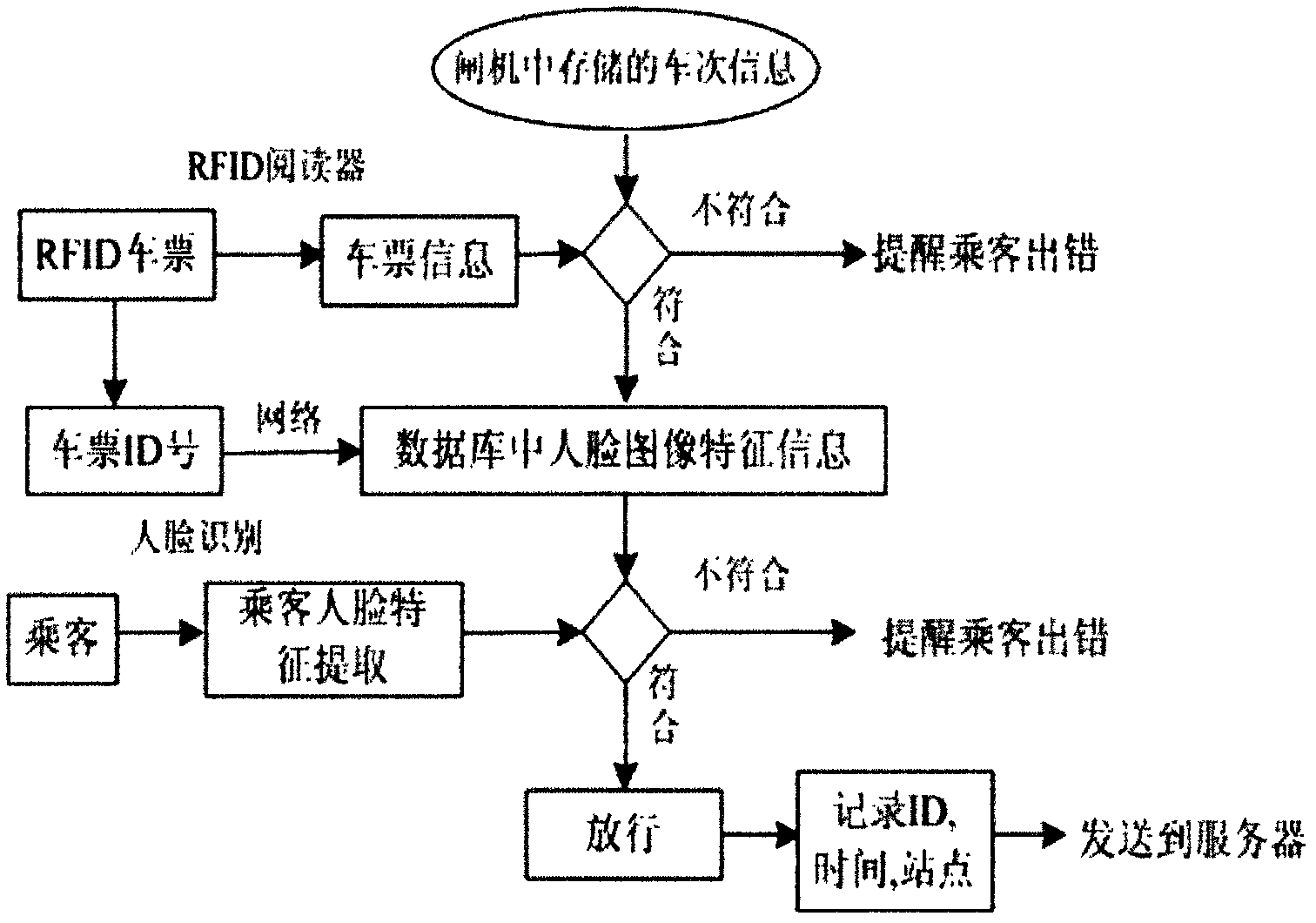
[0015] The real-name ticketing system based on RFID technology includes four parts: a ticket, a server, a ticket checking unit, and a ticket selling unit. There is an RFID tag on the ticket, and the RFID tag is used to store the train number information of the ticket. The ticketing unit is used to collect ticket information and facial image feature information of passengers, and store the ticket information in the RFID tag. The ticketing unit is connected to the server, and can store the ID number of the RFID tag in the server and the corresponding passenger face image feature information. into the server. The ticketing unit includes two modes of facial image information collection: an image collection module and a network transmission module. Passengers who buy tickets on the spot can collect facial image information on the spot through the image collection module; The photo with facial image information and the information of the ticket to be purchased can be directly trans...
PUM
 Login to View More
 Abstract
Description
Claims
Application Information
 Login to View More