Electrified railway negative sequence unbalance compensation method

A technology of electrified railway and balance compensation, which is applied in the direction of reactive power compensation, reactive power adjustment/elimination/compensation, etc., can solve the problems of high price, large RPC installation capacity and compensation capacity, and improve system stability and reduce three The effect of unbalanced phase and negative sequence and reducing the amount of use

CN102694386BActive Publication Date: 2014-07-02WUHAN UNIV
2 Cites 0 Cited by

Patent Information

Authority / Receiving Office
CN · China
Patent Type
Patents(China)
Current Assignee / Owner
Publication Date
2014-07-02

Smart Images

  • Figure 1
    Figure 1
  • Figure 2
    Figure 2
  • Figure 3
    Figure 3
Patent Text Reader

Abstract

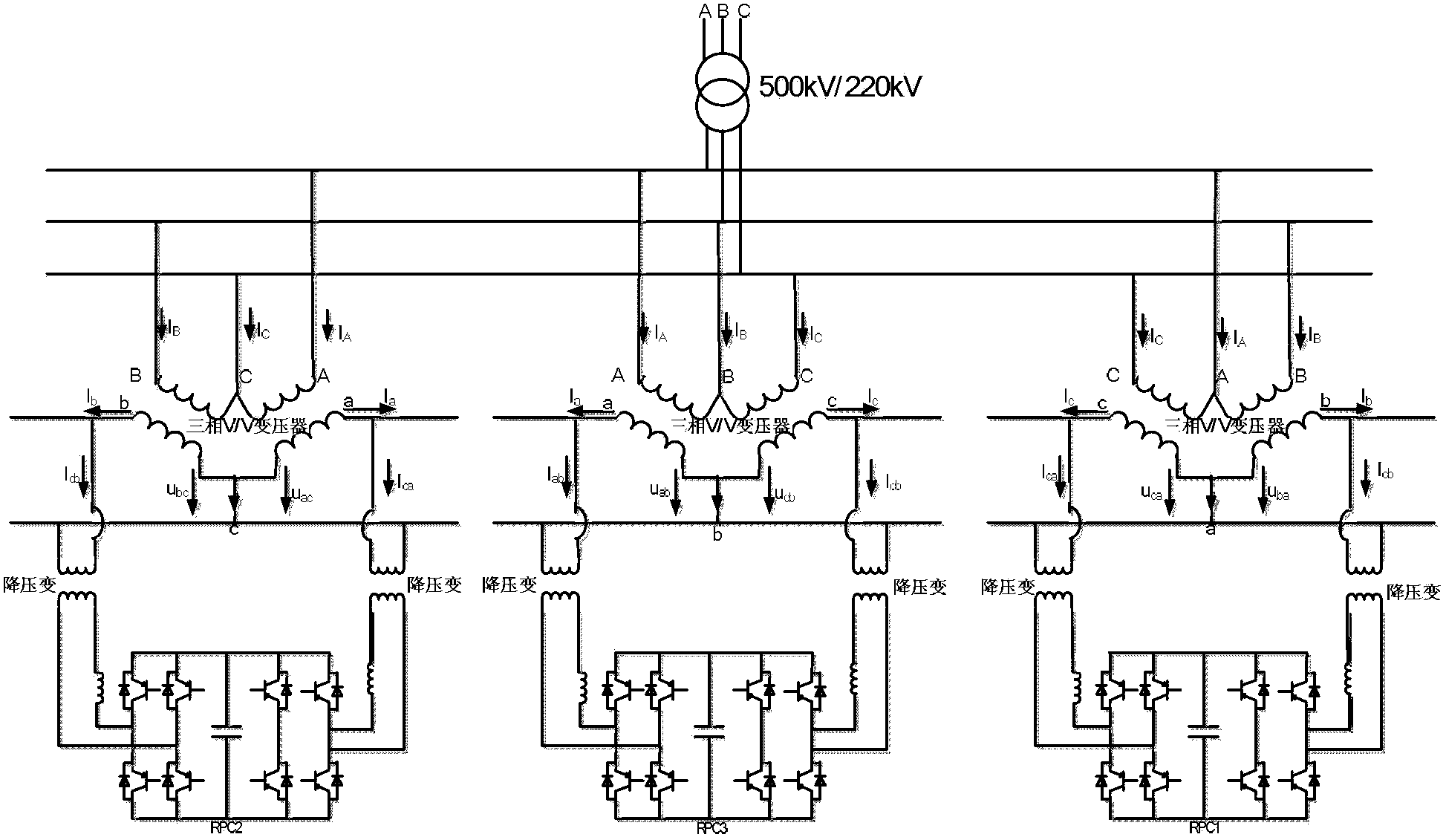
The invention discloses an electrified railway negative sequence unbalance compensation method. According to the method, railway power conditioners (PRCs) are installed at 3n stations in a traction substation with 3n+i stations, and circuit system negative sequence unbalance of an electrified railway is collaboratively compensated by the 3n station PRCs to achieve the purpose of reducing three-phase negative sequence unbalance of an electric system. Compared with the traditional single station compensation method, with the adoption of the electrified railway negative sequence unbalance compensation method, the use number of the PRCs is reduced, the installation capacity and the compensation capacity of the PRC are reduced by 1 / 3 so as to reduce the cost and system loss, and the system stability is also improved.
Need to check novelty before this filing date? Find Prior Art

Description

technical field

[0001] The invention belongs to the field of power quality supplementation of electrified railways, in particular to a method for compensating negative sequence unbalance of electrified railways. Background technique

[0002] Compared with conventional electrified railway locomotive traction load, high-speed railway locomotive traction load has the characteristics of large instantaneous power, high power factor, low harmonic content and large negative sequence component. More than 8,000 kilometers of high-speed railways in my country have been successfully put into operation, making China the country with the fastest high-speed railway operation and the longest mileage in the world. The traction load of high-speed railway locomotives will generate a large number of negative-sequence components, and these negative-sequence components will not only cause motor vibration and additional loss, but also cause relay protection malfunctions, threatening the safe oper...

Examples

Embodiment Construction

[0023] The method of the present invention will be further described below in conjunction with the accompanying drawings and embodiments.

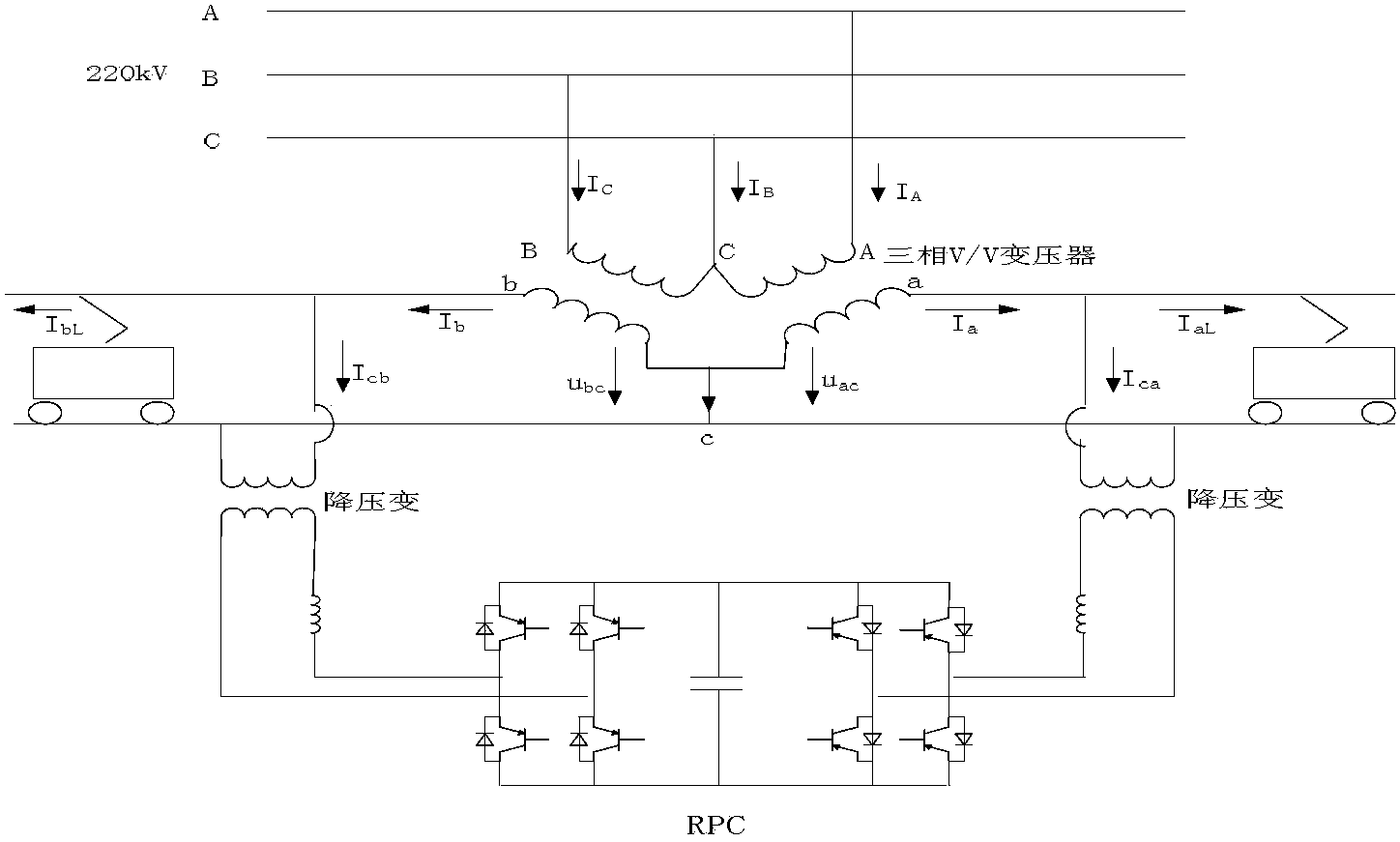
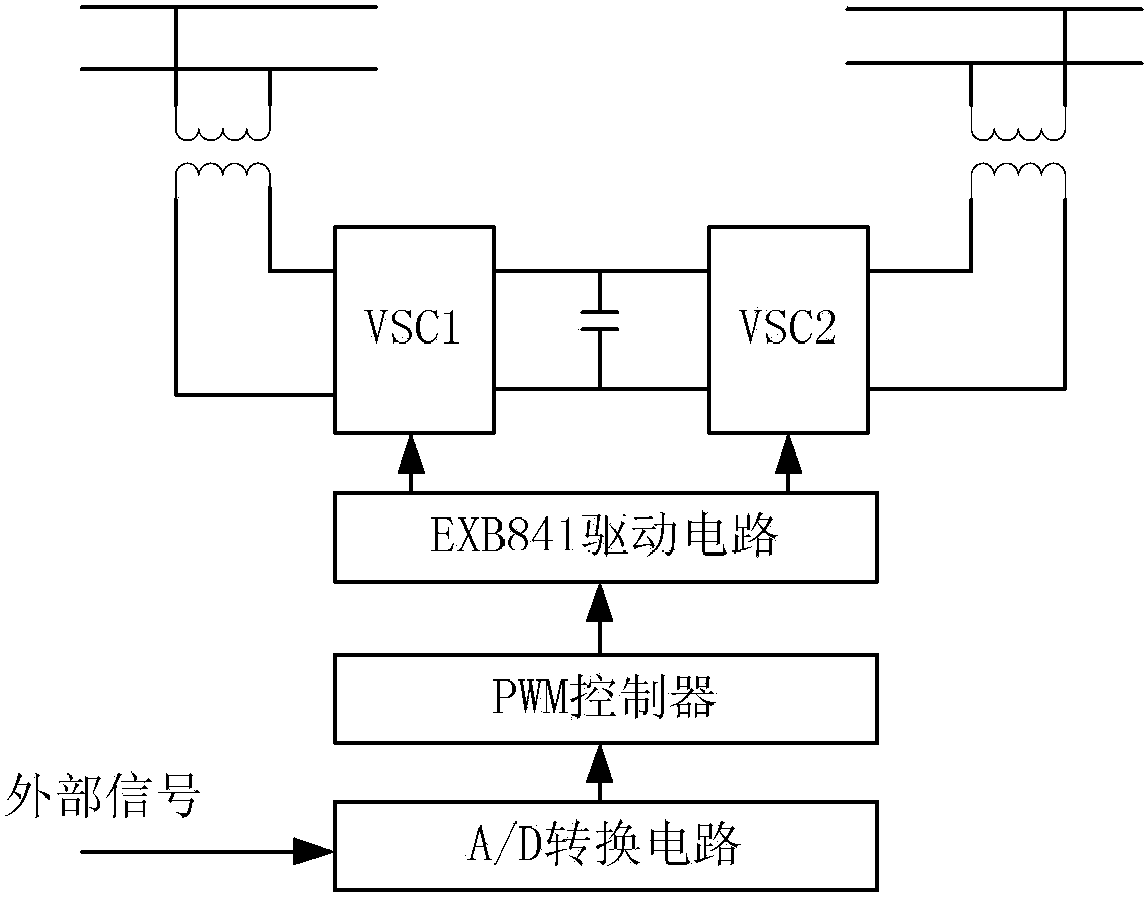
[0024] figure 1 The installation structure diagram of the railway power conditioner (RPC) used for this specific implementation. The railway power conditioner (RPC) is mainly composed of two H-bridge inverters and two step-down transformers with back-to-back common DC voltage. The railway power conditioner (RPC) is installed between the two power supply arms on the secondary side of the three-phase V / V wiring traction transformer through two step-down transformers, which can transmit a certain amount of active power between the two power supply arms and compensate a certain amount of reactive power between phases. work power.

[0025] see Figure 7, the voltage transformer and current transformer installed in the high-voltage substation collect the current and voltage of the three-phase 220kV bus of the power system in real time, and obt...