
Insecticidal composition containing flufenzine and spirotetramat
The technology of an insecticidal composition and spirotetramat, which is applied in the directions of insecticides, acaricides, biocides, etc., can solve the problems such as the insecticidal composition and its application that no one has reported before, and achieve good control effect and reduce Production cost and use cost, effect of delaying drug resistance
- Summary
- Abstract
- Description
- Claims
- Application Information
AI Technical Summary
Problems solved by technology
Method used
Image

Examples
Embodiment
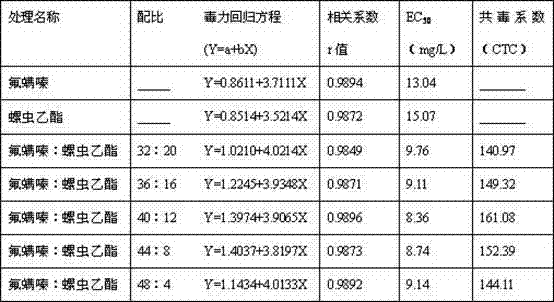
[0028] Example: Combined toxicity test of different ratios of flufenazine and spirotetramat.
[0029] 1.1 Drugs to be tested
[0030] 97% of the original drug of flufenazine and 95% of the original drug of spirotetramat, all of which were provided by the R&D Department of Hailier Pharmaceutical Co., Ltd.
[0031] 1.2 Test target
[0032] The test mites were collected from the test field of the Citrus Research Institute of the Chinese Academy of Agricultural Sciences. The cultivation and management conditions were the same. No pesticides had been applied recently. Leaves are kept for later use after 2 generations.
[0033] 1.3 single-dose determination method slide dipping method
[0034] Select female nymphs with the same individual size and bright red body color, and use a brush to stick the back of the test mite on a glass slide with double-sided adhesive tape. The concentration range of each slide is diluted. The original drug was dissolved in acetone, and then diluted ...
PUM
 Login to View More
 Abstract
Description
Claims
Application Information
 Login to View More