
Method and vibration isolation platform for improving spacecraft attitude control performance
A vibration isolation platform, attitude control technology, applied in attitude control, aerospace vehicle guidance devices, etc., can solve problems such as large resonance peaks, inability to achieve vibration isolation effects, and slow damper attenuation.
- Summary
- Abstract
- Description
- Claims
- Application Information
AI Technical Summary
Problems solved by technology
Method used
Image

Examples
Embodiment Construction
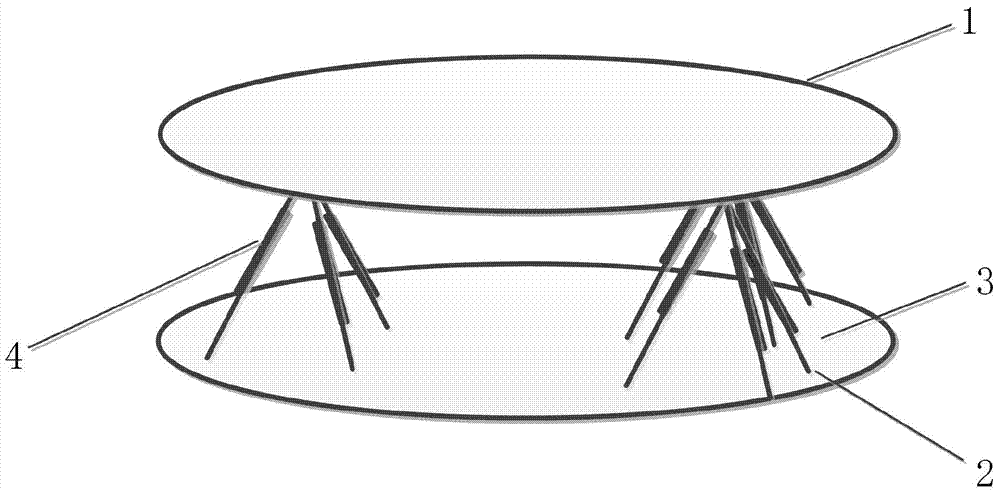
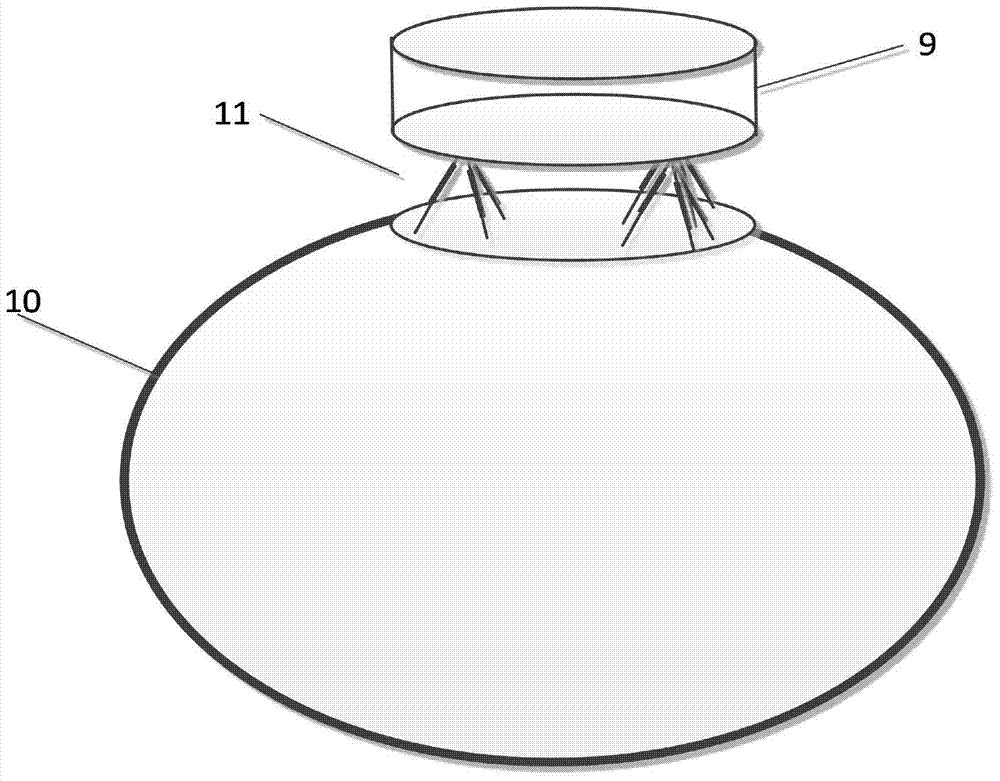
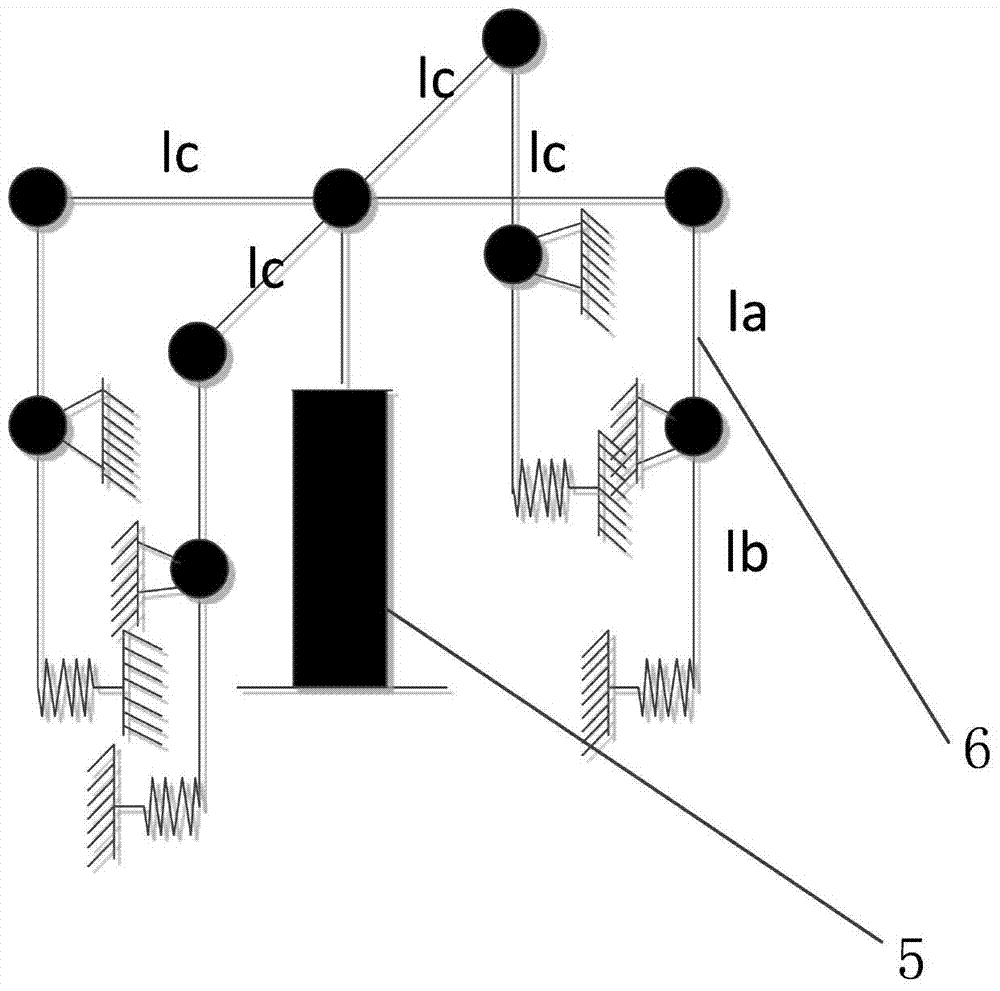
[0074] Such as figure 1 As shown, a vibration isolation platform for improving the attitude control performance of a spacecraft includes: an upper platform 1, a lower platform 3, and a strut 2 connecting the upper platform and the lower platform. Such as image 3 As shown, the middle section of the strut includes a positive stiffness part 5 and a negative stiffness part 6 . Positive stiffness means that the direction of the restoring force after the object is deformed is opposite to the direction of deformation, and is generally composed of elastically deformable materials. In this case, a metal rubber rod is used to realize it; negative stiffness refers to the direction of the restoring force and the direction of deformation of the object after deformation. Similarly, the principle of leverage is generally used so that the deformation direction of the deformation element is opposite to the deformation direction of the positive stiffness part. For example, the negative stiffn...
PUM
 Login to View More
 Abstract
Description
Claims
Application Information
 Login to View More