
Pig specific friendly site Pifs501 and application thereof
A site-friendly, specific technology, applied in the field of genetic engineering
- Summary
- Abstract
- Description
- Claims
- Application Information
AI Technical Summary
Problems solved by technology
Method used
Image


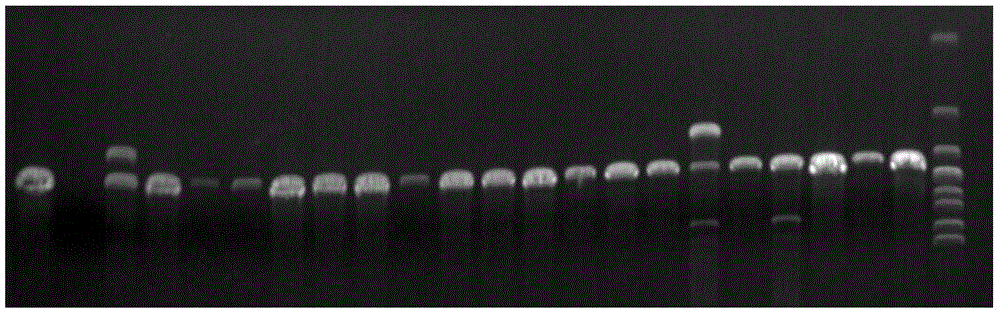
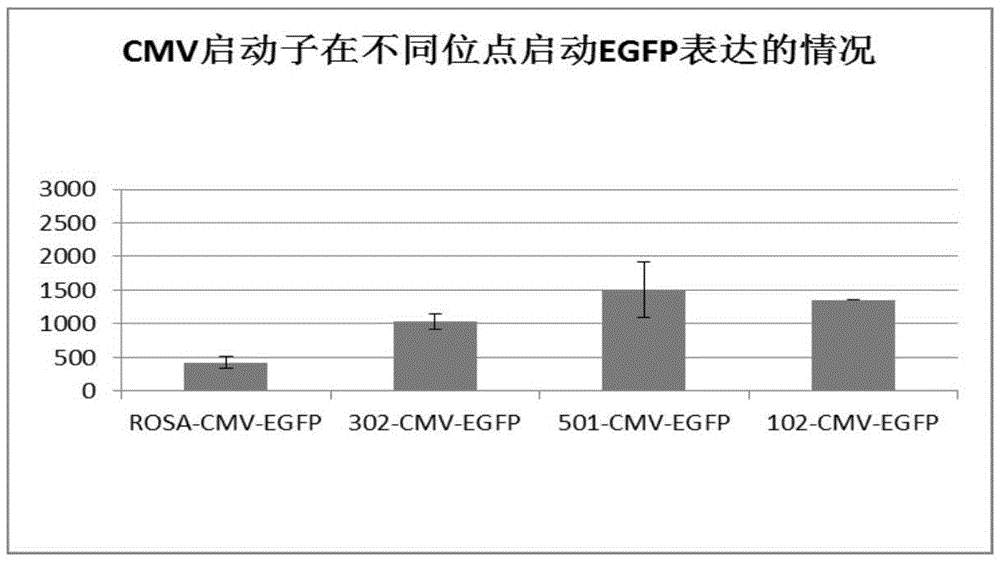
Examples
Embodiment 1
[0036] Example 1 is used to illustrate the pig-specific friendly site of the present invention.
[0037] The position of the friendly site Pifs501 on the genome is: bp 44288819 on chromosome 16 (NC_010458.3, based on the pig genome sequence information version number Sscrofa10.2, September 2011).
Embodiment 2
[0039] Example 2 is used to illustrate the sgRNA specifically targeting the friendly site Pifs501 of the present invention, the sgRNA is transcribed from the DNA sequence shown in SEQ ID No.1.
Embodiment 3
[0041] Example 3 is used to illustrate the CRISPR-Cas9 targeting vector for the friendly site Pifs501 of the present invention.
[0042] The construction method of CRISPR-Cas9 targeting vector is as follows:
[0043] 1. Construction of targeting vector
[0044]Complementary pairing of the sequence shown in SEQIDNo.1 and the sequence shown in SEQIDNo.2 to construct double-stranded DNA; the construction process is as follows: 94°C, 5min, then 35°C, 10min, and then put it on ice immediately, for oligonucleotide to save.
[0045] The px330 backbone vector was digested with the restriction endonuclease BbsI overnight, and after recovery, it was ligated with the annealed oligonucleotide at 16°C for 3 hours. Transformation and coating are carried out by conventional transformation methods. After a single colony grows, several colonies are picked for expansion and sequenced. The sequencing verification was correct, and the successfully constructed CRISPR-Cas9 targeting vector was ...
PUM
 Login to View More
 Abstract
Description
Claims
Application Information
 Login to View More