
Method for calculating allocated relay resources in optical transmission network planning
A technology of an optical transmission network and a computing method, which is applied to the computing field of allocating relay resources in optical transmission network planning, can solve problems such as serious computing time and achieve the effect of improving computing efficiency
- Summary
- Abstract
- Description
- Claims
- Application Information
AI Technical Summary
Problems solved by technology
Method used
Image

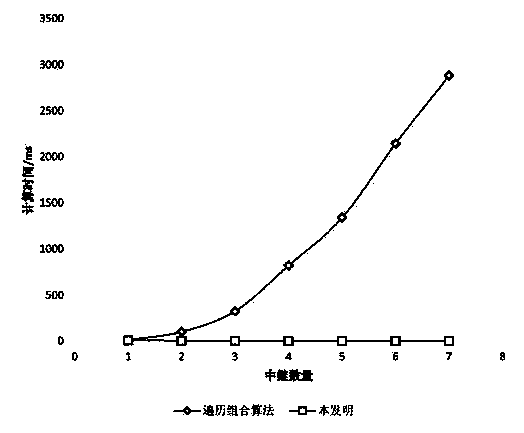
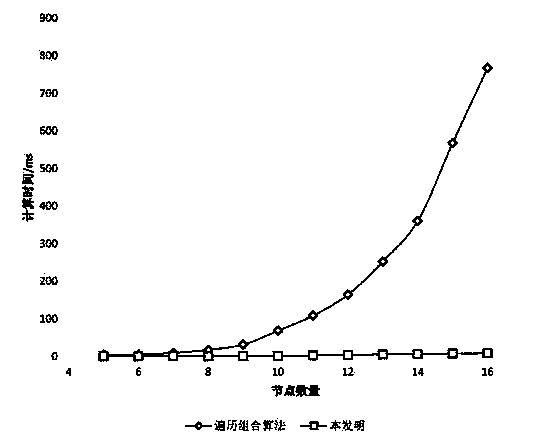
Examples
Embodiment Construction
[0025] The present invention will be described in further detail below in conjunction with the accompanying drawings and embodiments.
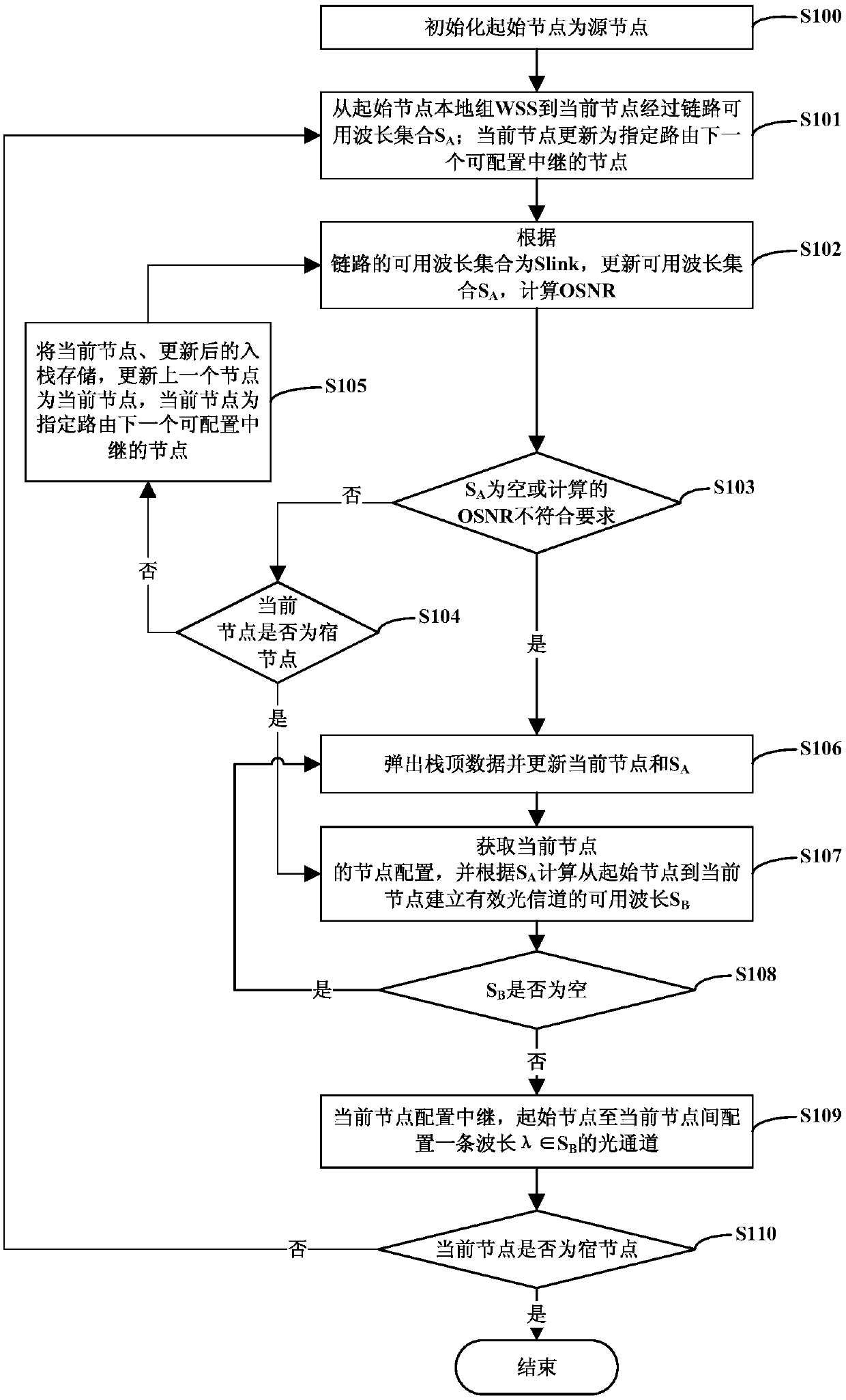
[0026] The calculation method for allocating relay resources in the optical transmission network planning of the present invention takes the source node as the starting node, finds the farthest node that can establish an effective optical channel, configures the relay at the farthest node and allocates a wavelength for the channel, and then Use the farthest node as the starting node to iterate until reaching the target node. Among them, the available wavelength set of the starting node is obtained, and the intersection of the available wavelength sets of the links between two adjacent nodes is obtained in turn until the result is empty or the optical signal-to-noise ratio (OSNR) of the path from the starting node to the current node is less than If the preset threshold is set, it will go back to the nearest node used to configure the relay.
...
PUM
 Login to View More
 Abstract
Description
Claims
Application Information
 Login to View More