
Task distribution processing method and device
A task allocation and processing device technology, applied in the field of information processing, can solve problems that affect the work efficiency of the task requester, and the task requester is not familiar with it, so as to avoid excessive task processing time, improve reliability, and improve processing efficiency.
- Summary
- Abstract
- Description
- Claims
- Application Information
AI Technical Summary
Problems solved by technology
Method used
Image

Examples
Embodiment 1
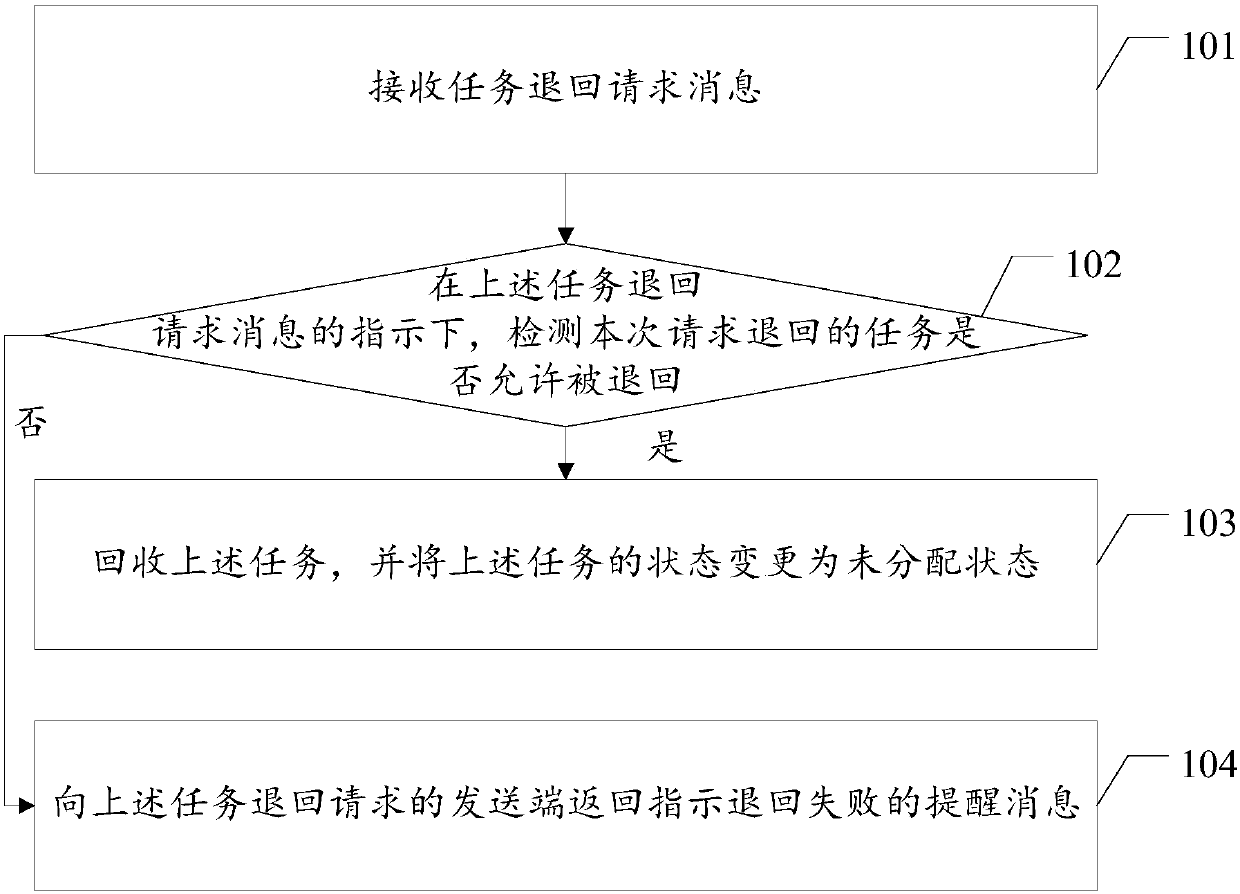
[0049] The embodiment of the present invention provides a task allocation processing method, please refer to figure 1 , The task allocation processing method in the embodiment of the present invention includes:
[0050] Step 101: Receive a task return request message;
[0051] In the embodiment of the present invention, tasks can be understood as pending transactions in the work pool. Generally, tasks exist in the following states: unassigned, assigned but not completed, and completed. For unassigned tasks, they can be assigned to registered personnel for processing.
[0052] In the embodiment of the present invention, a task return request interface is provided for users (for example, staff on the list), and the user can initiate a return request to the task assigned to him through the task return request interface. For example, when task S is assigned to user A, user A may send the above-mentioned task return request message through the corresponding task return request interface...
Embodiment 2
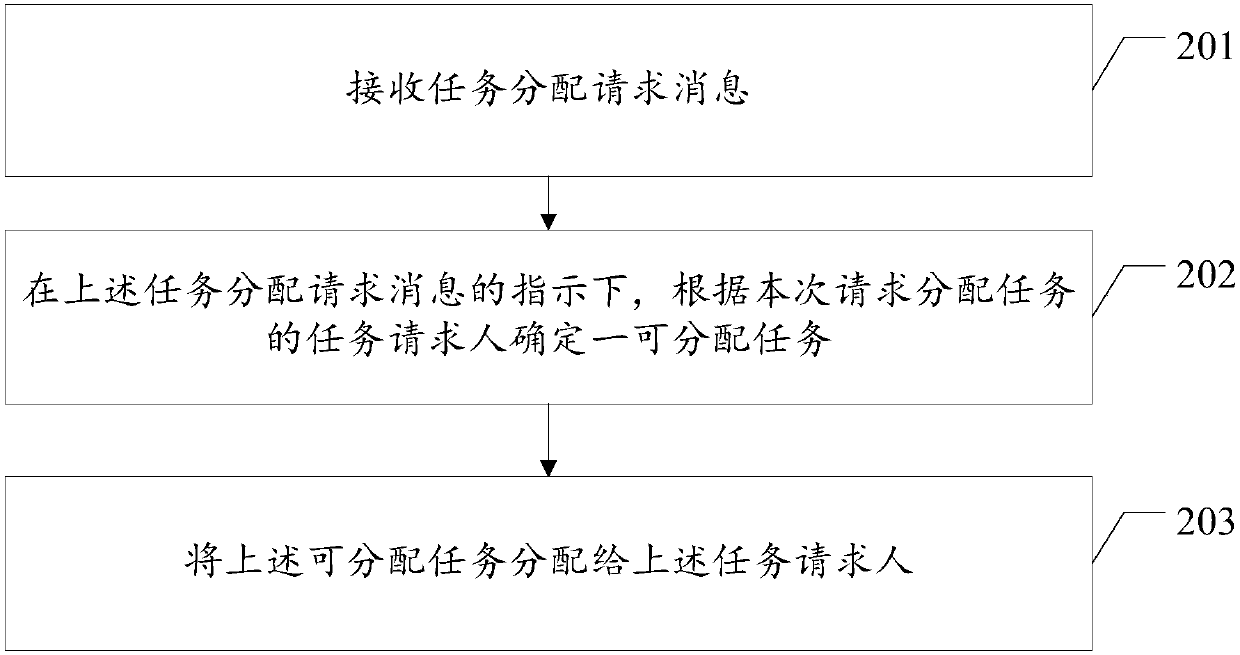
[0072] in figure 1 On the basis of the illustrated embodiment, the task allocation processing method in the embodiment of the present invention also provides a task allocation mechanism to avoid accidentally assigning tasks to the same person, such as figure 2 As shown, the task allocation processing method includes:
[0073] Step 201: Receive a task allocation request message;
[0074] In the embodiment of the present invention, a task allocation request interface is provided for users (for example, staff on the list), and the user can initiate a task request through the task allocation request interface.
[0075] Step 202: Under the instruction of the above-mentioned task assignment request message, determine an assignable task according to the task requester requesting the assignment this time;
[0076] Wherein, the allocable task is a task that is in an unallocated state and has not been allocated to the task requester.
[0077] Specifically, the assignment history of the task is r...
Embodiment 3
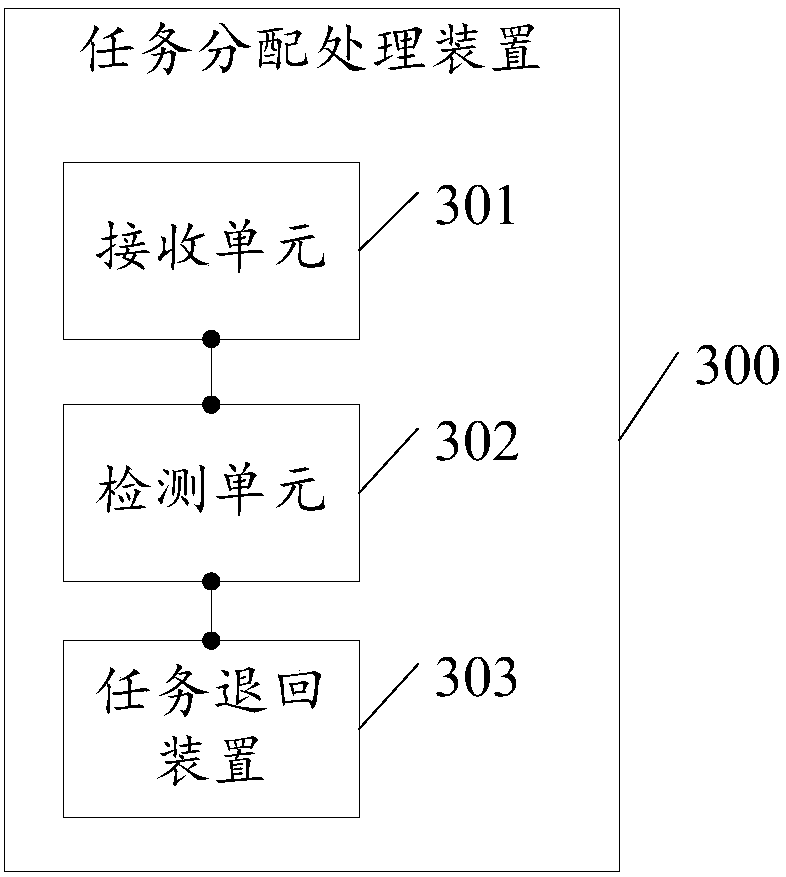
[0081] The embodiment of the present invention provides a task allocation processing device. See image 3 , The task allocation processing device 300 in the embodiment of the present invention includes:
[0082] The receiving unit 301 is configured to receive a task return request message;
PUM
 Login to View More
 Abstract
Description
Claims
Application Information
 Login to View More