
Distribution decision-making method of lightning monitoring device of power distribution network
A technology of monitoring devices and decision-making methods, applied in the direction of measuring devices, measuring electricity, fault locations, etc., can solve problems such as high cost and installation, and achieve the effect of improving effectiveness and economy
- Summary
- Abstract
- Description
- Claims
- Application Information
AI Technical Summary
Problems solved by technology
Method used
Image

Examples
Embodiment Construction
[0020] A distribution network lightning monitoring device layout decision-making method, which includes:
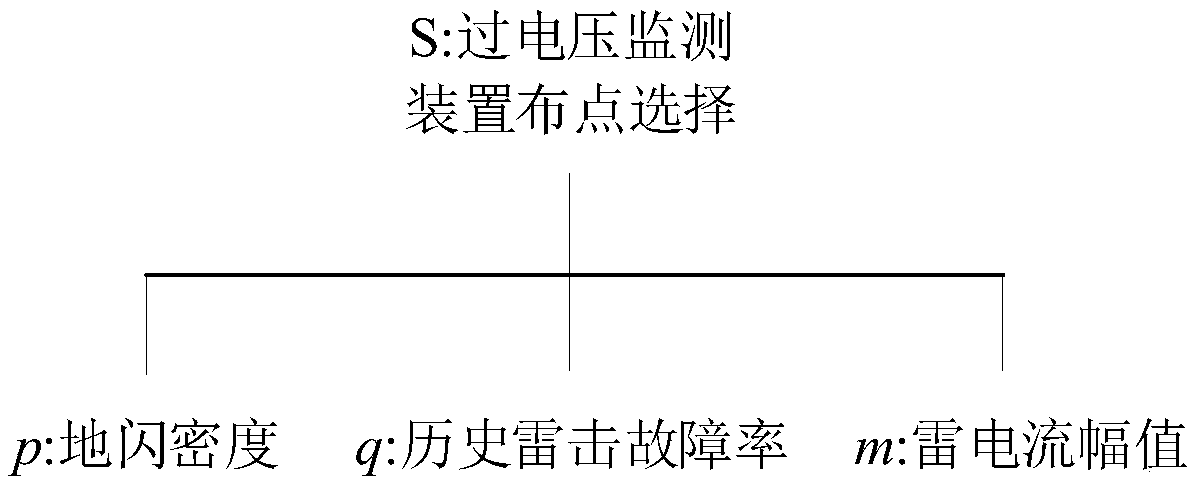
[0021] Step 1. Obtain the lightning distribution data and lightning current amplitude data in the area where the distribution network is located from the lightning location system LLS, obtain the lightning strike failure rate of historical lines from the management database, and import the distribution network line data from the distribution network GIS system spatial information;
[0022] Step 2. Obtain the total ground flash density p of each line according to the ground flash distribution data;
[0023] Step 3. Obtain the lightning current amplitude m in the area where each line passes through according to the lightning current amplitude data;
[0024] Step 4. Obtain the annual average lightning strike failure rate q of each line according to the lightning strike failure rate of historical lines;
[0025] Step 5. Assign a weight value k to the total flash density p o...
PUM
 Login to View More
 Abstract
Description
Claims
Application Information
 Login to View More