
Method for rapidly measuring internal stress of nickel-based single crystal superalloy
A technology of nickel-based single crystal and high-temperature alloy, which is applied in the direction of measuring force, measuring devices, instruments, etc., can solve the problems of difficult sample measurement and low degree of automation, achieve fast counting and collection, and improve work efficiency.
- Summary
- Abstract
- Description
- Claims
- Application Information
AI Technical Summary
Problems solved by technology
Method used
Image

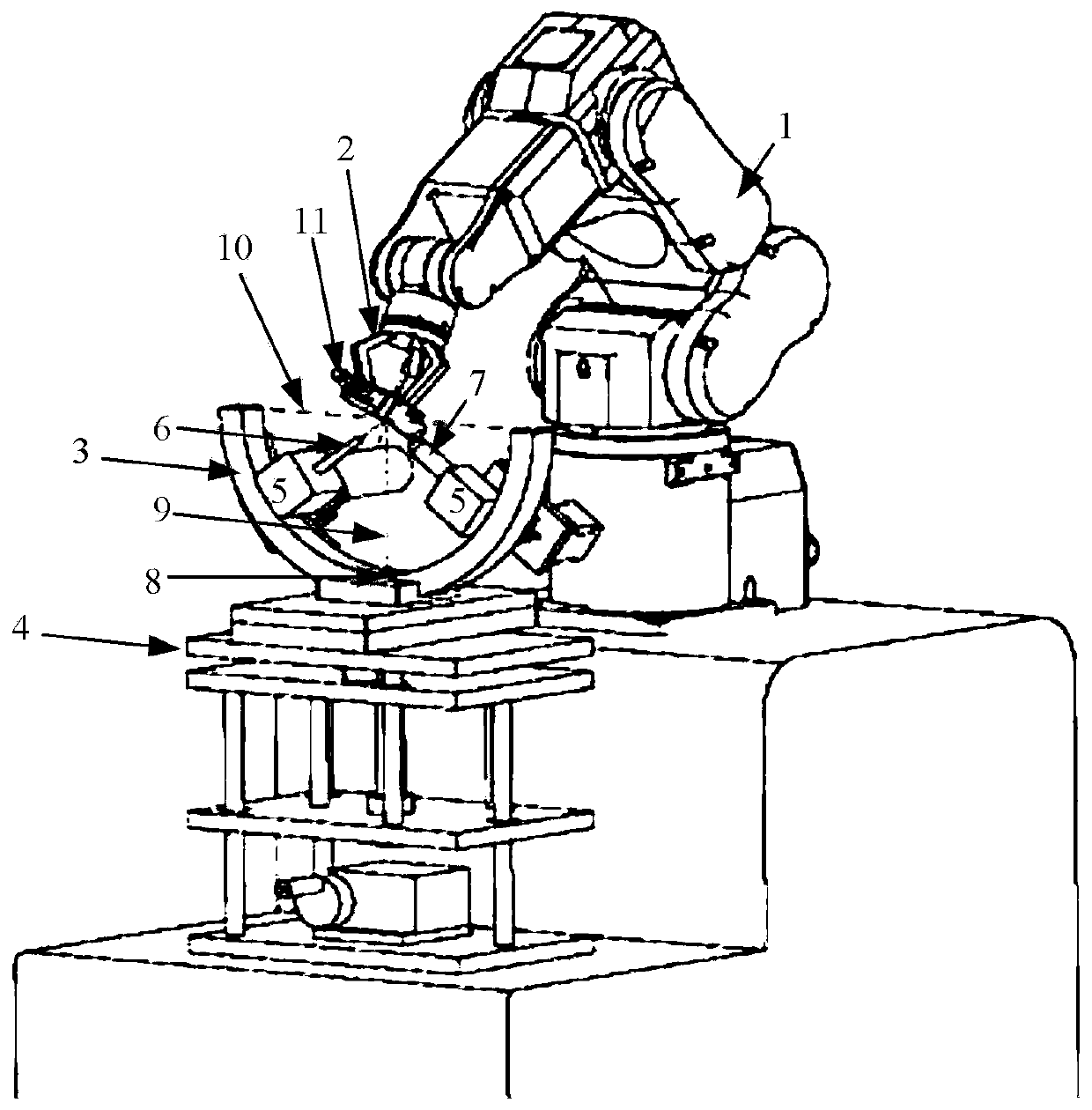
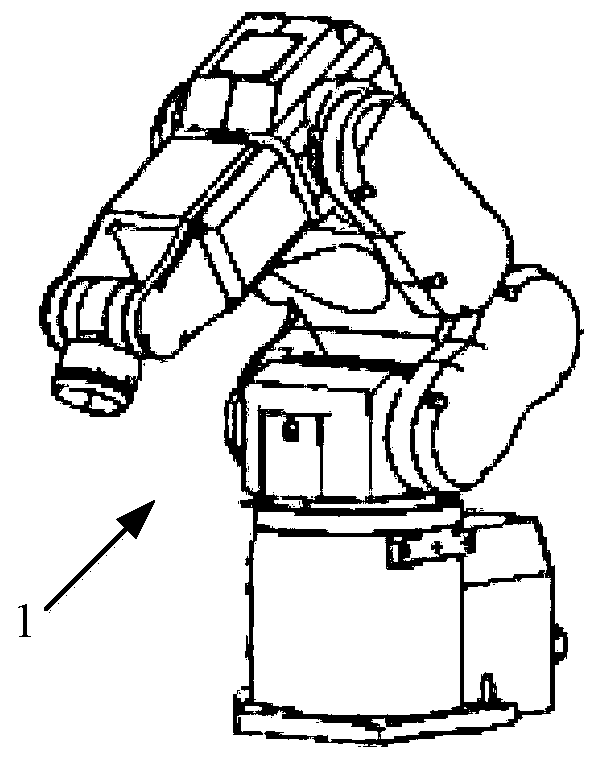
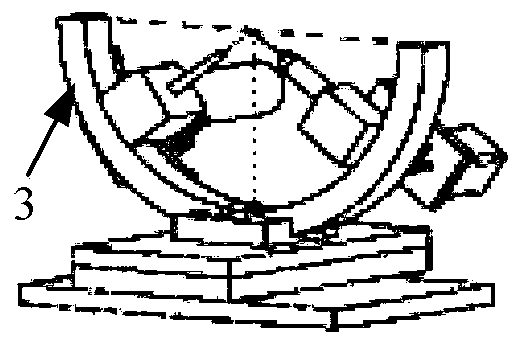
Examples
Embodiment
[0055] Determination of surface stress after heat treatment of tetragonal nickel-based single crystal superalloy:
[0056] Take a nickel-based single crystal superalloy sample of a certain brand, such as figure 2 , the shape of the sample is a square, the size is 10mm×10mm×7mm, and the test surface is electrolytically polished. Then clamp it with the pneumatic gripper 2 so that the point to be measured is located at the SCP point.
[0057] The orientation of the test surface of the sample was determined, and the orientation was 6° away from the [110] orientation. Referring to the standard pole figure of [110], the {331} and {400} crystal plane families are selected as the determination crystal plane family. According to the standard diffraction card, the diffraction angle of the {331} crystal plane family is 139.540°, and {400} The diffraction angle of the crystal plane group is 119.200°.
[0058] The input parameter 2θ angle is 139.540°, 119.200°, the range of the input s...
PUM
 Login to View More
 Abstract
Description
Claims
Application Information
 Login to View More