Novel high-speed coaxial double-rotor helicopter propelling system

A coaxial twin-rotor and helicopter technology, which is applied in the direction of rotorcraft, motor vehicles, power plants, etc., can solve the difficulty of developing a mechanical power input system for the tail rotor, the increase in the gross weight of the helicopter at take-off, and the large exhaust energy loss, etc. problems, to achieve the effect of high development difficulty, low development difficulty and low reliability

CN113306726AActive Publication Date: 2021-08-27NORTHWESTERN POLYTECHNICAL UNIV
9 Cites 1 Cited by

Patent Information

Authority / Receiving Office
CN · China
Patent Type
Applications(China)
Current Assignee / Owner
Publication Date
2021-08-27

Smart Images

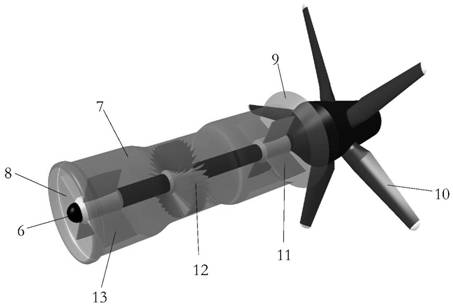
  • Figure 1
    Figure 1
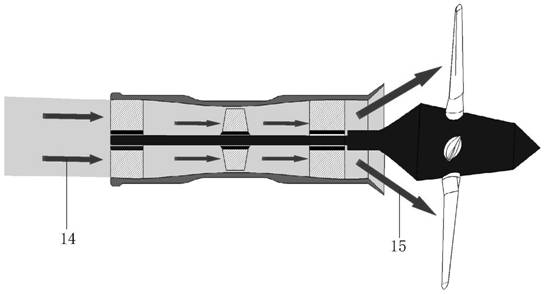
  • Figure 2
    Figure 2
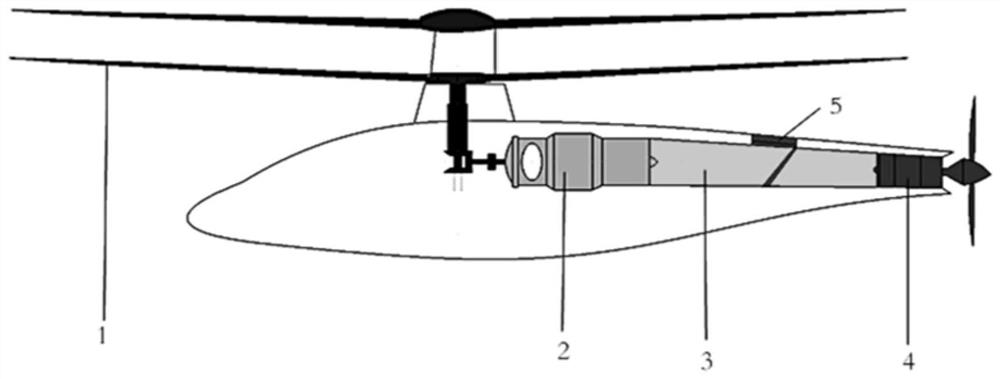
  • Figure 3
    Figure 3
Patent Text Reader

Abstract

The invention discloses a novel high-speed coaxial double-rotor helicopter propelling system. Tail gas of a turboshaft engine is introduced into a downstream propelling system to drive a free turbine in the propelling system to rotate, and the free turbine drives a propelling propeller at the tail of a helicopter body to rotate so as to generate basic propelling force for increasing the flight speed of a helicopter, so that primary utilization of the engine tail gas is realized; and engine tail gas is discharged out of the body through the tail nozzle between the tail of the helicopter body and the propeller, the propelling efficiency of the propelling propeller is improved through high-speed wake flow flowing through the propelling propeller, so that secondary utilization of the engine tail gas is achieved, meanwhile, the engine tail gas is fully mixed with the external environment atmosphere, the infrared characteristic of the helicopter is greatly reduced, and the battlefield survival rate of the helicopter is improved. Meanwhile, the propelling propeller is located in the underwash flow field of the rotor wings, so that the propelling efficiency of the propelling propeller is improved, the propelling force of the propelling propeller is improved again, and finally the purpose of improving the flight speed of the helicopter is achieved.
Need to check novelty before this filing date? Find Prior Art

Description

technical field

[0001] The invention relates to a novel high-speed coaxial double-rotor helicopter propulsion system, which belongs to the field of increasing the flight speed of the coaxial double-rotor helicopter. Background technique

[0002] Helicopters can take off and land vertically and hover in the field, and have good low-altitude maneuverability. They play an irreplaceable role in military and civilian fields.

[0003] However, compared with fixed-wing aircraft, helicopters have disadvantages such as low flight speed and short range. People's demand for improving the flight speed and range of helicopters is increasing. Driven by the deepening demand, the development of new high-speed helicopters and related technologies The development has shown a trend of vigorous development.

[0004] At present, the more successful high-speed helicopter configurations in the world mainly include tilt-rotor and coaxial dual-rotor compound propulsion. These two configurations hav...

Examples

Embodiment Construction

[0035] A novel high-speed coaxial twin-rotor helicopter propulsion system involved in the present invention mainly improves the flight speed of the coaxial twin-rotor helicopter by secondary utilization of engine exhaust and using the wash flow of the rotor at the design point state. The state of the design point described above is the high-speed cruising state of the helicopter;

[0036] Generally, the exhaust gas of the turboshaft engine is introduced into the downstream propulsion device to drive the free turbine in the propulsion device to rotate, and the free turbine drives the tail propeller to rotate to generate the basic propulsion required to increase the flight speed of the helicopter. The propulsion system is in working condition The exhaust gas of the lower engine is discharged from the body through the tail nozzle between the duct end of the propulsion device and the propeller, and the high-speed airflow discharged from the body flows through the propeller disc to ...