
IM data exporting system for exporting data based on user requirements
A technology for exporting data based on user requirements, applied in database management systems, transmission systems, structured data retrieval, etc.
- Summary
- Abstract
- Description
- Claims
- Application Information
AI Technical Summary
Problems solved by technology
Method used
Image

Examples
Embodiment 2
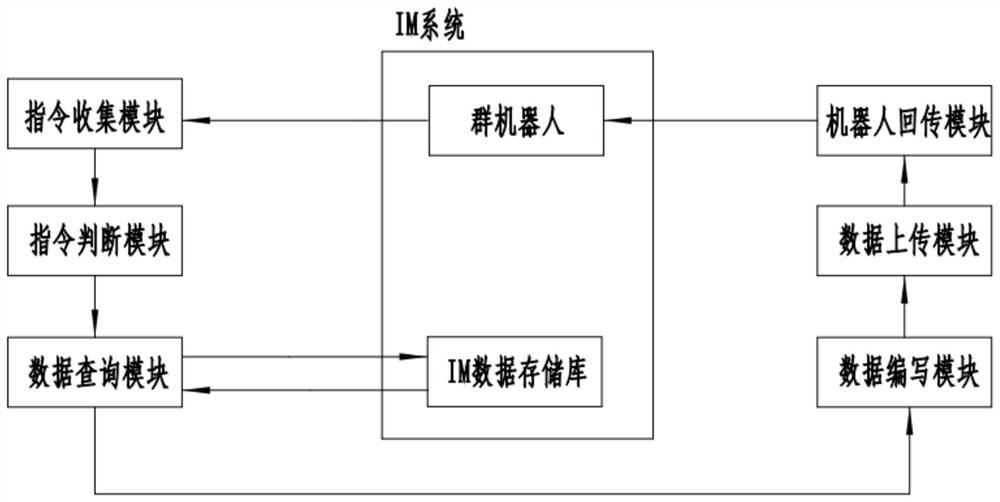
[0031] The difference between the second embodiment and the embodiment is only that a splicing checking module is further included, and the splicing checking module is used to check whether an error occurs in the splicing. If a splicing error is found, the related content of the association will be prompted according to the relevant error content words, such as "yearly, property fee, payment method = points, payer = Zhang San", it is found that the payer cannot correspond, but it can be found that there are similar conditions. If it is the payer, the error message will be returned as "The query conditions of the payer have not been queried, whether the query conditions of the payer are the payer". This solution performs error correction by associating the relevant content of the erroneous content, which is more intelligent and can prevent the returned data from splicing errors that do not meet the user's requirements.
PUM
 Login to View More
 Abstract
Description
Claims
Application Information
 Login to View More