
Self-reference, self-correlation and self-adaptive interference balancing method of evoked potential single extracted
A technology of induced potential and interference cancellation, applied in the field of medical equipment technology and biomedical engineering, it can solve the problems of changes, can not meet the needs of modern medical development, and the accuracy of results is not high, and achieve the effect of precise indicators
- Summary
- Abstract
- Description
- Claims
- Application Information
AI Technical Summary
Problems solved by technology
Method used
Image

Examples
specific Embodiment
[0037] Specific embodiments Single extraction of human visual evoked potential (VEP)
[0038] Single extraction steps for VEP:
[0039] (1) Obtained from the reference signal
[0040] Instrument: The visual electrophysiological examination system adopts the BIO2000 visual electrophysiological examination system produced by Chongqing Beiao Electronic Instrument Company.
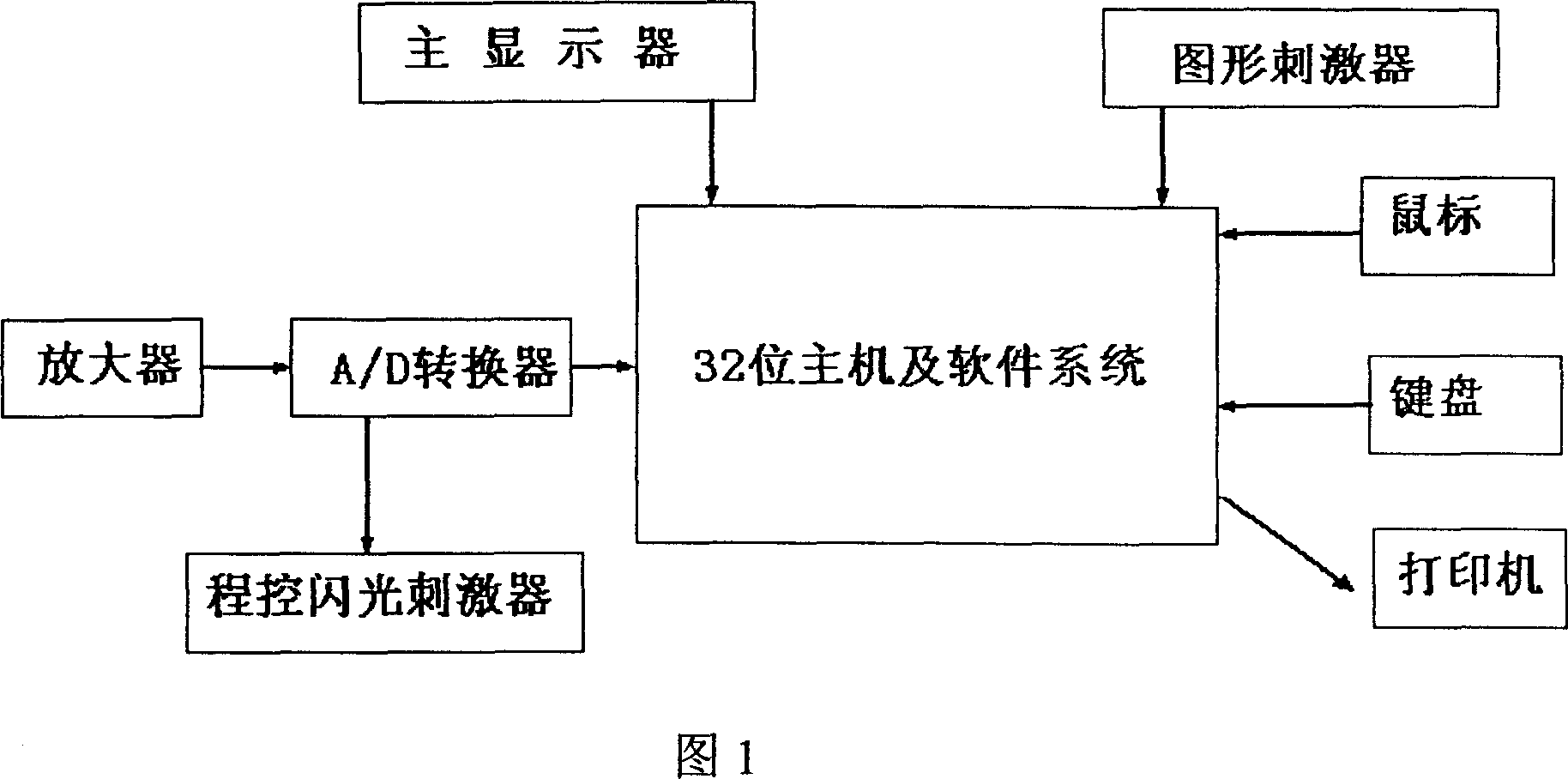
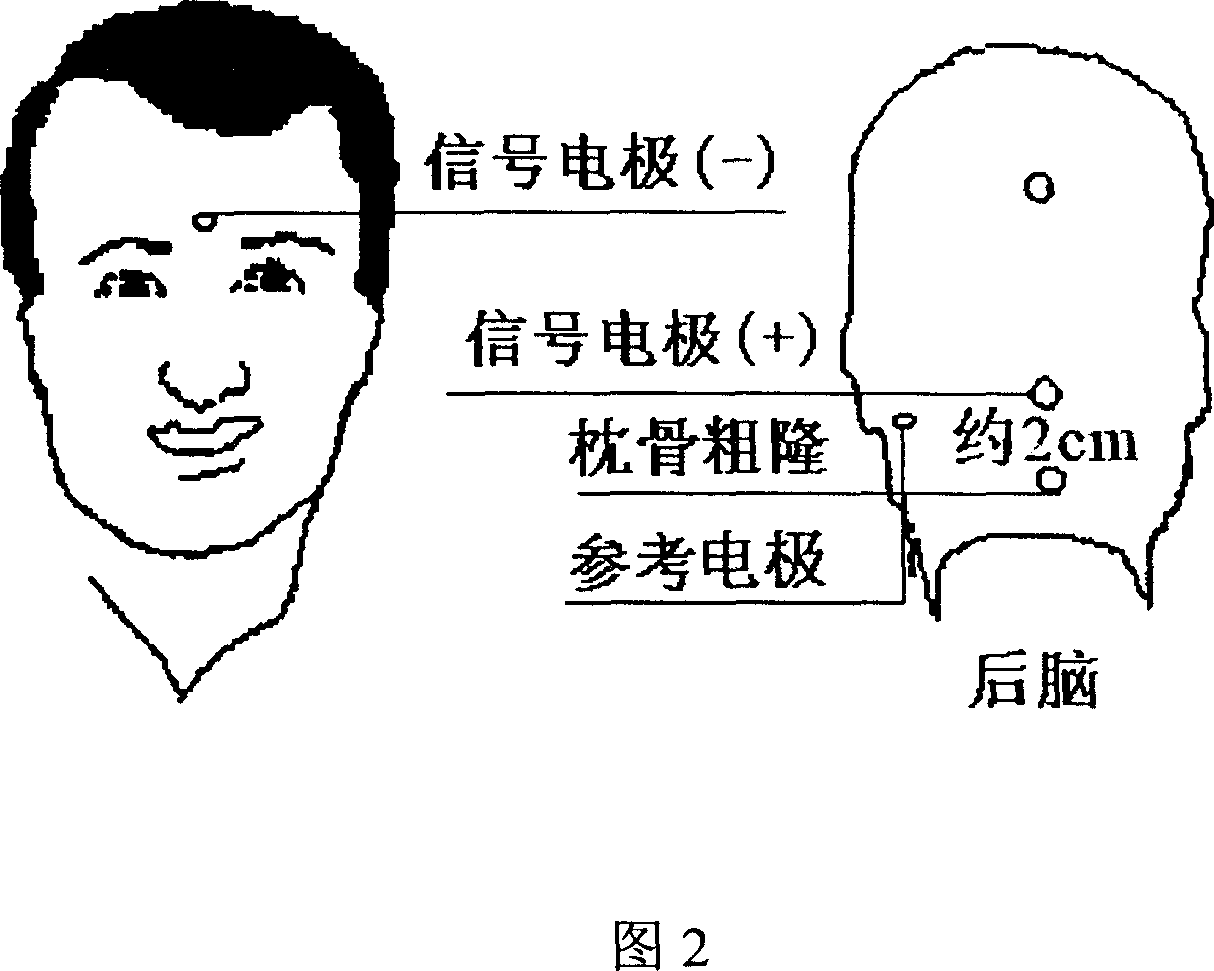
[0041] The block diagram of the system is shown in Figure 1. The equipment is initialized, the subject lies supine, wears goggles, cleans the scalp where the electrodes are placed with anhydrous alcohol, coats the surface of the electrodes with a special conductive paste, fastens the two signal electrodes on the scalp with elastic bands, and fixes the reference electrode with medical adhesive tape. Sampling frequency: 2kHz; acquire 2 minutes of self-reference signal. The schematic diagram of the electrode configuration is shown in Figure 2, and the electrodes used are as follows: silver / silver chloride disc...
PUM
 Login to View More
 Abstract
Description
Claims
Application Information
 Login to View More