
Real-time remote backup system and related method
a backup system and real-time remote technology, applied in data switching networks, fault response, instruments, etc., can solve problems such as complicated tasks for programmer, and achieve the effects of reducing data loading, improving backup efficiency, and improving backup efficiency
- Summary
- Abstract
- Description
- Claims
- Application Information
AI Technical Summary
Benefits of technology
Problems solved by technology
Method used
Image

Examples
Embodiment Construction
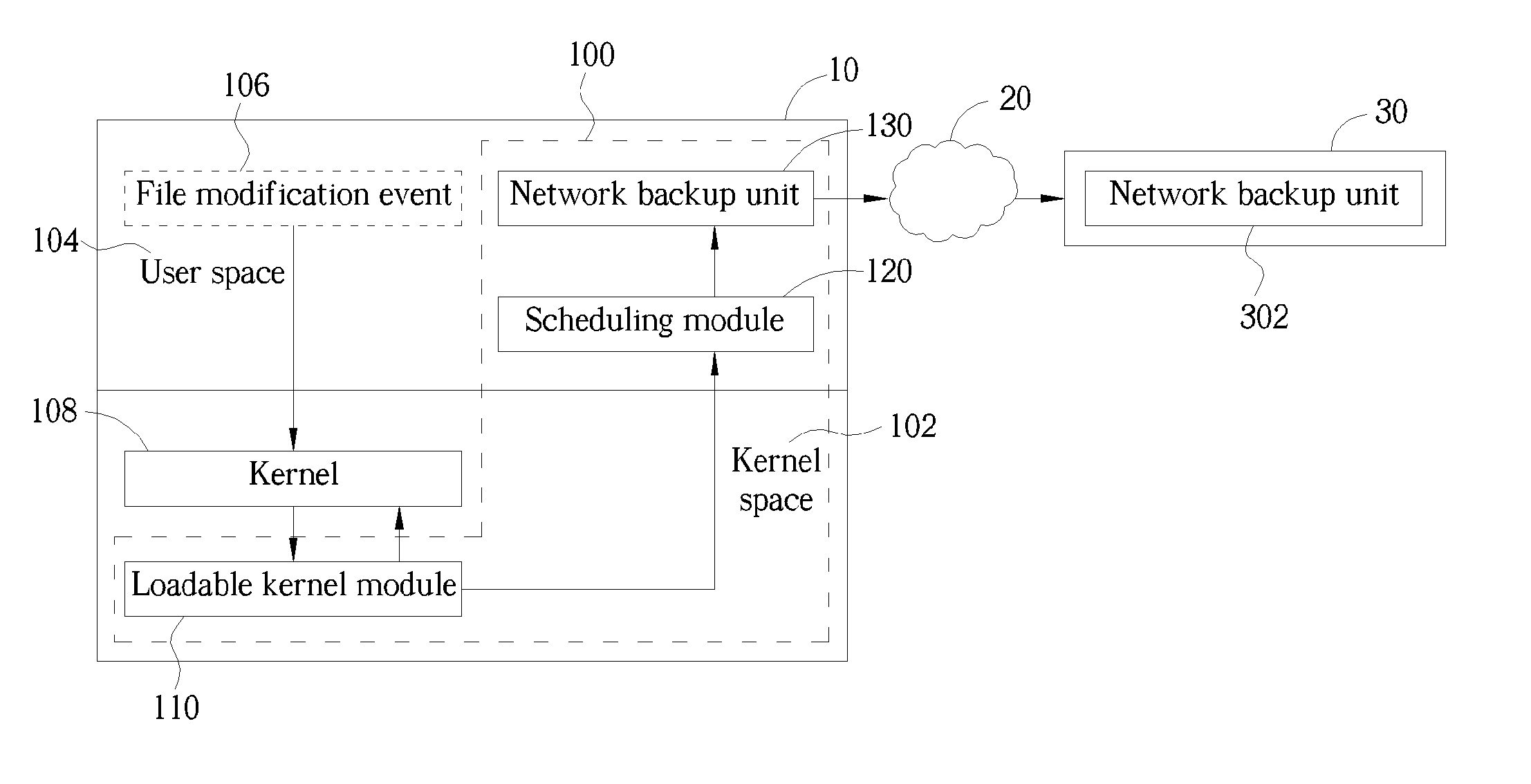
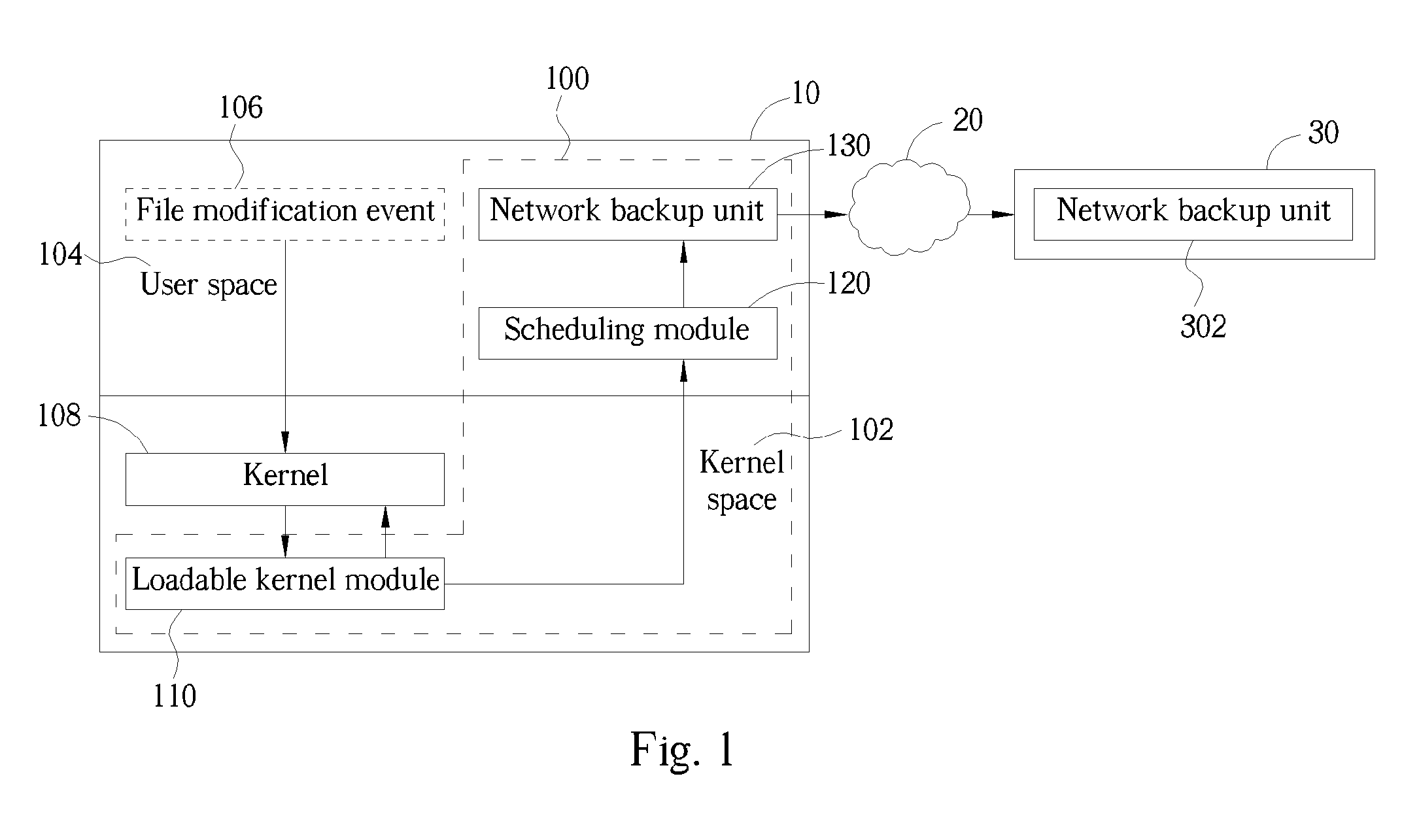
[0015] Please refer to FIG. 1 showing a real-time remote backup system 100 utilized with a network system 20. The network system 20 interconnects between at least one source computer system 10 and a destination computer system 30 in a Linux environment 30. Each computer system 10, 30 consist of a kernel space 102 having a kernel 108, and a user space 104.
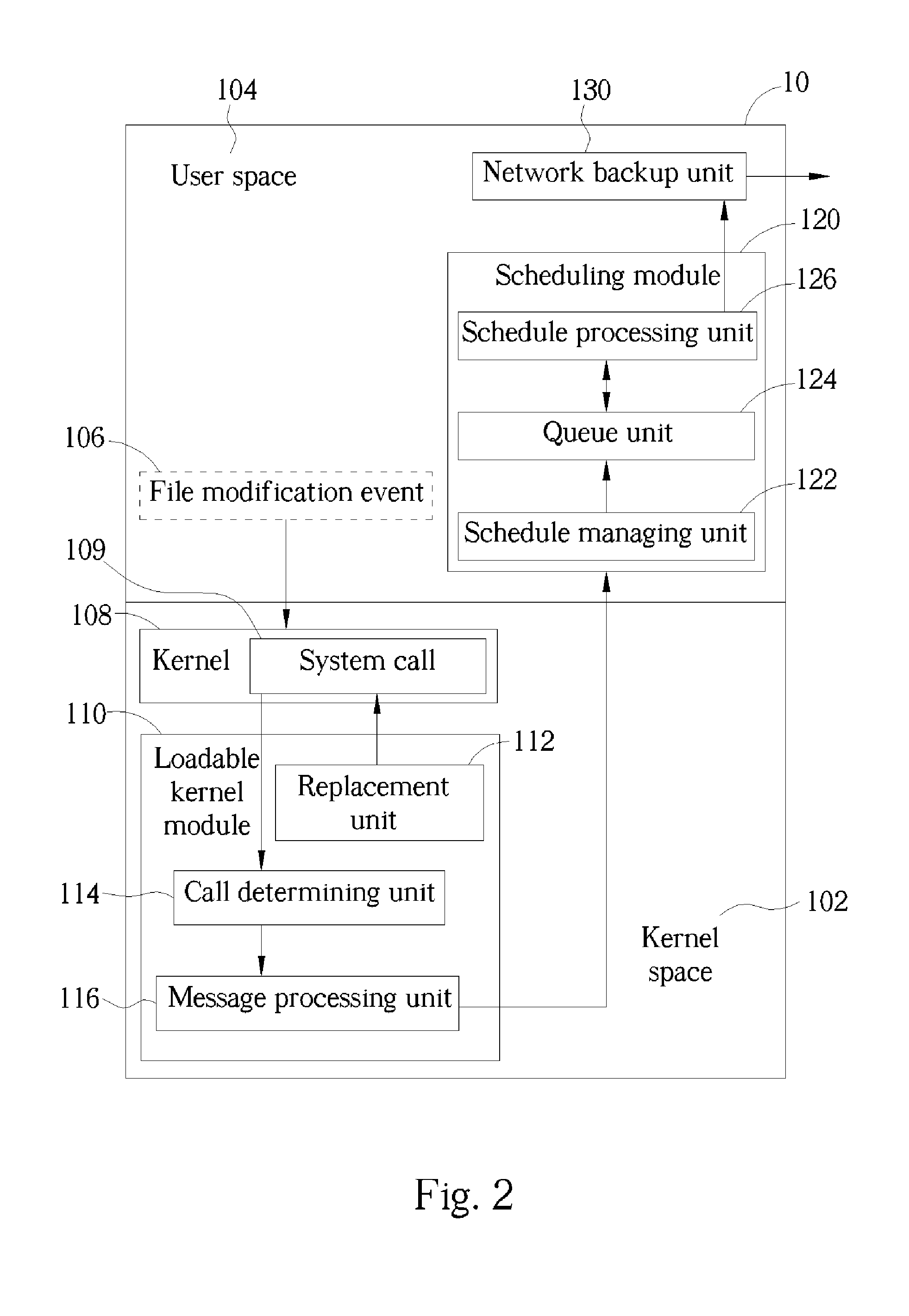
[0016] The real-time remote backup system 100 has at least one loadable kernel module 110 installed in the kernel space 102 of the source computer system 10 for detecting whether a file modification event 106 has occurred in the user space 104. A scheduling module 120 installed in the user space 104 of the source computer system 10 sequentially queues each file modification message transmitted from the loadable kernel module 110 and process the file modification message to generate a backup command. A pair of network backup units 130, 302, such as a pair of RSYNC applications, is respectively installed in the user spaces 104 of the...
PUM
 Login to View More
 Abstract
Description
Claims
Application Information
 Login to View More