
Lipin1 function
- Summary
- Abstract
- Description
- Claims
- Application Information
AI Technical Summary
Benefits of technology
Problems solved by technology
Method used
Image

Examples
example 1
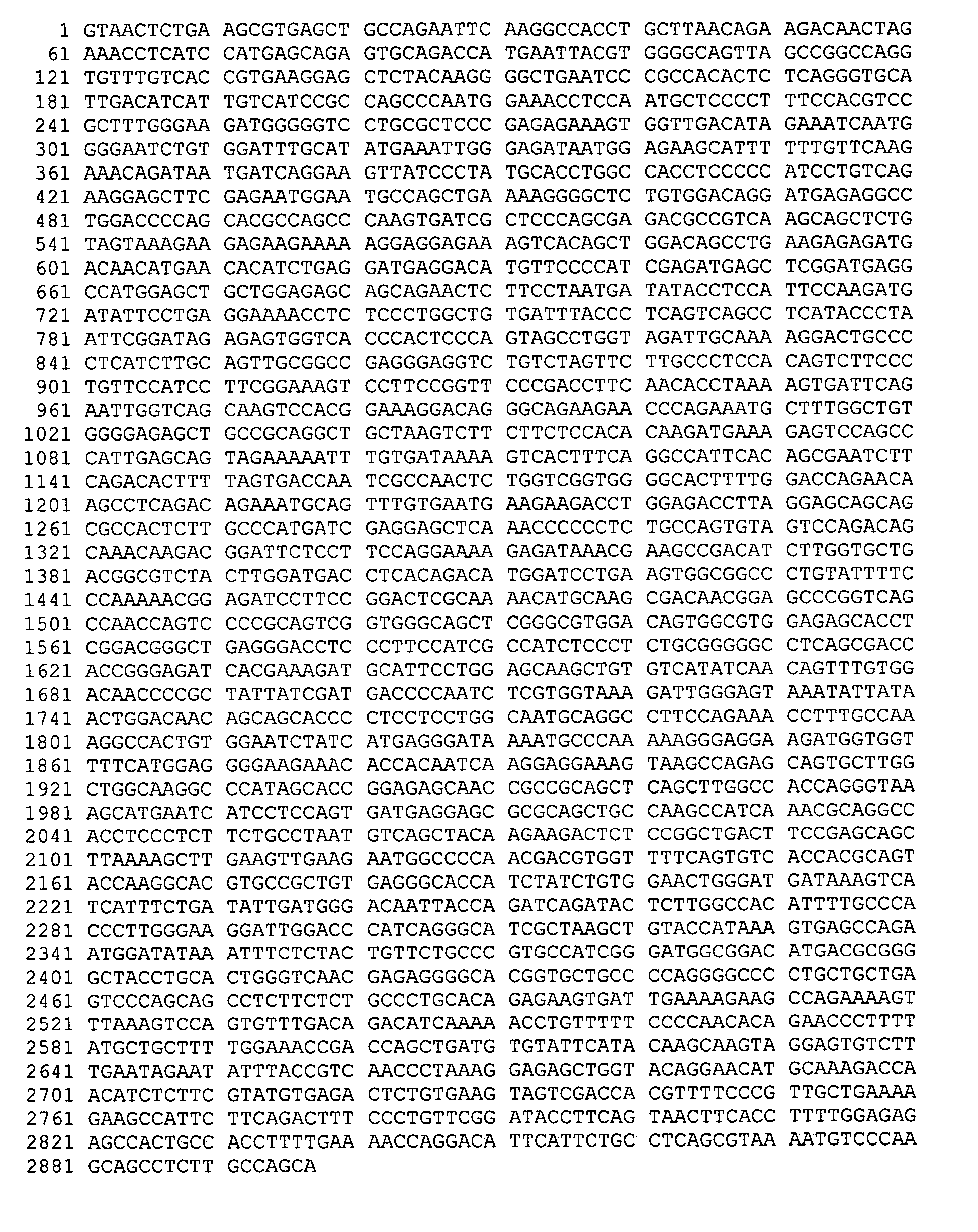
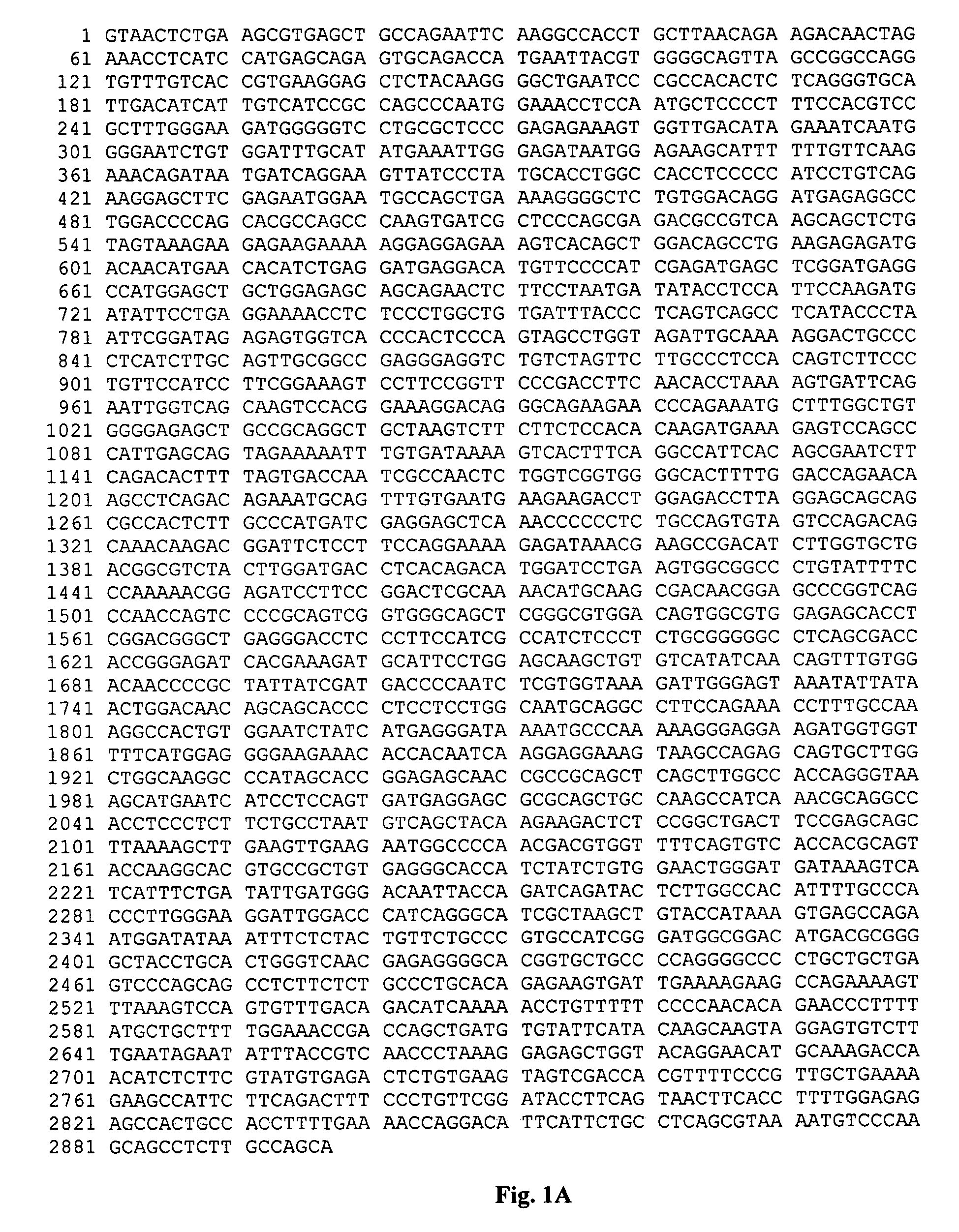
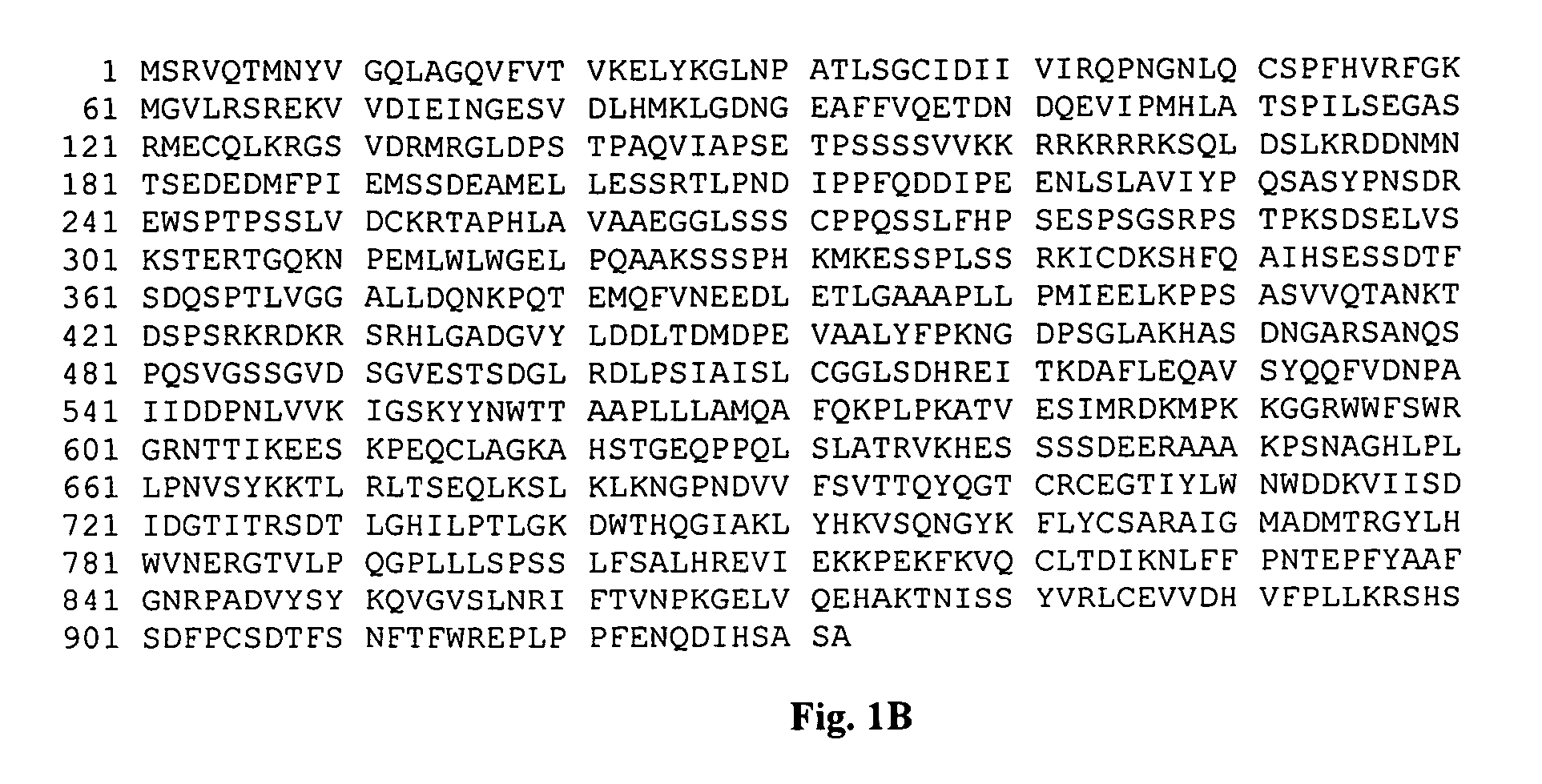
Identification of the Human Lipin1B2 Gene and Protein
[0125] The open reading frame of human Lipin1A was cloned in two independent fragments. The sequence encoding the N-terminus of human Lipin was generated by polymerase chain reaction (PCR) (using primers: 5′-CTA GTC TAG AGA ATT CCT CGG TGC AGA CCA TGA ATT A-3′ (SEQ ID NO:7) and 5′-CCA CTT CAG GAT CCA TGT CTG TG-3′ (SEQ ID NO:8)) with human muscle cDNA as template.
[0126] The sequence encoding the C-terminal part of human Lipin was generated by PCR (with primers: 5′-GTC TAC TTG GAT GAC CTC ACA-3′ (SEQ ID NO:9) and 5′-ACC GCT CGA GTG CTG GCA AGA GGC TGC TTG G-3′ (SEQ ID NO:10)) with human muscle cDNA as template. Both PCR-products were subcloned in pCR-BluntII (Invitrogen) and subsequently joined by digestion with EcoRI and BamHI, and BamHI and XhoI, respectively, and inserting it between the EcoRI and XhoI from the pBluescript vector (Stratagene). The resulting clones were named pTG-hsLipin1A.
[0127] Then the Lipin1A cDNA from clo...
example 2
Expression of Lipin Polypeptides in Human Tissues
[0130] RNAs isolated from different human tissues were obtained from Biocat, Heidelberg, Germany. Total RNA from Human Adult Normal Adipose (Biocat Order Number R1234003-50); total RNA from Human Adult Normal Stomach (Biocat Order Number R1234248-50); total RNA from Human Adult Normal Small Intestine (Biocat Order Number R1234226-50); total RNA from Human Adult Normal Colon (Biocat Order Number R1234090-50); total RNA from Human Adult Normal Lung, Pancreas, Spleen, Sk. Muscle (Biocat Order Number R8234560); total RNA from Human Adult Normal Heart, Brain, Kidney, Liver (Biocat Order Number R8234559); total RNA from Human Adult Normal Thyroid (Biocat Order Number R1234265-50). RNAs from adipose tissue of donors with known body mass index (BMI) were obtained from Stratech, Soham, UK (L020703; L031703; L051603; L030803; L042903; L061303Abd) and Zen-Bio, NC, USA (L012703).
[0131] The RNA was treated with DNase according to the instruction...
example 3
Assays for the Determination of Free Fatty Acid Uptake, Lipid Synthesis and Triglyceride Levels in Lipin1A or Lipin1B2 Overexpressing Cells (FIG. 6)
PUM
| Property | Measurement | Unit |
|---|---|---|
| Temperature | aaaaa | aaaaa |
| Time | aaaaa | aaaaa |
| Weight | aaaaa | aaaaa |
Abstract
Description
Claims
Application Information
 Login to View More