
Shielding wireless transponders
- Summary
- Abstract
- Description
- Claims
- Application Information
AI Technical Summary
Benefits of technology
Problems solved by technology
Method used
Image

Examples
Embodiment Construction
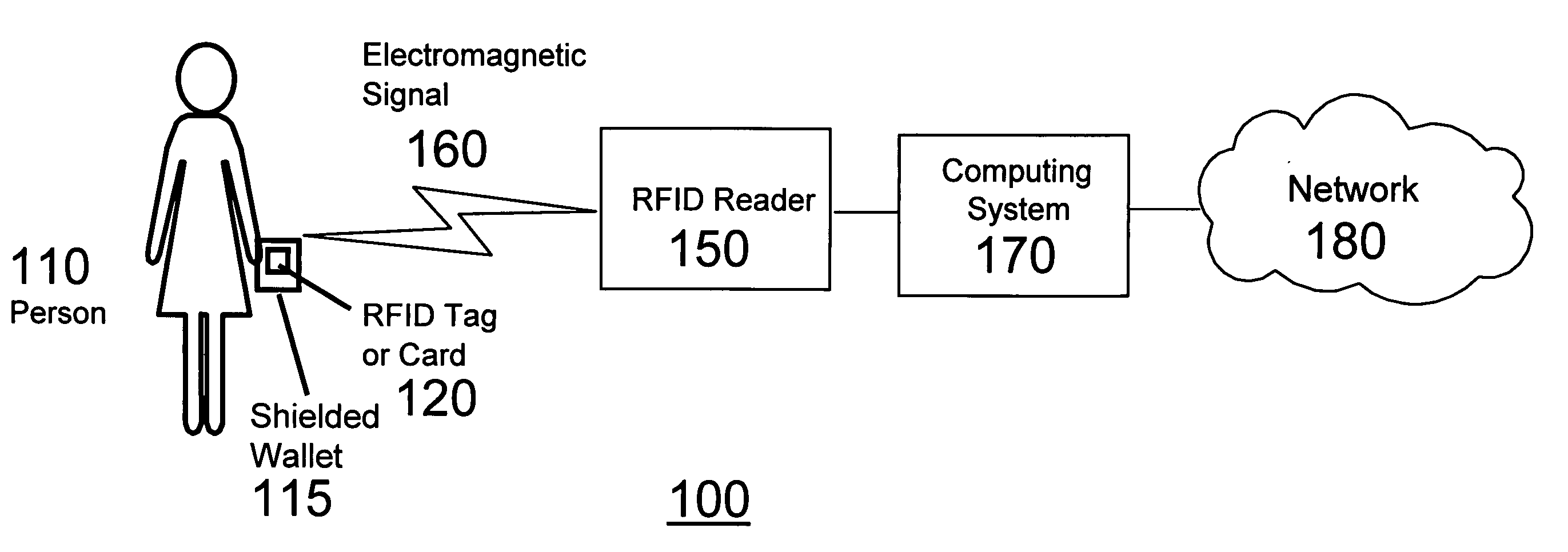
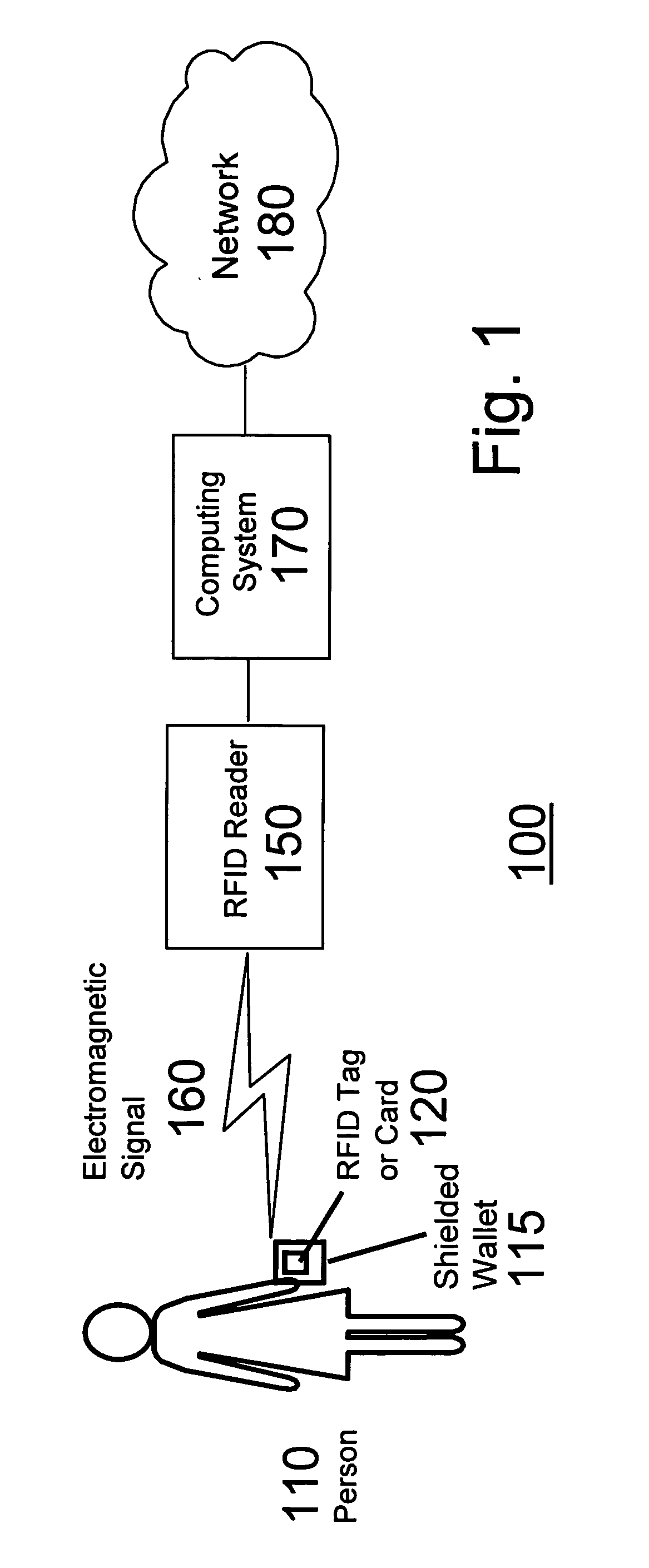
[0017] The present invention provides methods, systems and apparatus to protect wireless transponders, such as cards, fobs or RFID tags that may be carried on a person within a carrying case or enclosure from an unauthorized interrogation. Such cards or tags have means for receiving and storing electronic information, commonly in binary form using memories and / or electronic circuits, typically, but not exclusively such as chips containing “bits” to store the information. The invention is designed to provide privacy for this type of electronic information and yet permit the information to be queried at the users discretion. At the same time, the cards and tags can be protected from receiving unauthorized or unwanted information. The invention provides means that permit a user, generally the owner or holder of a wireless transponder, to decide when reception or interrogation of this personal information is desirable by simple mechanical means.
[0018] Since the issue of privacy is of c...
PUM
 Login to View More
 Abstract
Description
Claims
Application Information
 Login to View More