Programmatic control of RFID tags

a technology of programmable control and rfid tags, applied in the field of rfid technology, can solve the problems of long life span, limited ability to control the tags, and physical size of active tags, and achieve the effect of increasing the number of active tags and increasing the cost of passive tags
US20080006696A1Active Publication Date: 2008-01-10RICOH KK

Patent Information

Authority / Receiving Office
US ยท United States
Patent Type
Applications(United States)
Current Assignee / Owner
RICOH KK
Publication Date
2008-01-10

Smart Images

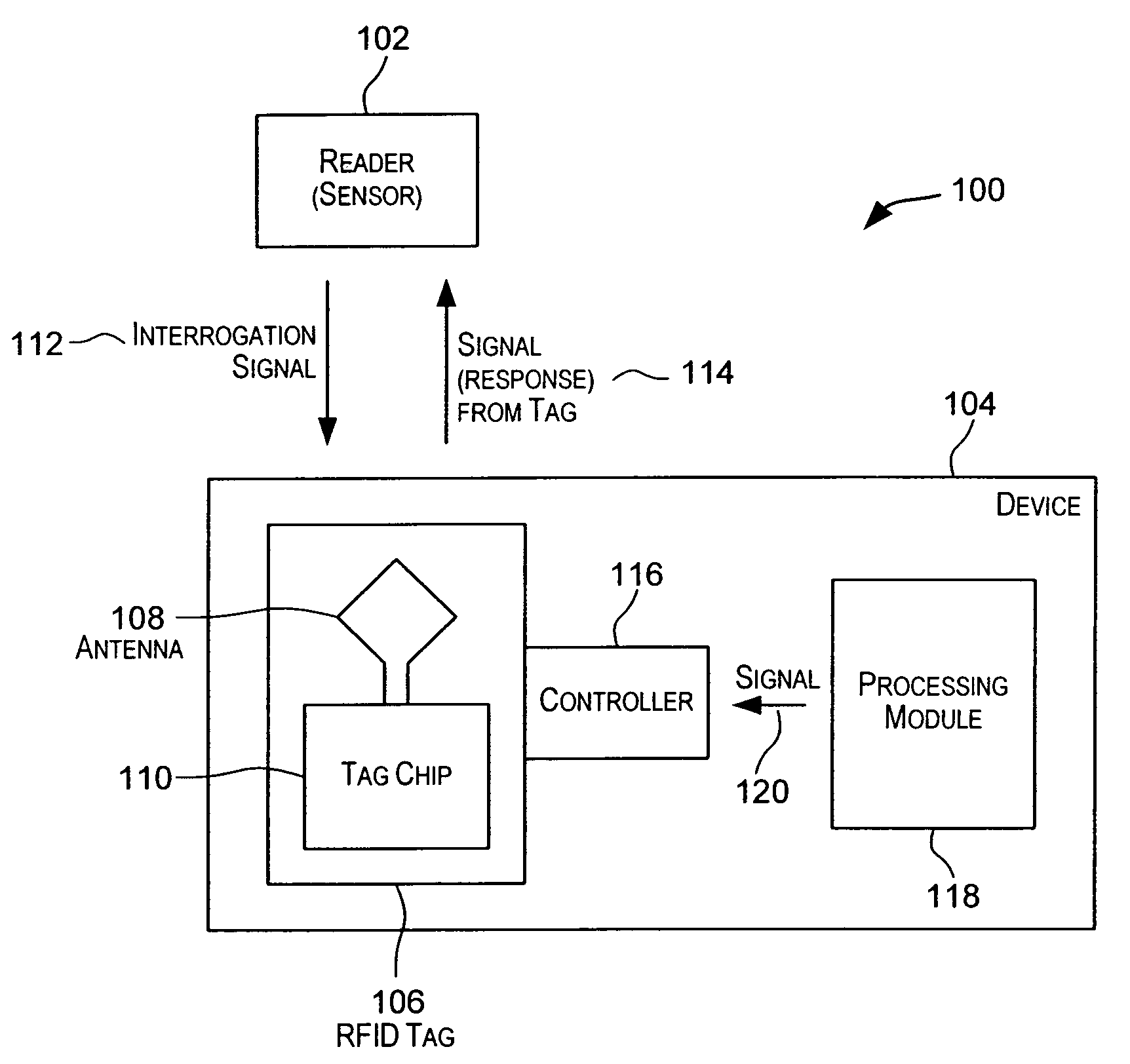
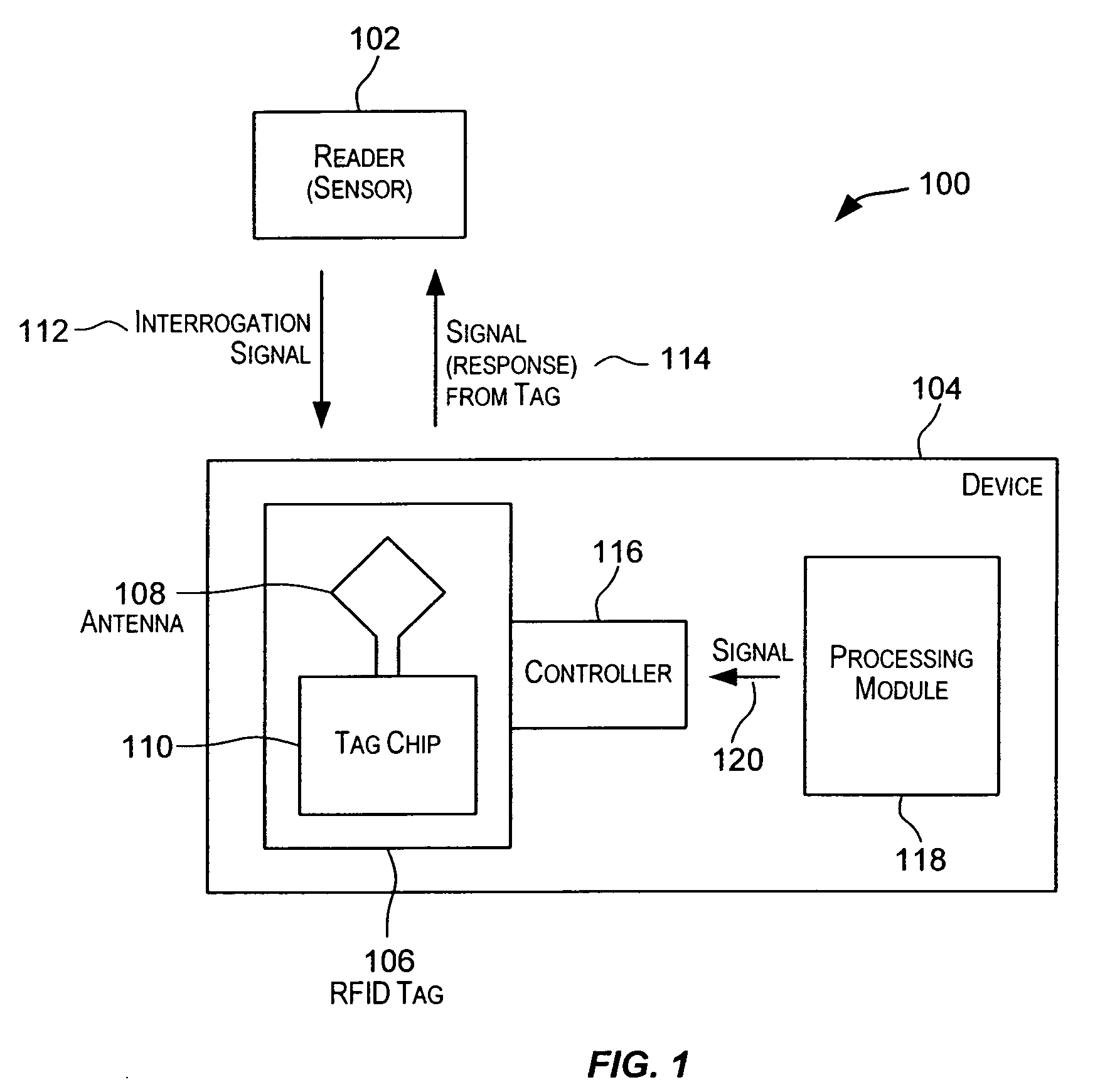
  • Figure 1
    Figure 1
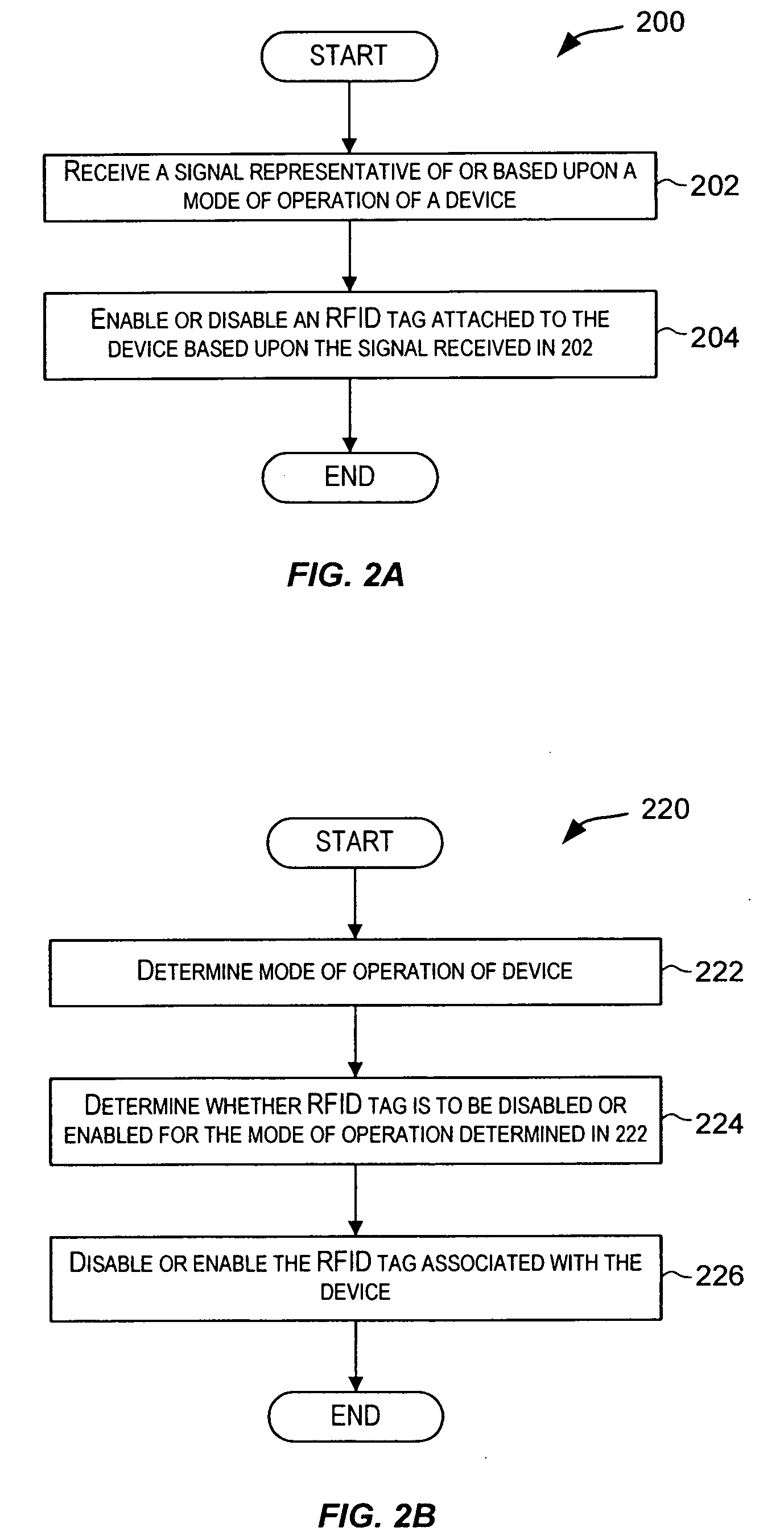
  • Figure 2
    Figure 2
  • Figure 3
    Figure 3
Patent Text Reader

Abstract

Techniques that enable a device to advertise its mode of operation using an RFID tag attached to the device. Techniques are provided for programmatically controlling an RFID tag. An RFID tag attached to a device is programmatically enabled or disabled depending upon the mode(s) of operation of the device. The RFID tag is able to transmit a signal when enabled and not able to transmit a signal when disabled. Using such a controllable RFID tag, a device can efficiently indicate or advertise its mode of operation to an RFID reader or sensor.
Need to check novelty before this filing date? Find Prior Art

Description

BACKGROUND OF THE INVENTION

[0001] The present invention relates to radio frequency identification (RFID) technology, and more particularly to techniques that enable a device to advertise its mode of operation using an RFID tag attached to the device.

[0002] RFID tags are commonly used for inventory control and tracking of objects. It is well known that RFID chips are only readable from a few centimeters away, unless they are coupled to an antenna. However, once properly attached to an antenna, they are then visible from a much greater distance, for example, up to 10 meters in the case of RFID chips in the 2.4 GHz transmission band.

[0003] An RFID tag generally comprises a microchip coupled to an antenna. RFID tags are configured to respond to interrogation signals received from an RFID reader. The response signal transmitted from the RFID tag may then be read and used by the reader. An antenna attached to an RFID tag may be used for receiving an interrogation signal from an RFID reader a...

Claims

the structure of the environmentally friendly knitted fabric provided by the present invention; figure 2 Flow chart of the yarn wrapping machine for environmentally friendly knitted fabrics and storage devices; image 3 Is the parameter map of the yarn covering machine
Login to View More