
Call Distribution in a Direct-Communication Network
- Summary
- Abstract
- Description
- Claims
- Application Information
AI Technical Summary
Benefits of technology
Problems solved by technology
Method used
Image

Examples
Embodiment Construction
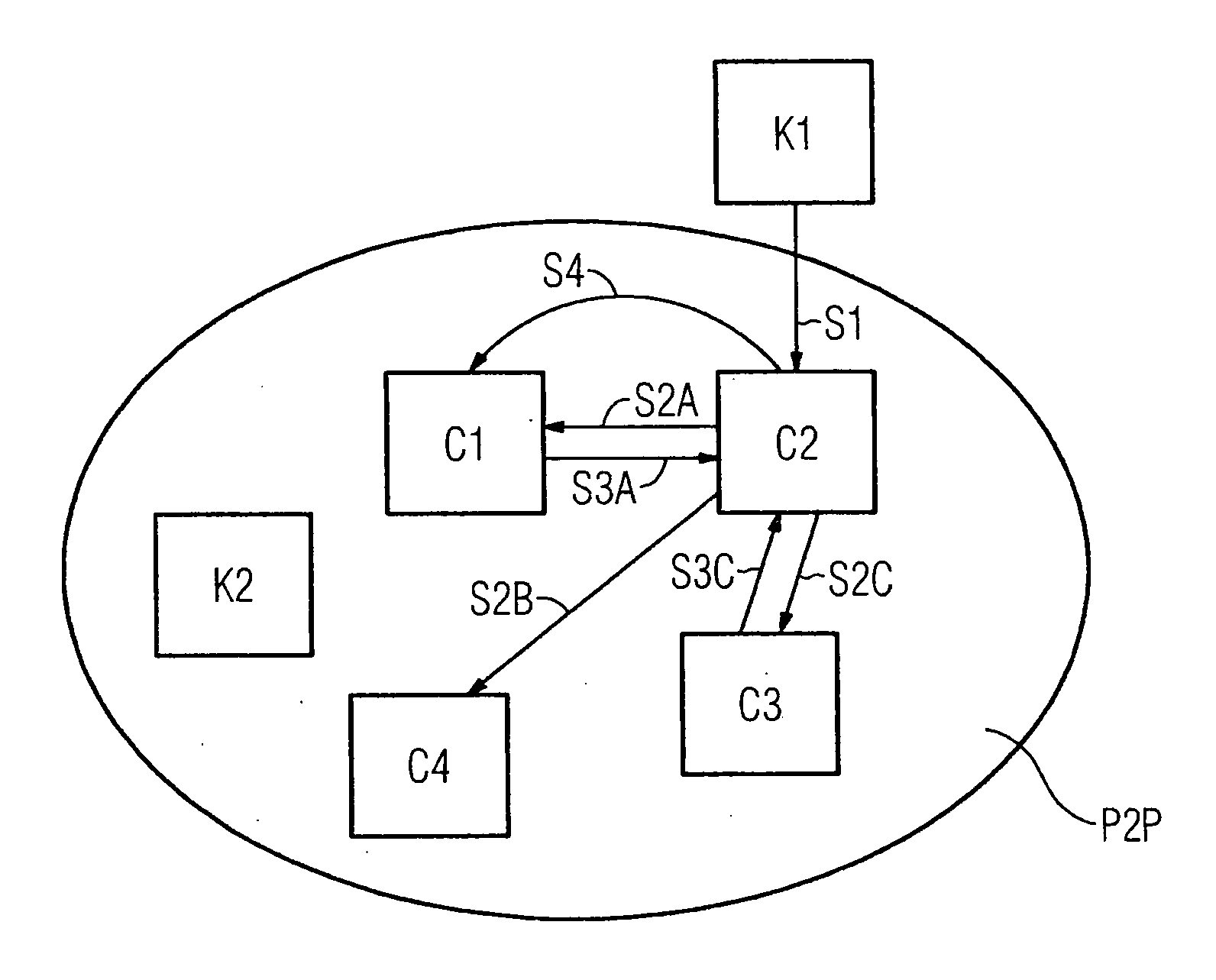
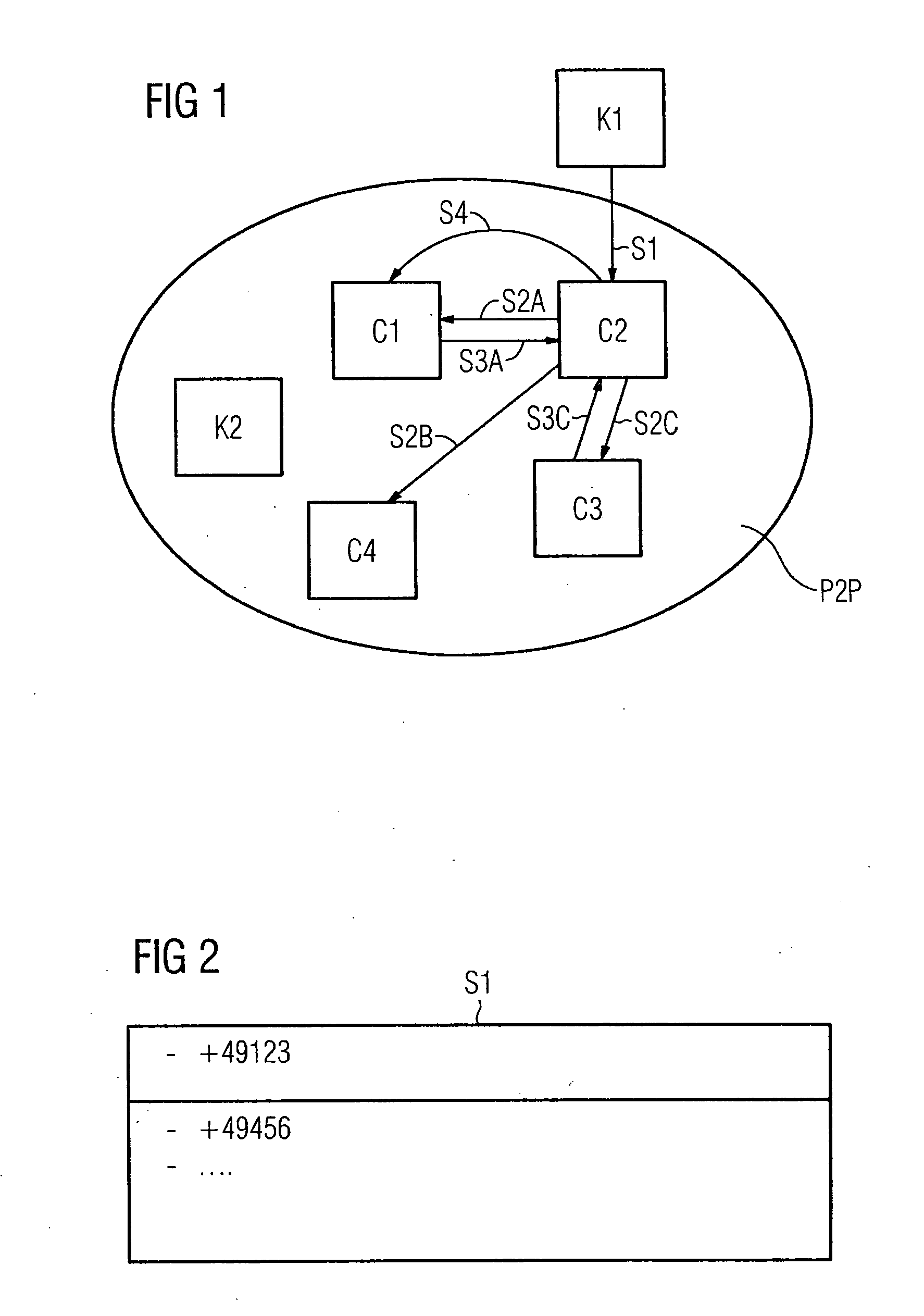
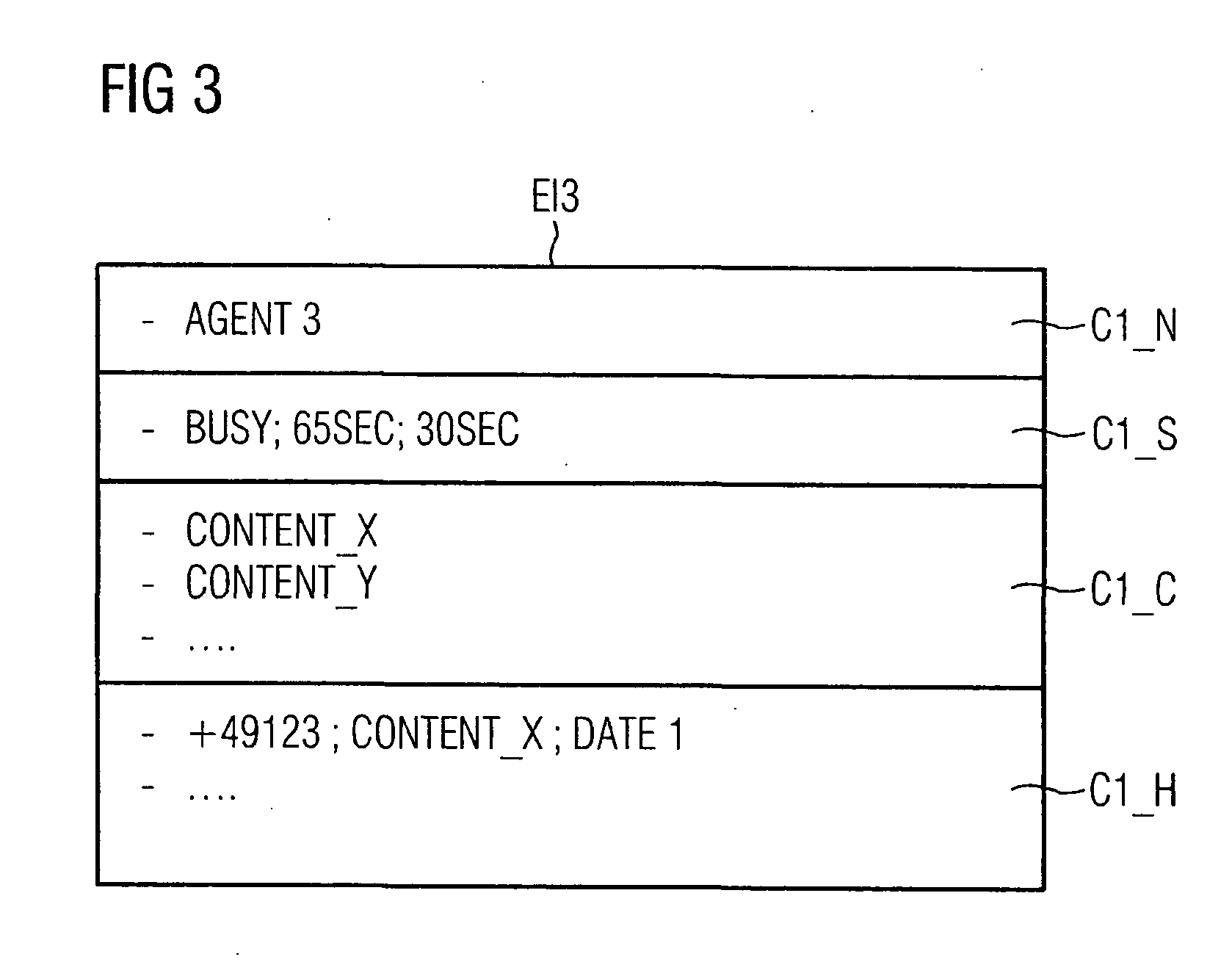
[0024]FIG. 1 schematically shows a direct-communication communication network P2P (Peer-to-Peer) which contains the clients C1, C2, C3, C4. The clients C1, C2, C3, C4 are formed by communication components (IP telephone, multimedia PC, PDA, WLAN terminal, smart phone or the like), with client C1 being a communication component with a voice mail server functionality (telephone answering machine function), clients C2 and C3 being multimedia PCs (computer with a telephony function), and client C4 being a IP phone (VoIP telephone). In this arrangement, the clients C2, C3 and C4 are associated with the employees at a call center who are associated with different responsibilities and are intended to handle calls from external customers. A further communication component K2, which is likewise arranged in the communication network P2P is not part of the workgroup. The Communication component K1 is shown in FIG. 1 as a representative of an unlimited number of external communication component...
PUM
 Login to View More
 Abstract
Description
Claims
Application Information
 Login to View More