
Catheter anchor
a catheter and anchoring technology, applied in the field of catheter anchoring or securement systems, can solve the problems of tube and catheter main body not being securely affixed to the patient's skin, inconvenient fixation method, other complications
- Summary
- Abstract
- Description
- Claims
- Application Information
AI Technical Summary
Benefits of technology
Problems solved by technology
Method used
Image

Examples
Embodiment Construction
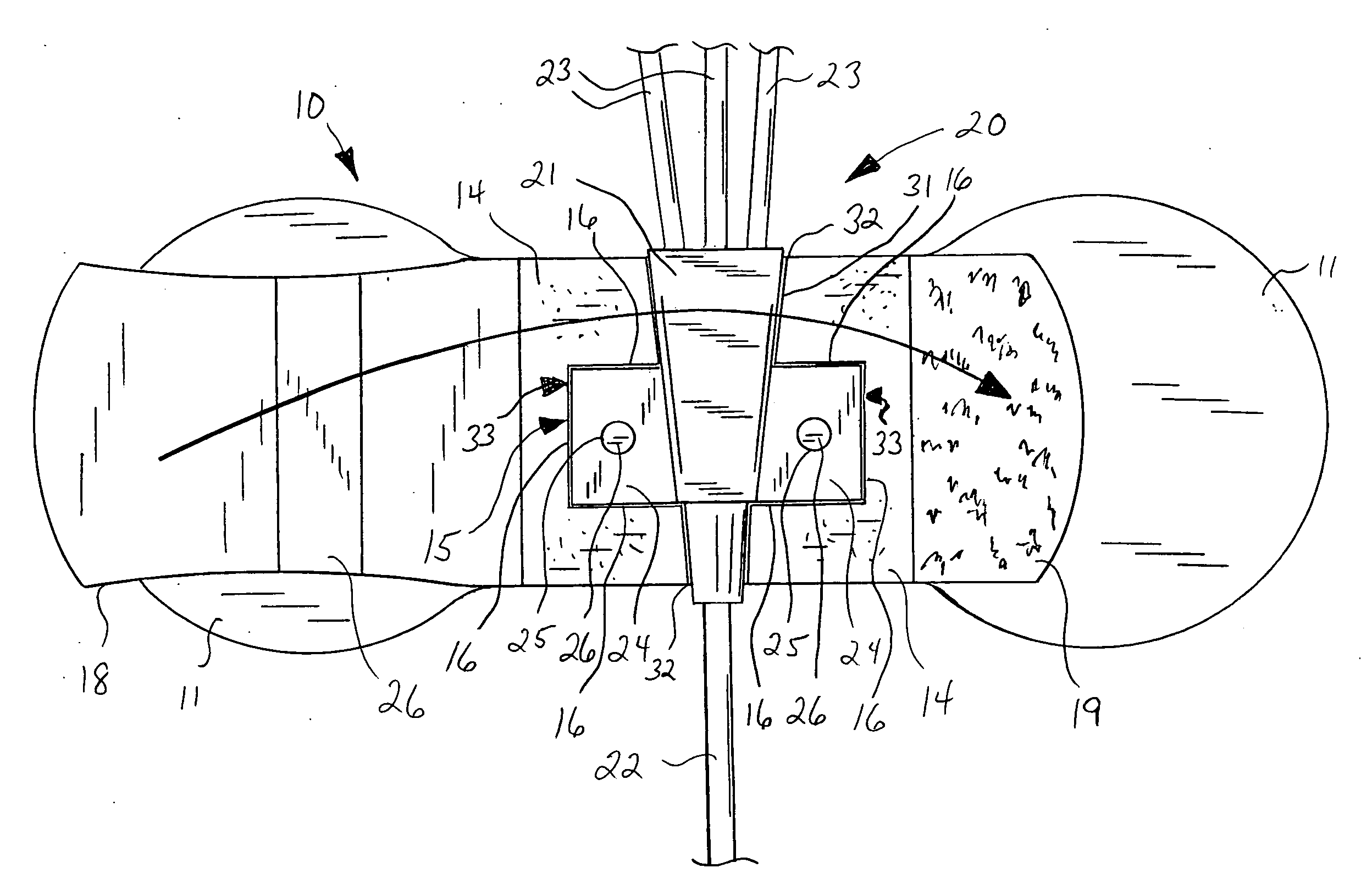
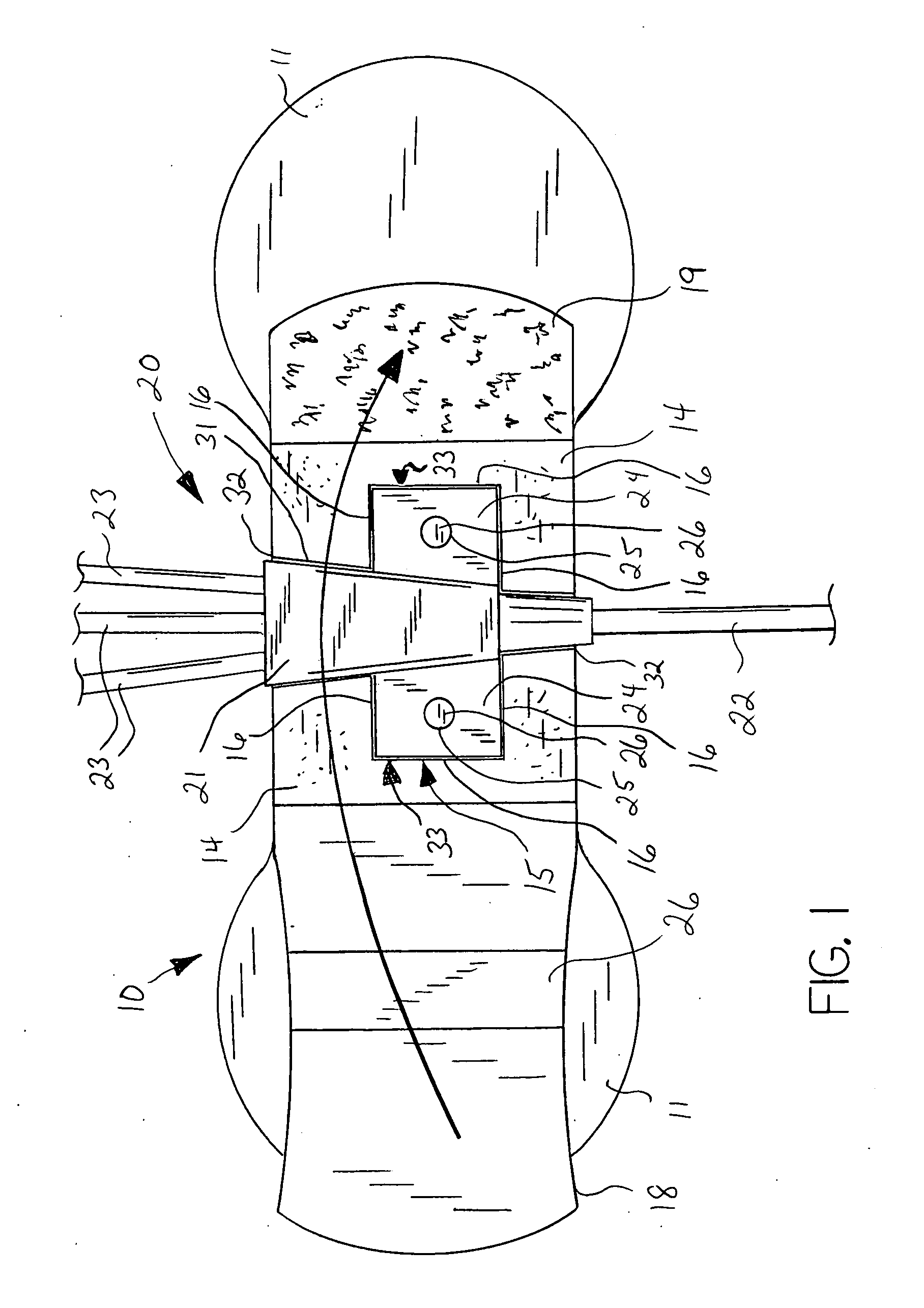
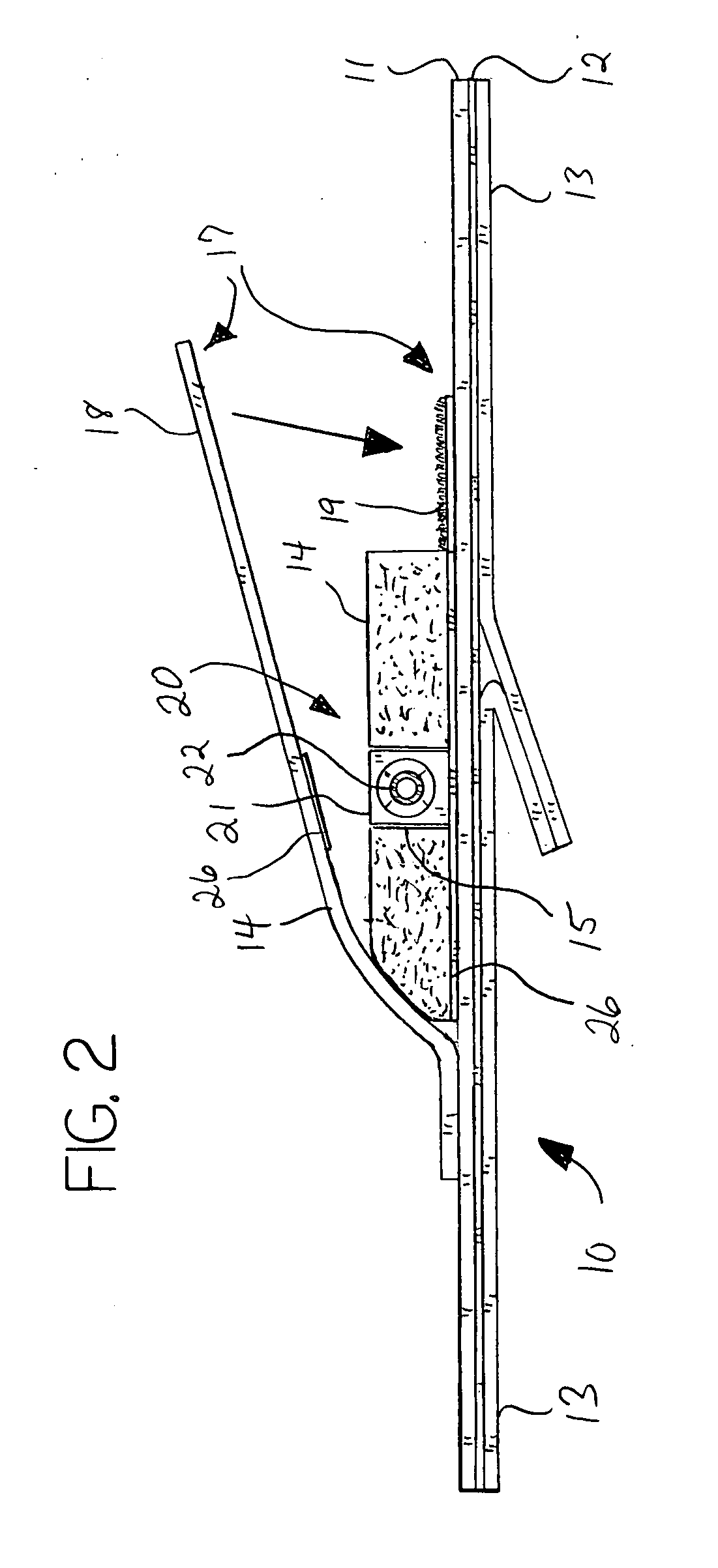
[0013]With reference to the drawings, the invention will now be described with regard for the best mode and the preferred embodiment. In a most general sense, the invention is an anchoring device or system for securing a medical device or line to the skin of a patient. In a more particular sense, the invention is an anchoring device or system in combination with or for securing a catheter to the skin of a patient, with the term catheter being taken herein to encompass a catheter system or its parts comprising conduit lines, the catheter needle and a catheter body member, this term taken herein to define a fitting, adaptor, tubing connector, hub or the like having a relatively rigid body, raised profile and a footprint exceeding that of any of the tubular conduit lines, especially in the direction transverse to the axial flow direction. As used herein, the term “horizontal” shall be taken to be the direction generally parallel to the area of the patient's skin to which the device is ...
PUM
 Login to View More
 Abstract
Description
Claims
Application Information
 Login to View More