
Hardtail converter block for a tremolo equipped guitar
a converter block and guitar technology, applied in the field of tremolo devices, can solve the problems of increasing the tension on the remaining strings, sharpness, and tremolo devices, and achieve the effect of reducing the possibility of string breakage and reducing the weight of the guitar
- Summary
- Abstract
- Description
- Claims
- Application Information
AI Technical Summary
Benefits of technology
Problems solved by technology
Method used
Image

Examples
Embodiment Construction
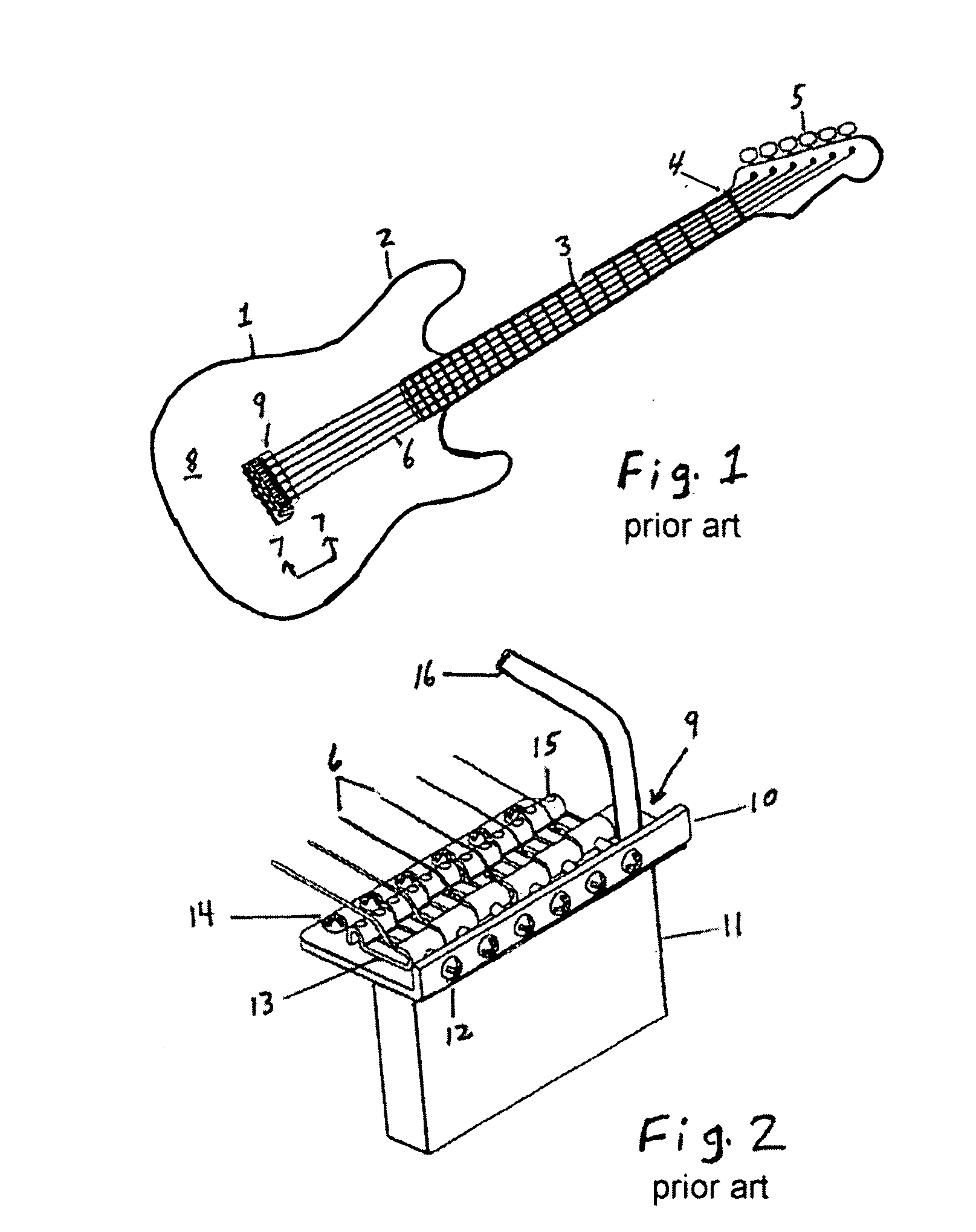
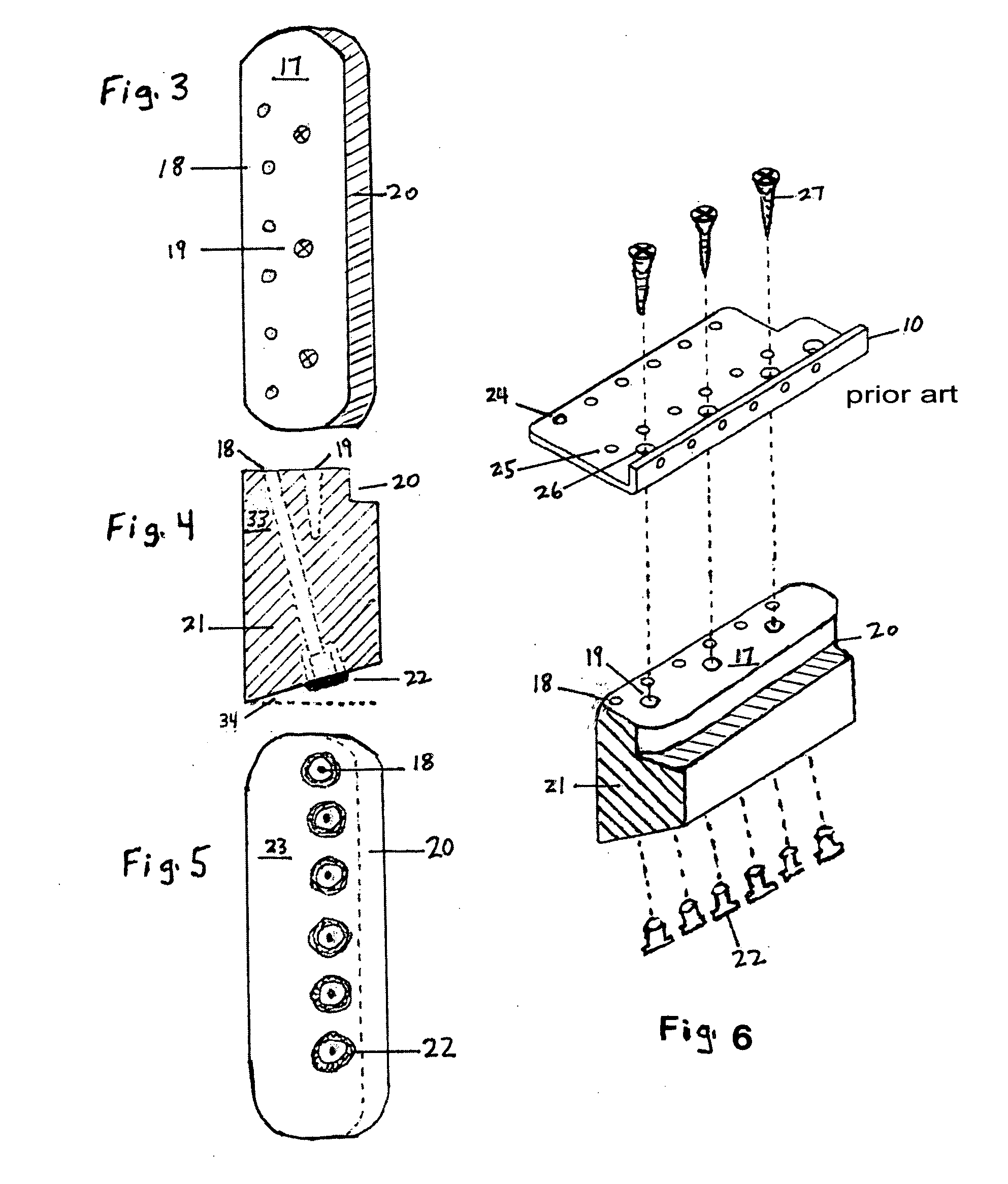
[0028]If a player does not use the tremolo when playing, a method of removing the counterbalancing feature of the tremolo bridge is desirable. Referring to FIGS. 3 through 8, a preferred method of accomplishing this is presented.
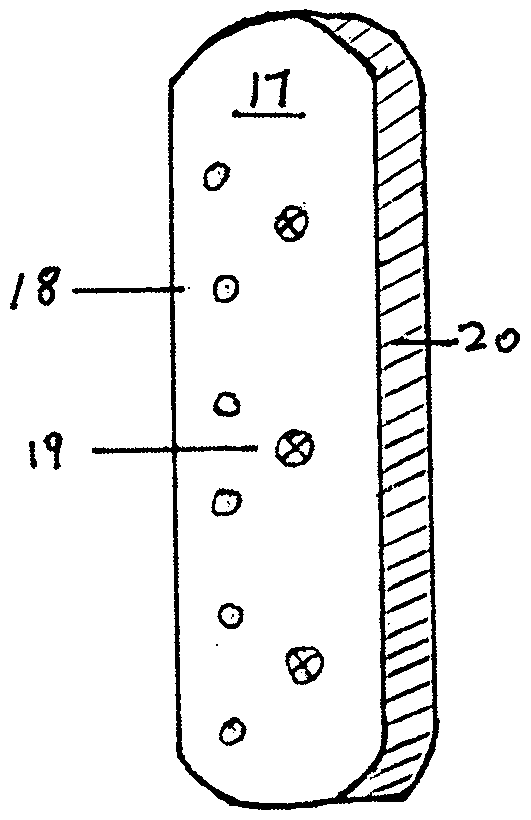
[0029]FIG. 3 shows a top view 17 of the present invention, herein after referred to as “the block”, and is designed to fit snugly into the routed tremolo cavity of body 2. As presented, it is machined from a piece of clear hardwood with the grain running longitudinally from top to bottom and substantially fills the vertical portion of the tremolo cavity as shown in FIG. 8 reference 31.
[0030]Six one-eighth inch diameter holes 18 are drilled so that they align with holes 25 on the bridge plate 10. Three three-sixteenth inch holes 19 are drilled so that they align with holes 26 in the bridge plate 10.
[0031]A notch 20 is cut one-quarter inch deep and one-quarter inch wide on the right-hand side of the top face 17. This notch must interface with the lip 32 on the...
PUM
 Login to View More
 Abstract
Description
Claims
Application Information
 Login to View More