
System for enabling or restricting certain cellular telephone device capabilities in certain zones
a technology of cellular telephone devices and capabilities, applied in the direction of substation equipment, electrical equipment, assess restrictions, etc., can solve the problems of individuals not having the courtesy to turn off or at least, distracted and irritated, and unable to achieve the effect of mute or mu
- Summary
- Abstract
- Description
- Claims
- Application Information
AI Technical Summary
Benefits of technology
Problems solved by technology
Method used
Image

Examples
Embodiment Construction
[0022]A high-level view of the operation of this system is presented first. Then a concrete design of a preferred embodiment is presented later.
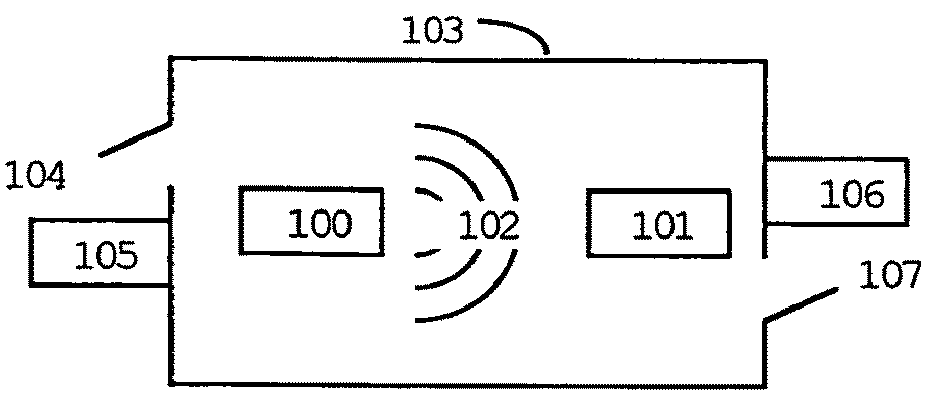
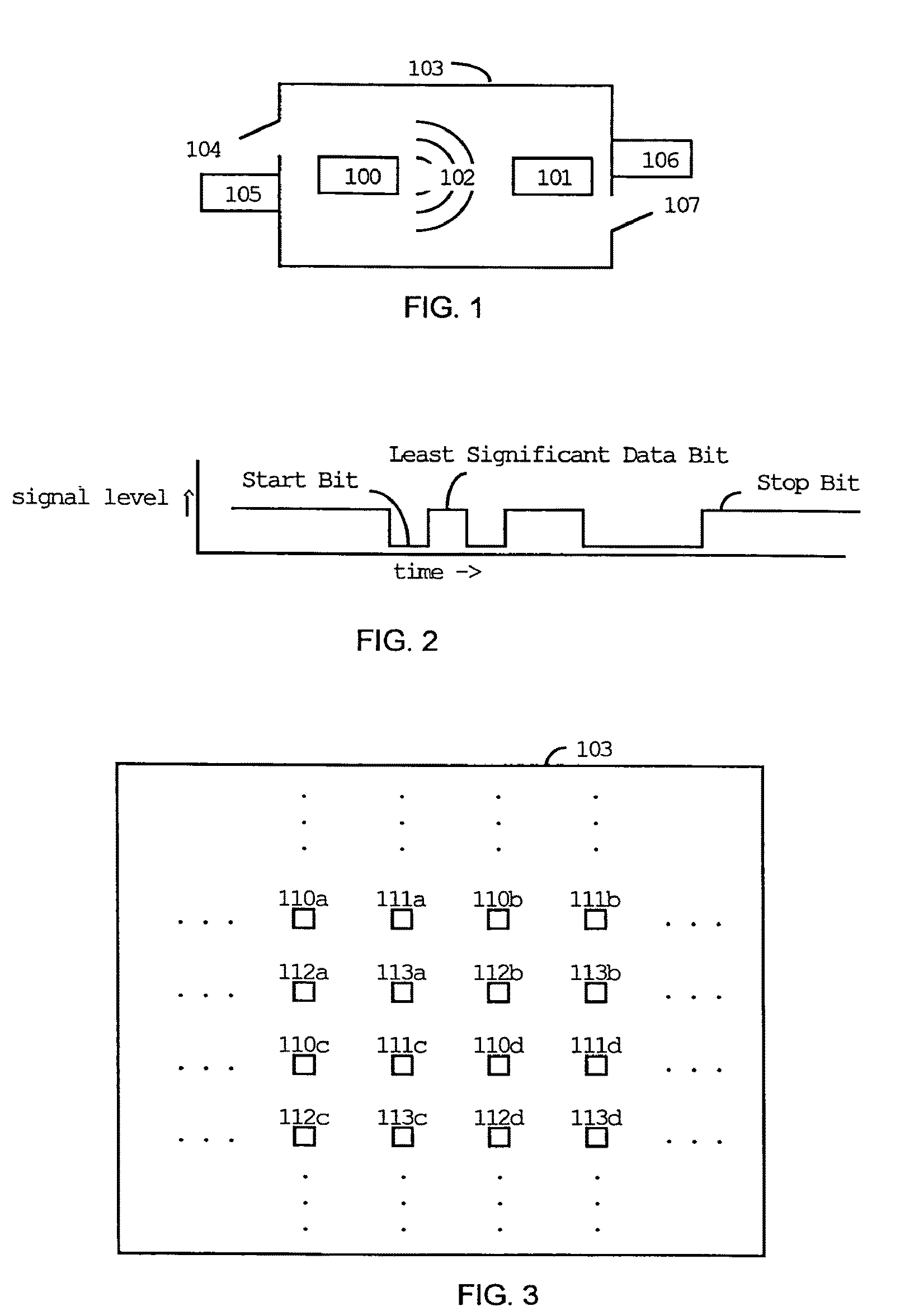
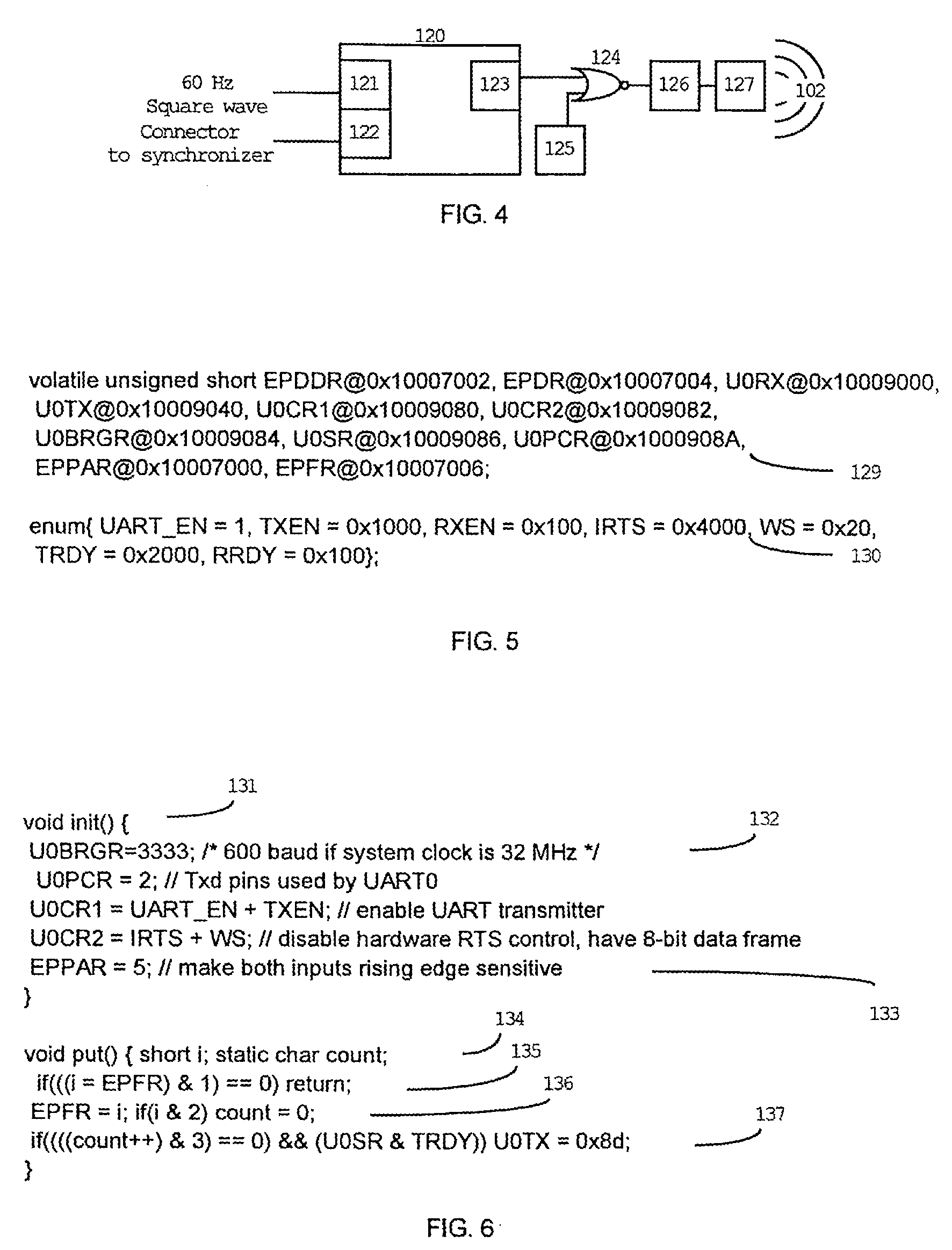
[0023]FIG. 1 illustrates the general organization of this system. A restricted area 103 may be protected by one of three operating modes or a combination thereof. In a first mode, the restricted area has one or more control signal transmitters (CSTs) 100, and one or more restricted devices 101 may be carried by persons in the area. The control signal 102 passes throughout (blankets) the restricted area 103. Whenever restricted device 101 receives the control signal 102, it will be muted. Alternatively in a second operating mode, a first CST 105 may be placed by each entrance 104 to a restricted area 103, and a second CST 106 may be placed by each exit 107 from a restricted area 103. When a restricted device 101 receives a control signal from first CST 105, it is muted until the restricted device 101 receives a control signal from second CST ...
PUM
 Login to View More
 Abstract
Description
Claims
Application Information
 Login to View More