Methods and apparatus to generate rules for clinical lab results

a technology of clinical lab results and rules, applied in the field of clinical decision support systems, can solve the problems that doctors or users would not be able to effectively use known cdss systems for spotting such a decreas

US20080288288A1Inactive Publication Date: 2008-11-20GENERAL ELECTRIC CO
12 Cites 9 Cited by

Patent Information

Authority / Receiving Office
US · United States
Patent Type
Applications(United States)
Current Assignee / Owner
Publication Date
2008-11-20
Estimated Expiration
Not applicable · inactive patent

Smart Images

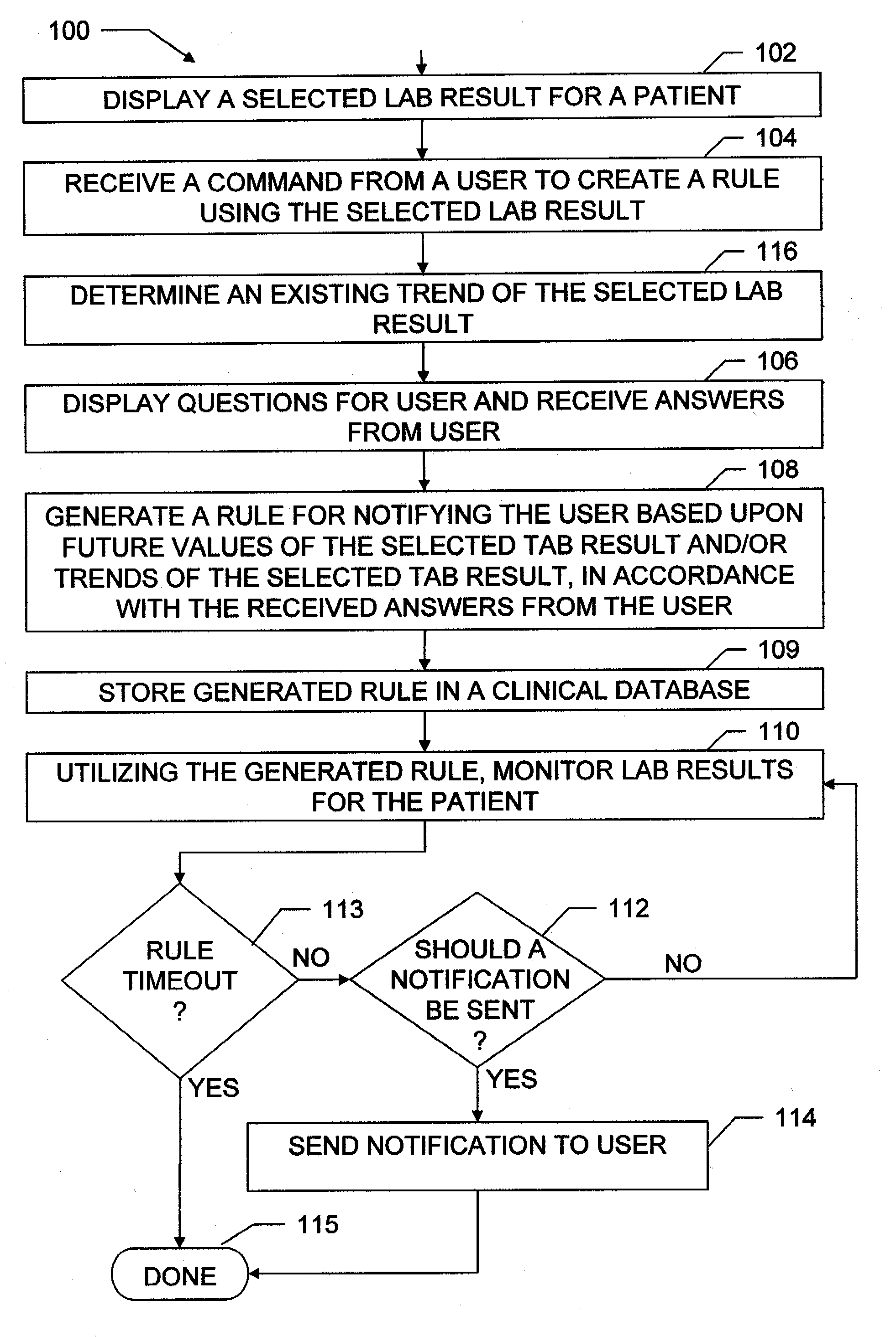
  • Figure 1
    Figure 1
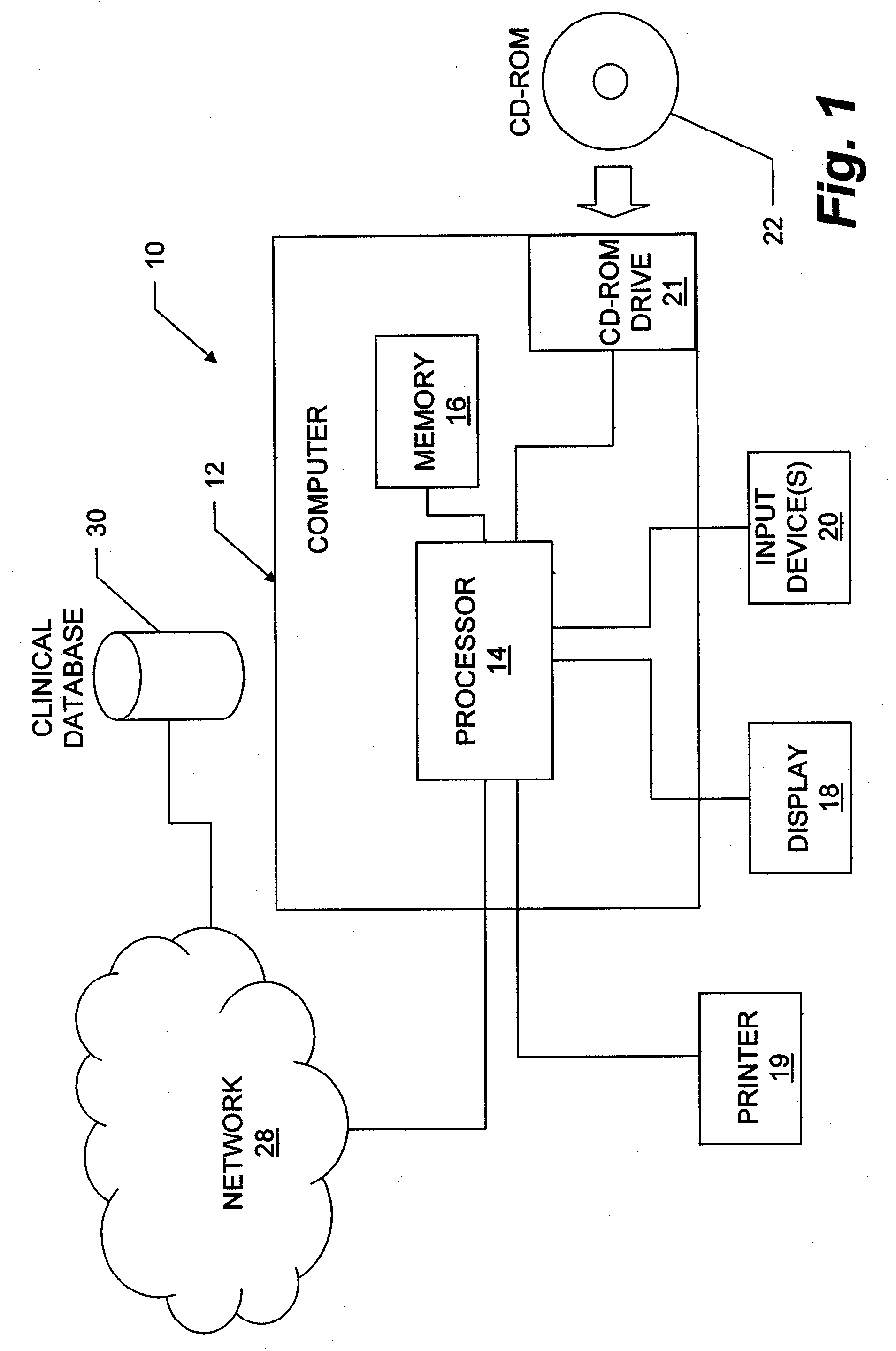
  • Figure 2
    Figure 2
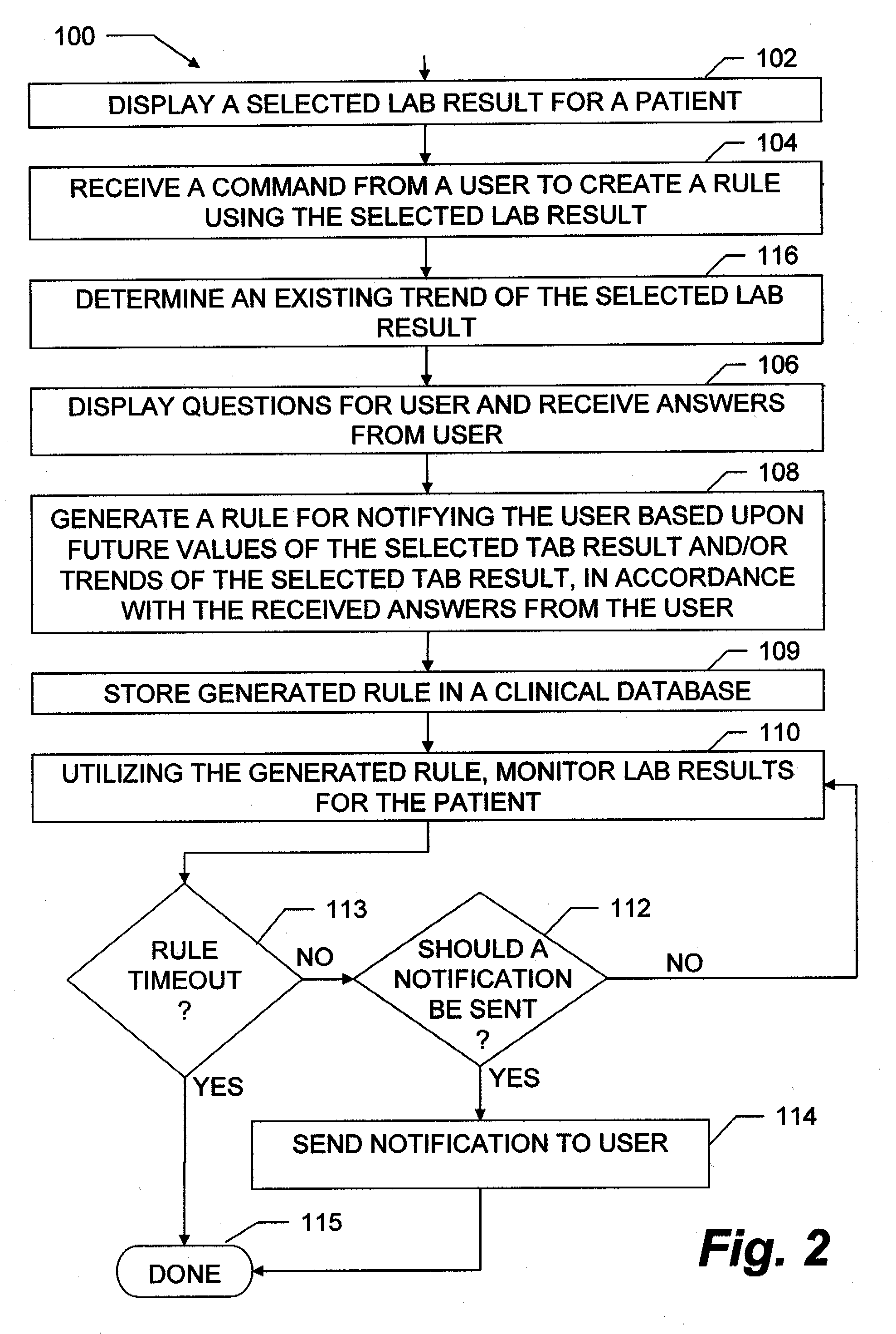
  • Figure 3
    Figure 3
Patent Text Reader

Abstract

A computer-based method for generating rules for a clinical decision support system includes displaying a selected lab result for a patient, receiving a command from a user to create a rule using the selected lab result, and displaying questions and receiving answers from the user concerning future values of the selected lab result and / or trends of the selected lab result. The method further includes generating a rule for notifying the user based upon the future values of the selected lab result and / or trends of the selected lab result, in accordance with the received answers from the user.
Need to check novelty before this filing date? Find Prior Art

Description

BACKGROUND OF THE INVENTION

[0001] This invention relates generally to clinical decision support systems, and more particularly to methods and apparatus for generating rules for such systems.

[0002] CDSSs are typically designed to integrate a medical knowledge base, patient data and an inference engine to generate case specific advice. Components of a clinical decision support system (CDSS) include a dynamic (medical) knowledge base and an inference mechanism, which usually comprises a set of rules derived from the experts and evidence-based medicine. The CDSS can be expert system, an artificial neural network, or a combination of both.

[0003] Measurements and / or estimates of the amount of time required to write rules for CDSSs have be made and reported. In at least one published paper, the time required to write rules for seven clinical conditions has been reported as one week, while the average cost of writing rules for one condition was reported as being between 6 and 20 hours, includi...

Examples

Embodiment Construction

[0012]As used herein, an element or step recited in the singular and proceeded with the word “a” or “an” should be understood as not excluding plural said elements or steps, unless such exclusion is explicitly stated. Furthermore, references to “one embodiment” of the present invention are not intended to be interpreted as excluding the existence of additional embodiments that also incorporate the recited features. Moreover, unless explicitly stated to the contrary, embodiments “comprising” or “having” an element or a plurality of elements having a particular property may include additional such elements not having that property.

[0013]Configurations of the present invention allow users to dynamically create rules for clinical decision support systems (CDSS) by spotting a specific trend in a particular patient. For example, if the trend of a patient's measured blood pressure is going down and has fallen, say, 2%, some configurations allow the user to indicate who should be notified i...