
Novel compositions and methods for enhancing potency or reducing adverse side effects of opiold agonists
a technology of opiold and composition, applied in the direction of drug composition, biocide, heterocyclic compound active ingredients, etc., can solve the problems of significant adverse side effects and analgesia, and achieve the effect of improving analgesia
- Summary
- Abstract
- Description
- Claims
- Application Information
AI Technical Summary
Benefits of technology
Problems solved by technology
Method used
Image

Examples
example 1
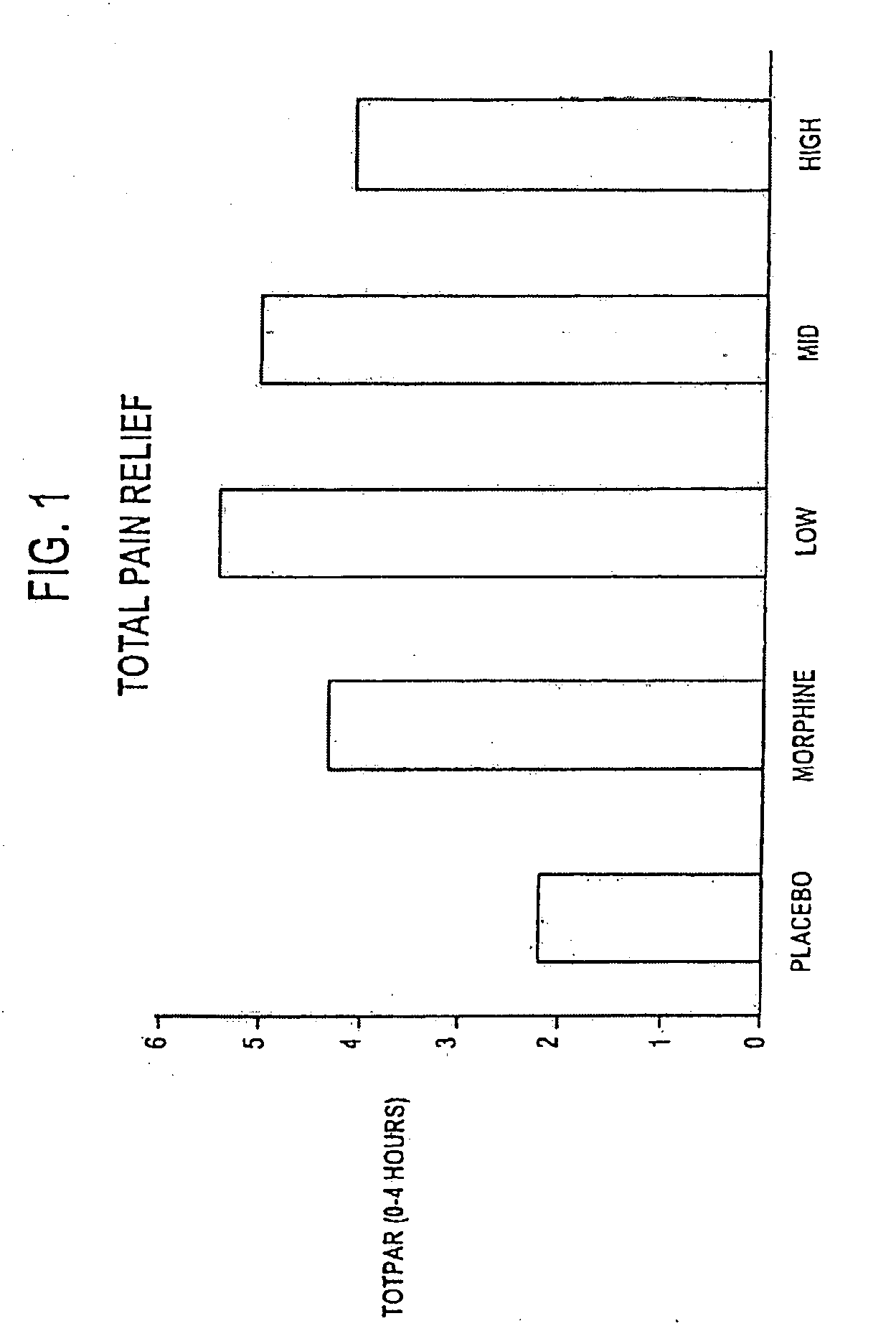
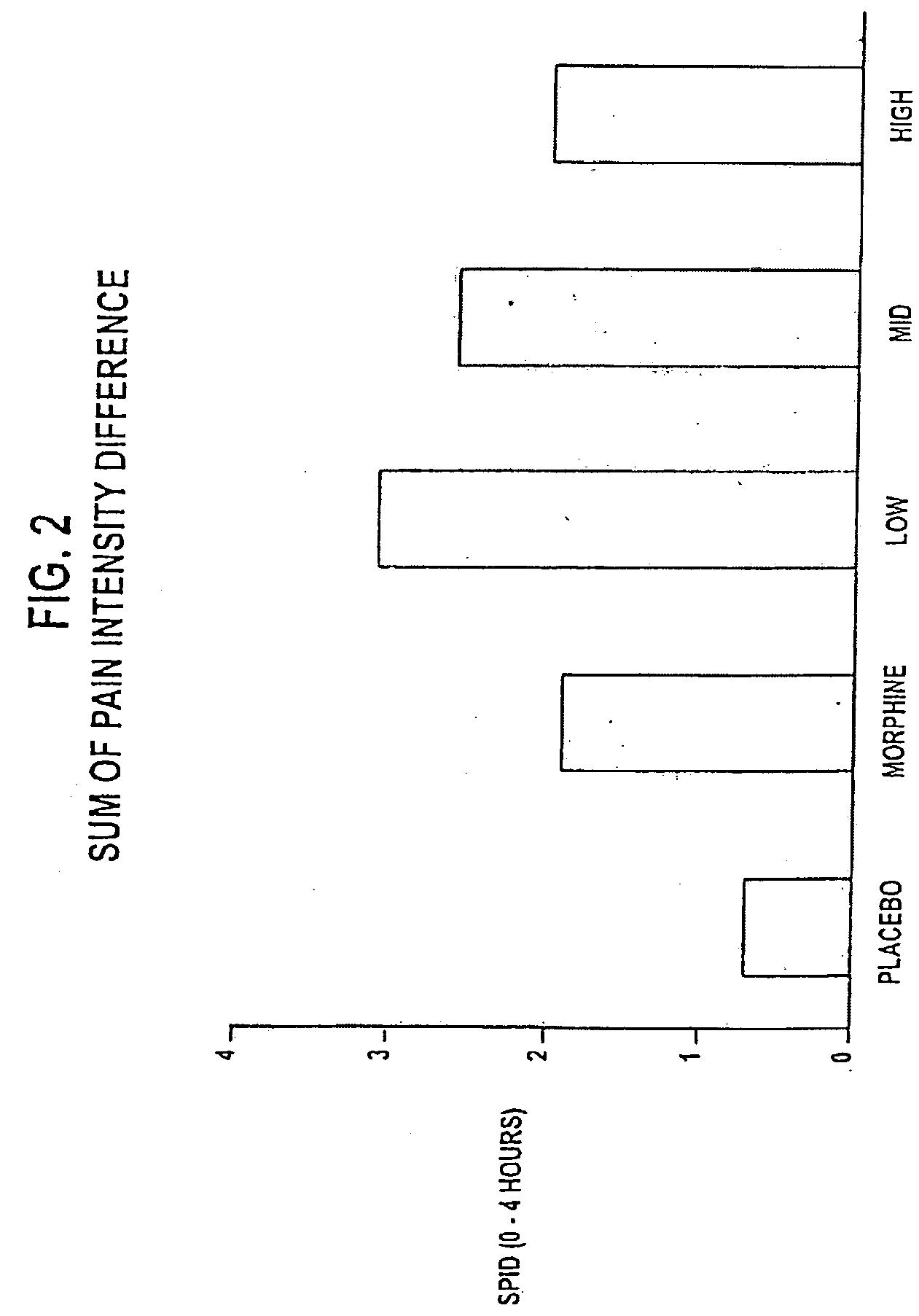
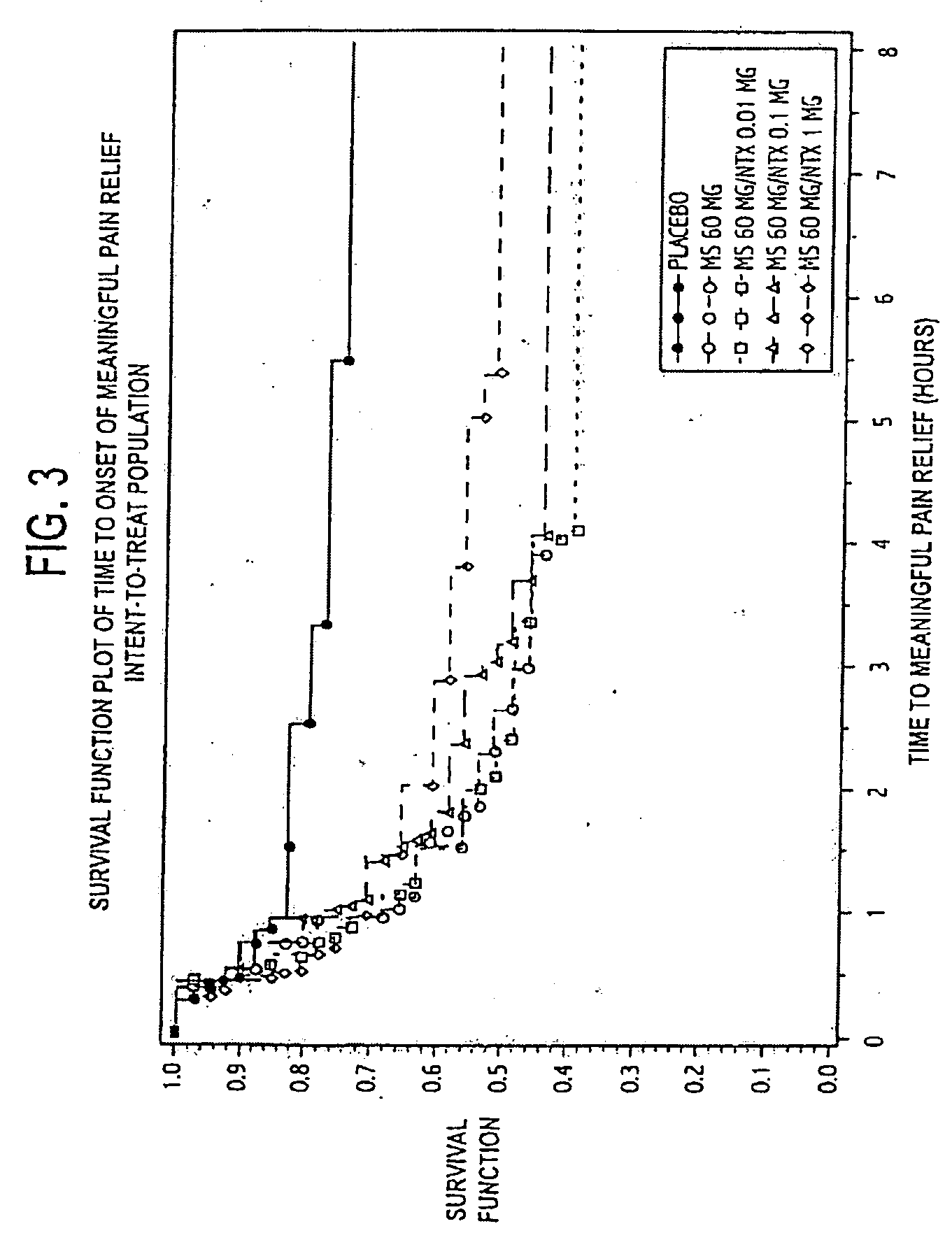
[0122]A clinical study was designed as follows: (1) to compare the analgesic activity (onset, peak, duration, and total effect) of three different doses of NTX in combination with MS 60 mg versus MS 60 mg alone in subjects with moderate to severe pain in a postsurgical dental pain model to determine whether NTX enhances the analgesic effect of MS 60 mg; and (2) to evaluate the safety of three different doses of NTX in combination with MS 60 mg versus MS 60 mg alone in subjects with moderate to severe pain in a postsurgical dental pain model to determine whether the addition of NTX reduces the frequency or severity of morphine-related side effects.
[0123]Additional objectives of the study included: (1) to compare the analgesic efficacy of MS 60 mg to placebo to establish the assay sensitivity of the study; (2) to compare the analgesic activity (onset, peak, duration, and total effect) of three different doses of NTX in combination with MS 60 mg versus placebo in subjects with moderate...
example 2
[0214]The results from the clinical study as described in Example 1 were analyzed by gender.
[0215]The results for females and males from the Example 1 clinical study are shown in the following Tables and Figures.
[0216]A total of 204 subjects were randomized; among them 201 subjects were deemed evaluable. One subject in each of the placebo, MS and MS / 0.1 NTX groups was not evaluable because the subject took rescue medication less than 90 minutes after dosing. Tables 14A and 14B show the number of female and male subjects separately.
TABLE 14AAnalysis Populations, Female PatientsTreatmentsMS (60 mg)MS (60 mg)MS (60 mg)Placebo withMS (60 mg)with NTXwith NTXwith NTXPlacebowith Placebo(0.01 mg)(0.1 mg)(1.0 mg)TotalPatients Enrolled [1]2223202020105Safety22 (100.0%)23 (100.0%)20 (100.0%)20 (100.0%)20 (100.0%)105 (100.0%)Intent-To-Treat22 (100.0%)23 (100.0%)20 (100.0%)20 (100.0%)20 (100.0%)105 (100.0%)Evaluable22 (100.0%)23 (100.0%)20 (100.0%)19 (95.0%)20 (100.0%)104 (99.0%)[1] PATIENTS WIT...
example 3
[0234]An additional clinical study using morphine alone and in combination with low doses of naltrexone was designed substantially the same as that described in Example 1, with the following differences: (1) six treatment groups (not 5) with three different doses of NTX (0.1 mg, 0.01 mg and 0.001 mg) in combination with MS 60 mg versus MS 60 mg alone, versus NTX 0.01 mg alone, and versus placebo alone, in subjects with moderate to severe pain in a postsurgical dental pain clinical study; (2) each group was 50 patients (not 40) for a total of 300 (not 200); (3) subjects had three or four full or partial bony impacted third molars (not 2 or more impacted third molars); (4) meaningful pain relief only (not meaningful and perceptible pain relief with two stopwatches) was measured using one stopwatch; (5) the primary efficacy variables included TOTPAR-4 and SPID-4 measured through 4 hours (not TOTPAR-8 and SPID-8 measured through 8 hours); (6) the secondary efficacy variables included 6 ...
PUM
| Property | Measurement | Unit |
|---|---|---|
| Volume | aaaaa | aaaaa |
| Volume | aaaaa | aaaaa |
| Volume | aaaaa | aaaaa |
Abstract
Description
Claims
Application Information
 Login to View More