Method of compressing video data and a media player for implementing the method

US20090220003A1Active Publication Date: 2009-09-03BLACKBIRD PLC
8 Cites 3 Cited by

Patent Information

Authority / Receiving Office
US · United States
Current Assignee / Owner
Publication Date
2009-09-03

Smart Images

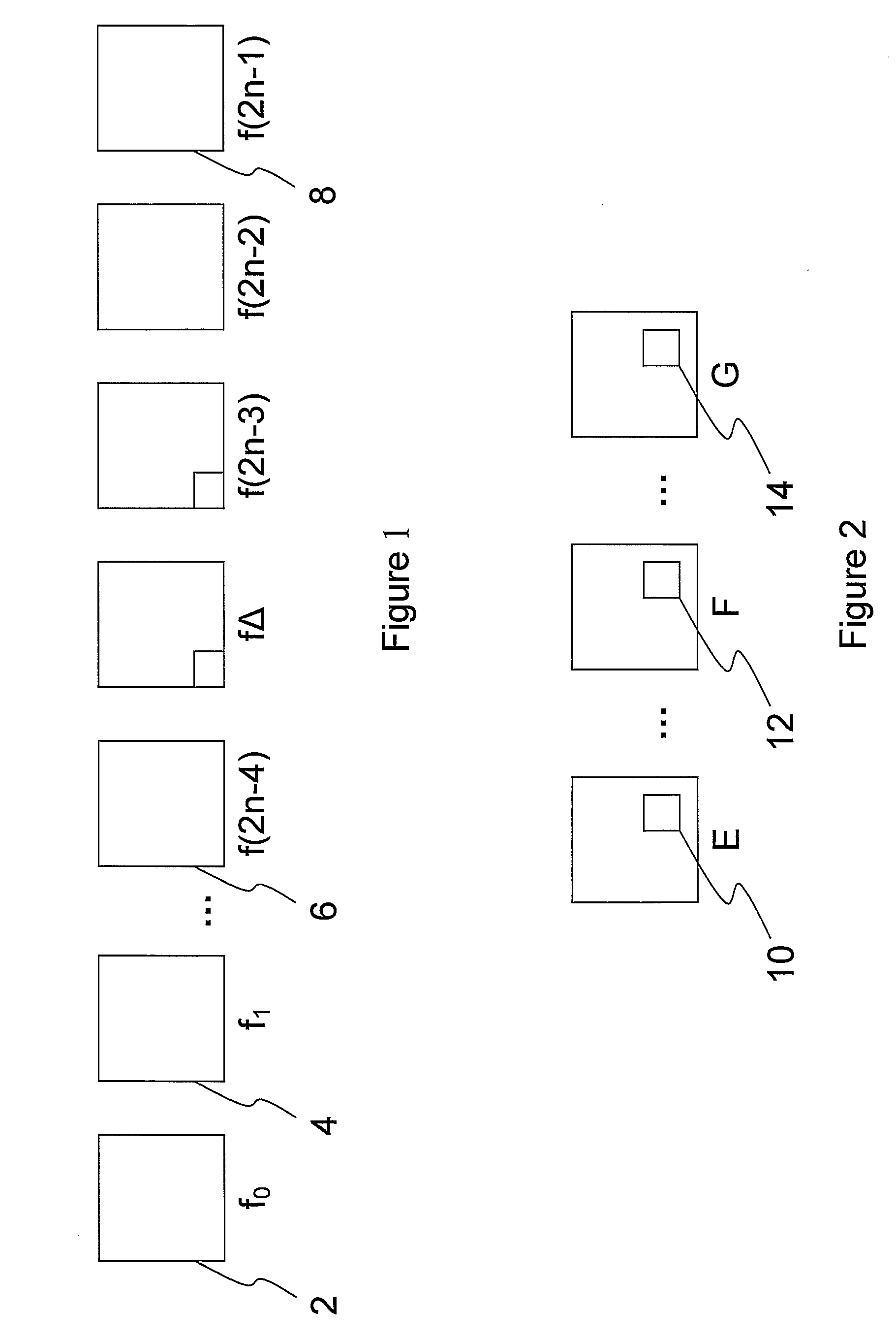
  • Figure 1
    Figure 1
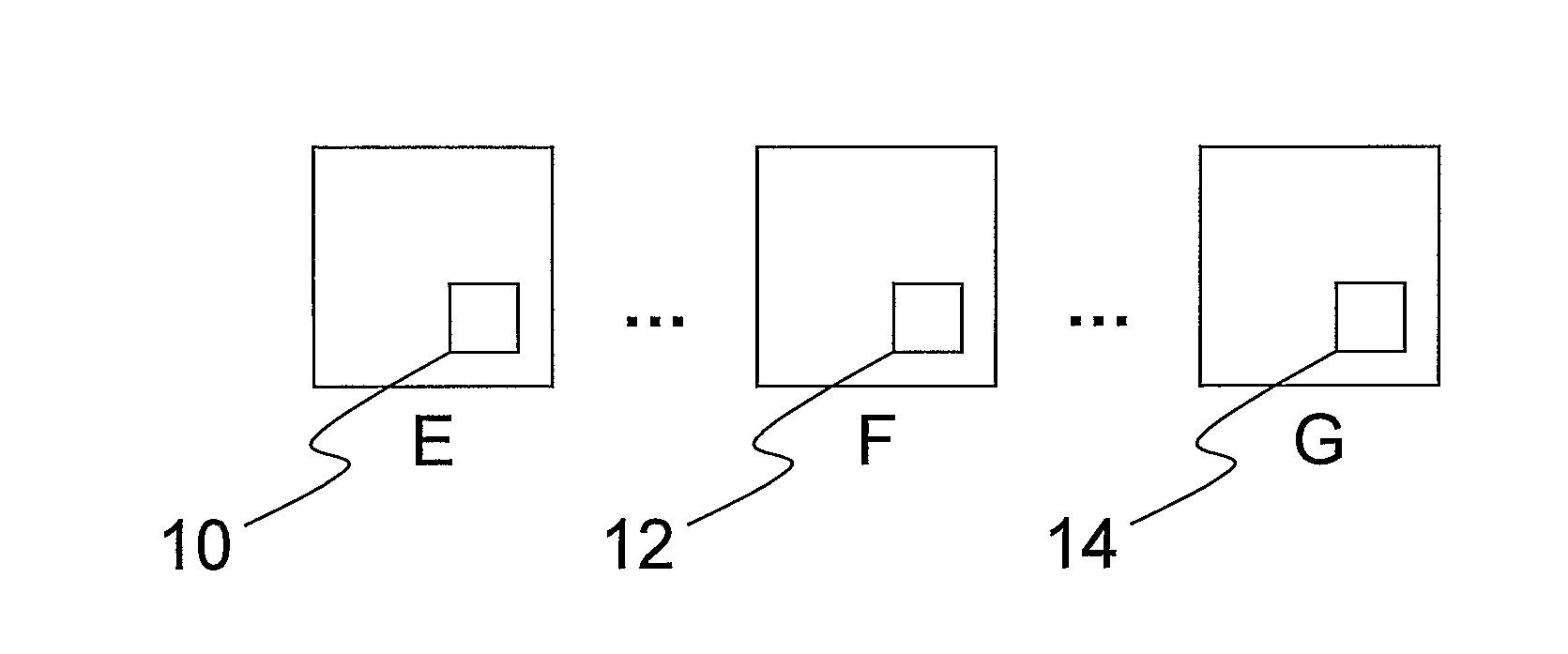
  • Figure 2
    Figure 2
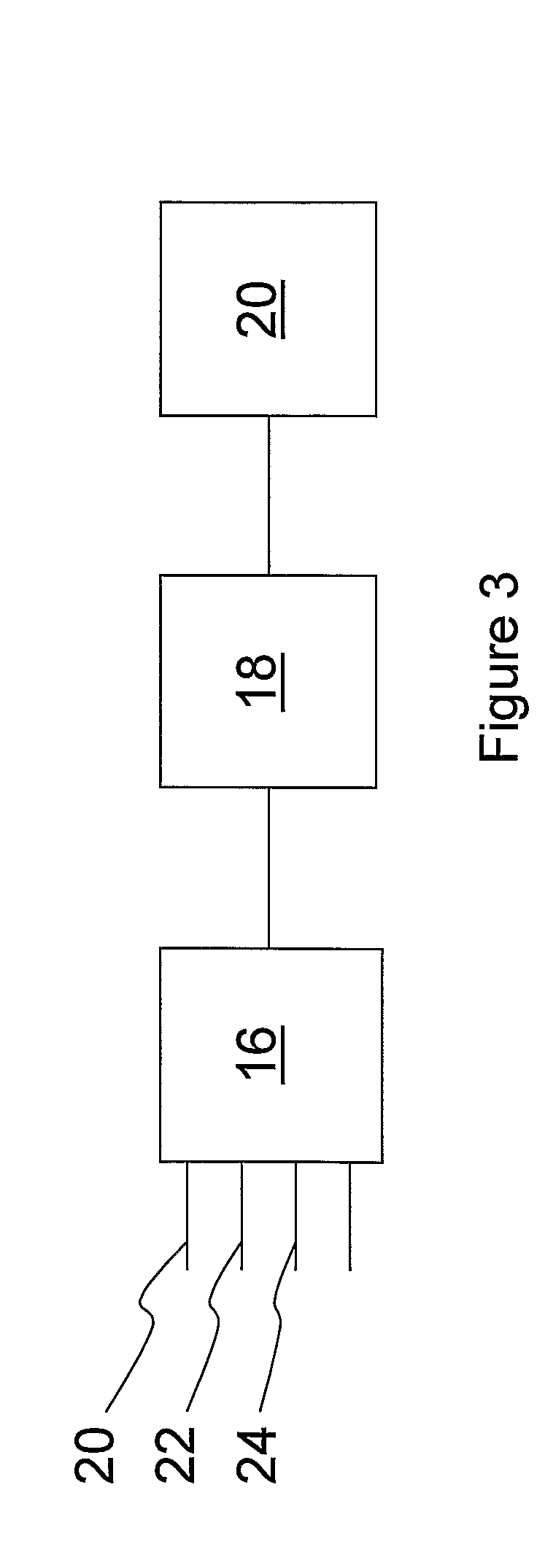
  • Figure 3
    Figure 3
Patent Text Reader

Abstract

A method of receiving video data comprising the steps of: receiving at least one chunk of video data comprising a number of sequential key video frames where the number is at least two and, constructing at least one delta frame between a nearest preceding key frame and a nearest subsequent key frame from data contained in the either or each of the nearest preceding and subsequent frames.
Need to check novelty before this filing date? Find Prior Art

Description

TECHNICAL FIELD AND BACKGROUND ART

[0001] Visual recordings of moving things are generally made up of sequences of successive images. Each such image represents a scene at a different time or range of times. This invention relates to such sequences of images such as are found, for example, in video, film and animation.

[0002] Video takes a large amount of memory, even when compressed. The result is that video is generally stored remotely from the main memory of the computer. In traditional video editing systems, this would be on hard discs or removable disc storage, which are generally fast enough to access the video at full quality and frame rate. It is foreseen that people will wish to access and edit video file content remotely, over the internet, in real time.

[0003] This invention relates to the applications of video editing (important as much video content on the web will have been edited to some extent), video streaming, and video on demand.

[0004] At present any media player editor ...

Examples

Example

[0016]A method of compressing video data and a media player for implementing the method will now be described, by way of example only, with reference to the accompanying drawings in which:

[0017]FIG. 1 is a schematic diagram of a sequence of video frames;

[0018]FIG. 2 is a schematic diagram illustrating construction of a delta frame; and

[0019]FIG. 3 is a schematic diagram of a media player.

[0020]A source which contains images making up a video, film, animation or other moving picture is available for the delivery of video over the internet. Images (2, 4, 6 . . . ) in the source are digitised and labelled with frame numbers (starting from zero) where later times correspond to bigger frame numbers and consecutive frames have consecutive frame numbers. The video also has audio content, which is split into sections.

[0021]The video frames are split into chunks as follows:

[0022]A value of n is chosen to be a small integer 0<=n. In one implementation, n is chosen to be 5. A chunk is a set of...