
Advanced surface discharge lamp systems
- Summary
- Abstract
- Description
- Claims
- Application Information
AI Technical Summary
Benefits of technology
Problems solved by technology
Method used
Image

Examples
Embodiment Construction
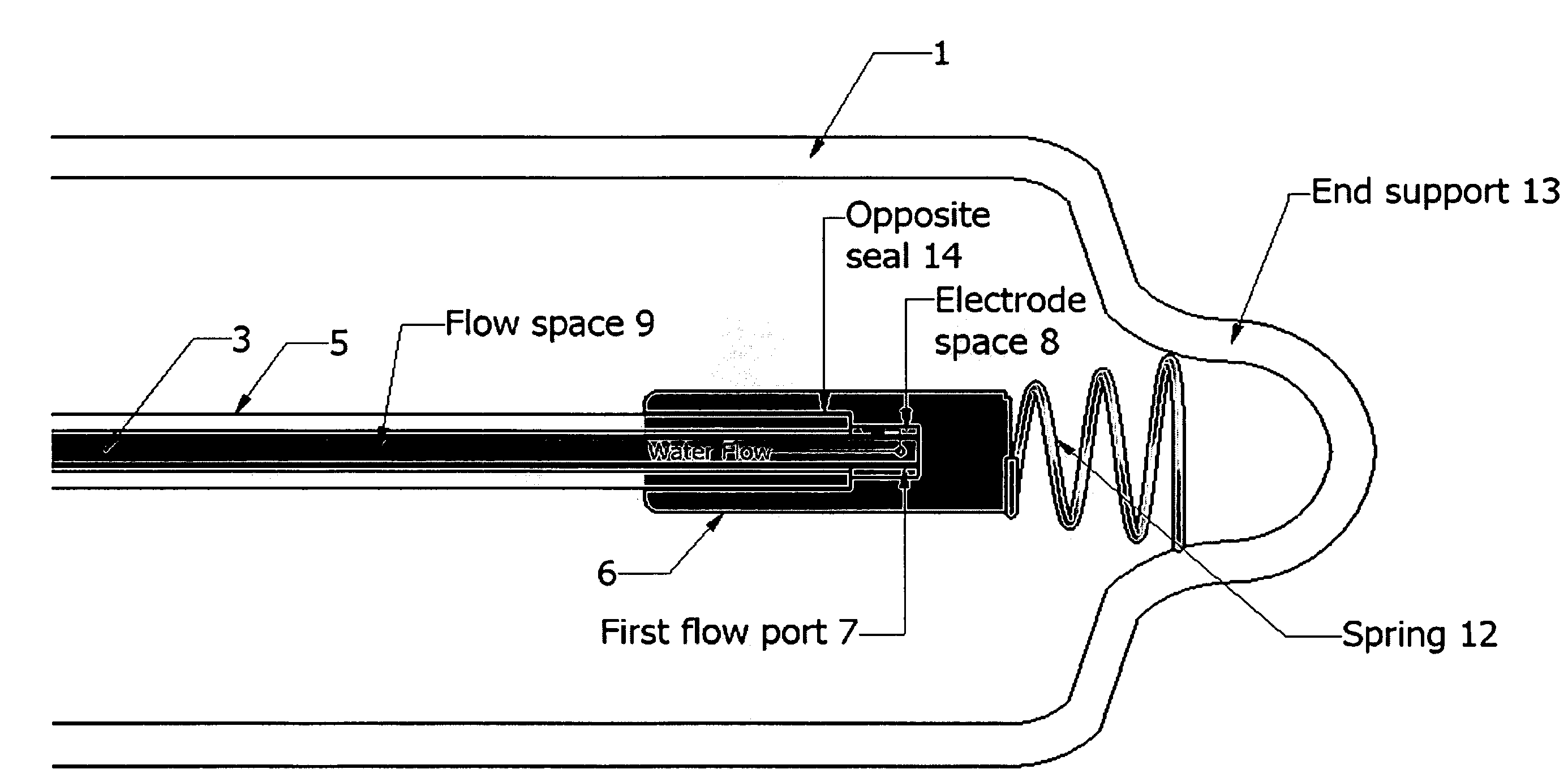
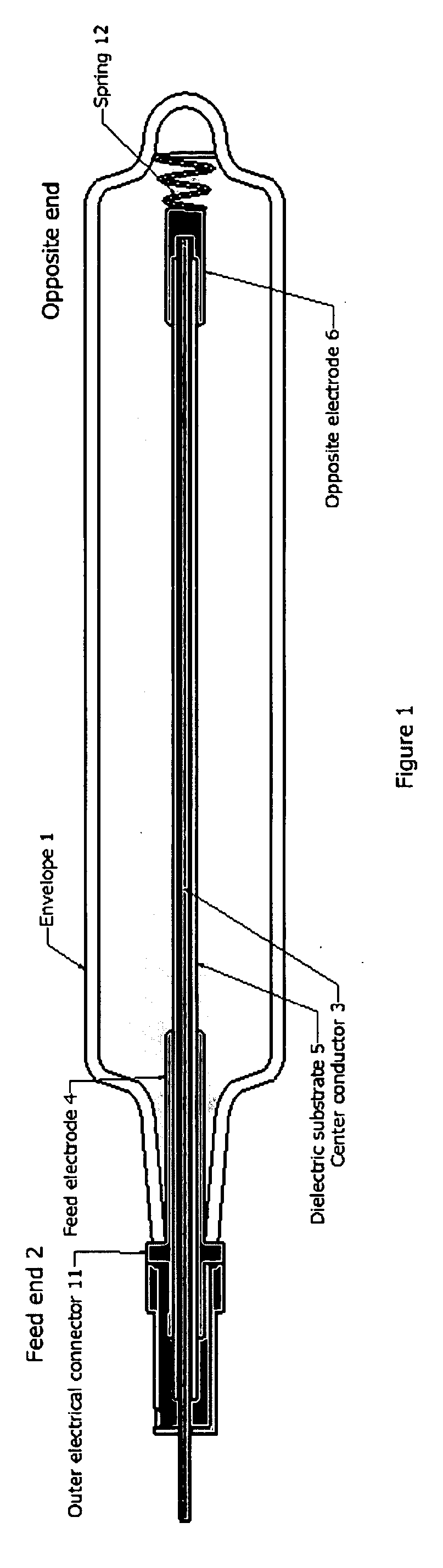
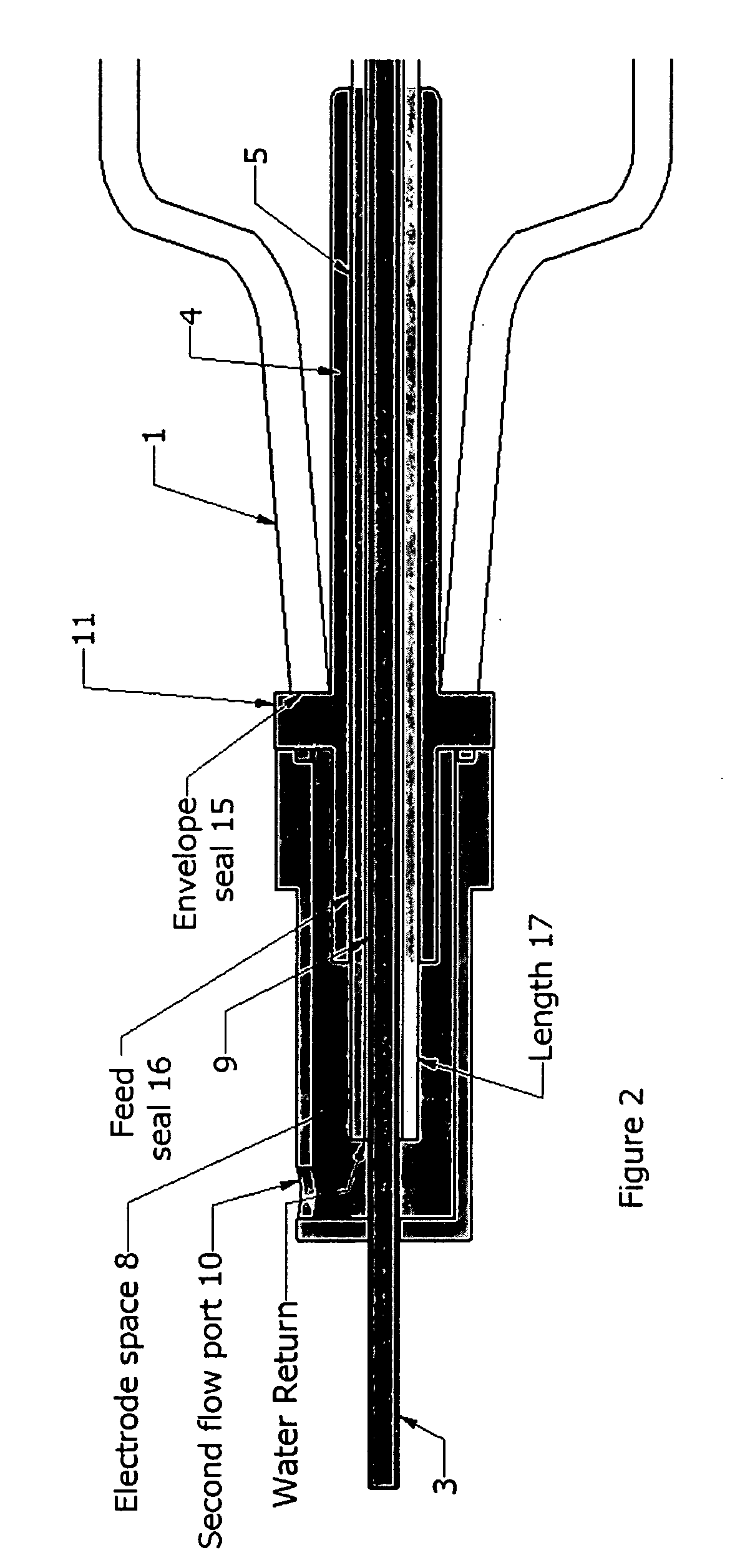
[0026] In a surface discharge (SD) lamp, a plasma discharge is created by applying an electric potential that has sufficient magnitude to cause electronic breakdown of a discharge gas between two spaced apart electrodes near a dielectric surface. The resulting electronic discharge creates plasma streamers that emit intense incoherent light.
[0027] The present invention is directed to an SD lamp having electrical, cooling and support feed throughs and functions at one end of the lamp so that the entire structure of the lamp terminates at the other end of the lamp. This approach allows the SD lamp to be used when it is desirable for the lamp to be held at one end, or where the presence of electrical or cooling lines at both ends of the lamp is a complication. This approach may also be less expensive and more straightforward to implement. This allows the use of SD lamps, for instance, in water treatment applications where an array of UV lamps is attached at one end to an arm and in wat...
PUM
 Login to View More
 Abstract
Description
Claims
Application Information
 Login to View More