
Boat docking apparatus
a docking apparatus and boat technology, applied in waterborne vessels, marine site engineering, construction, etc., can solve the problems of insufficient measures, not always possible in a busy dock, and time-consuming and challenging tasks for docking boats
- Summary
- Abstract
- Description
- Claims
- Application Information
AI Technical Summary
Benefits of technology
Problems solved by technology
Method used
Image

Examples
Embodiment Construction
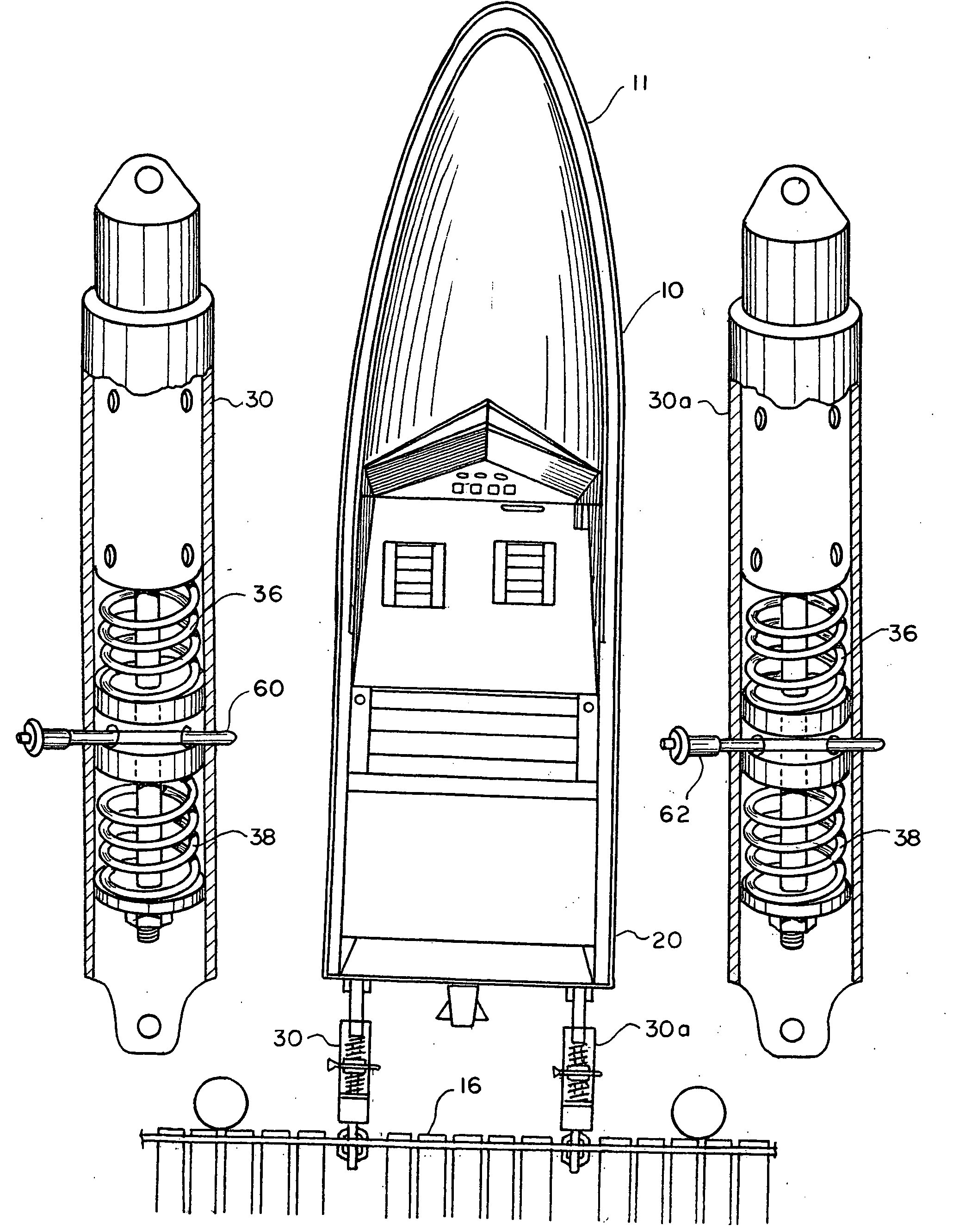
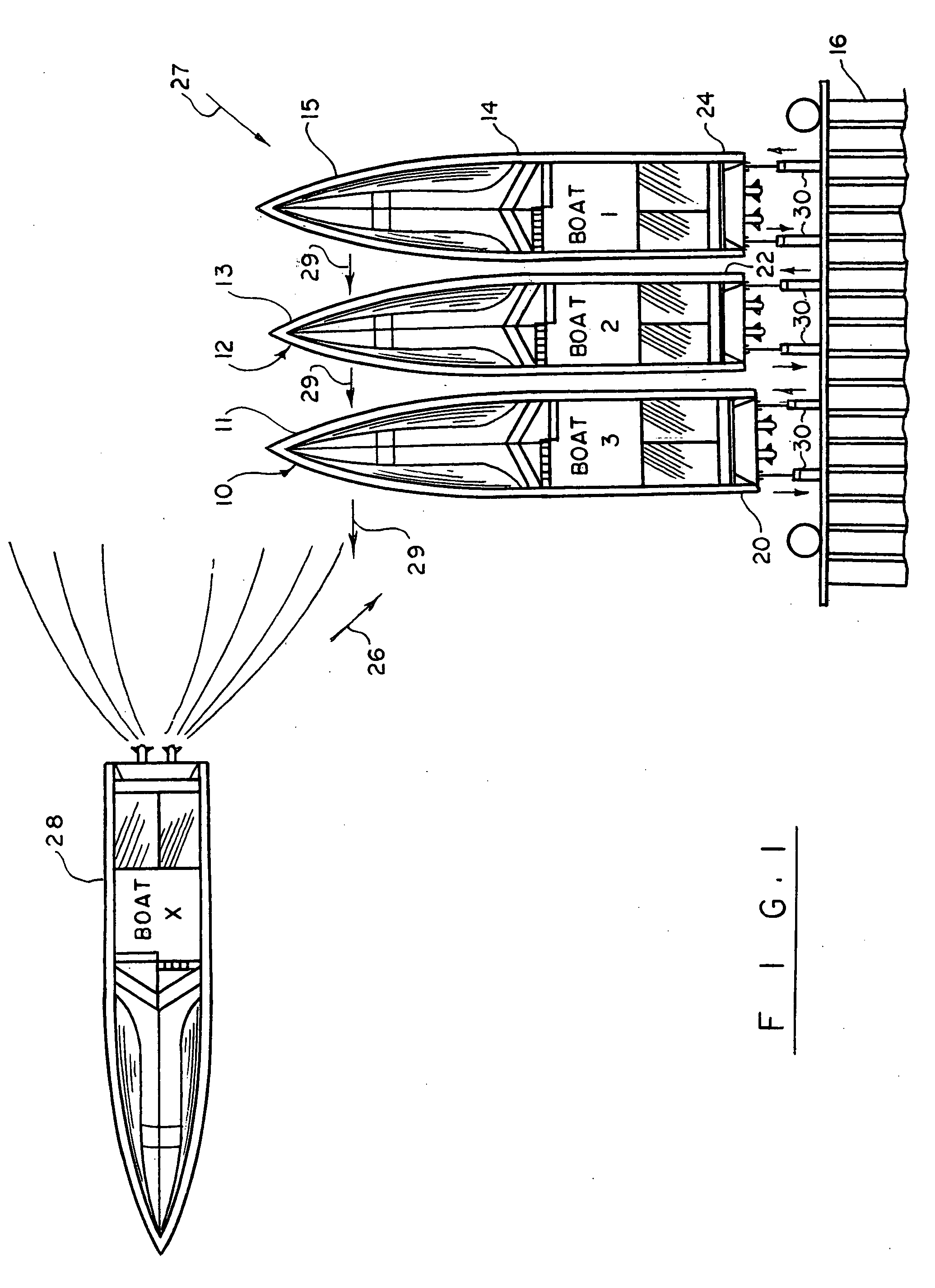
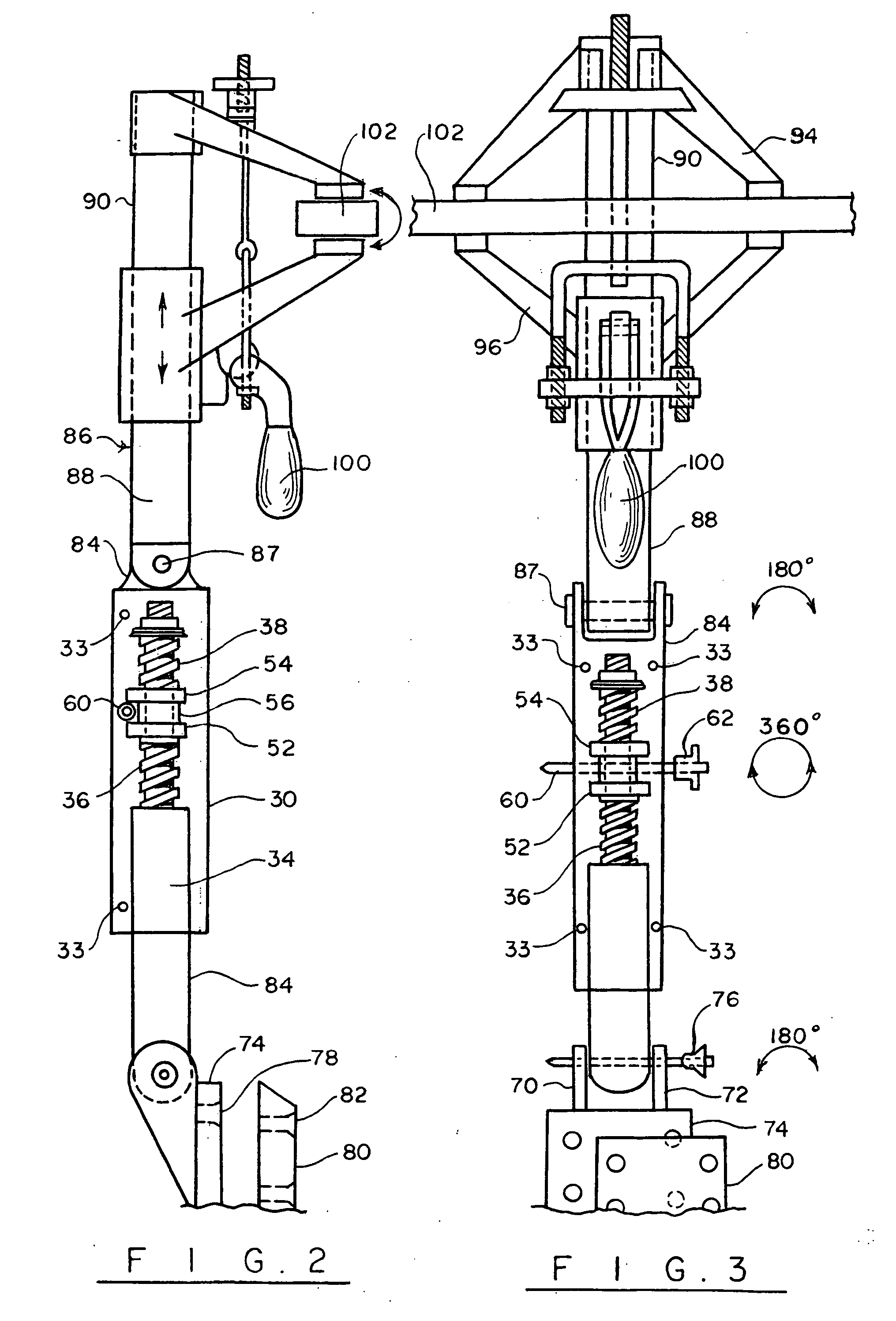
[0022]Turning now to the drawings in more detail, numerals 10, 12, and 14 designate the boats secured side-by-side to a dock 16. Each of the boats 10, 12, and 14 has a bow designated by numerals 11, 13, and 15, respectively, and transoms, or stems designated by numerals 20, 22, and 24, respectively. Each of the boats 10, 12, and 14 is secured to the dock 16 using a pair of spaced-apart docking arms 30, 30a positioned on the stems of the boats.
[0023]The waterway 26, where the boats 10, 12, and 14 are docked is open to navigation by other boats, such a boat 28 moving in a direction generally perpendicular to the orientation of the hulls of the bots 10, 12, and 14. As the boat 28 moves it creates a wave force schematically shown by arrows 27 and 29 that reaches the docked boats and causes the boats to roll, pitch and yaw. Of the three dynamic motions moving the boats 10, 12, and 14, yaw becomes the most problematic—it causes the boats to rotate about their vertical axes so as to cause ...
PUM
 Login to View More
 Abstract
Description
Claims
Application Information
 Login to View More