Recursive adaptive intra smoothing for video coding

a video coding and adaptive technology, applied in the field of image/video processing, can solve the problems of significant impact of extra side information on performance, method only being able to be used in lossless mode, and prediction performance degraded, so as to reduce the problem of shift invarian

US20120218432A1Inactive Publication Date: 2012-08-30SONY CORP
10 Cites 10 Cited by

Patent Information

Authority / Receiving Office
US · United States
Patent Type
Applications(United States)
Current Assignee / Owner
Publication Date
2012-08-30
Estimated Expiration
Not applicable · inactive patent

Smart Images

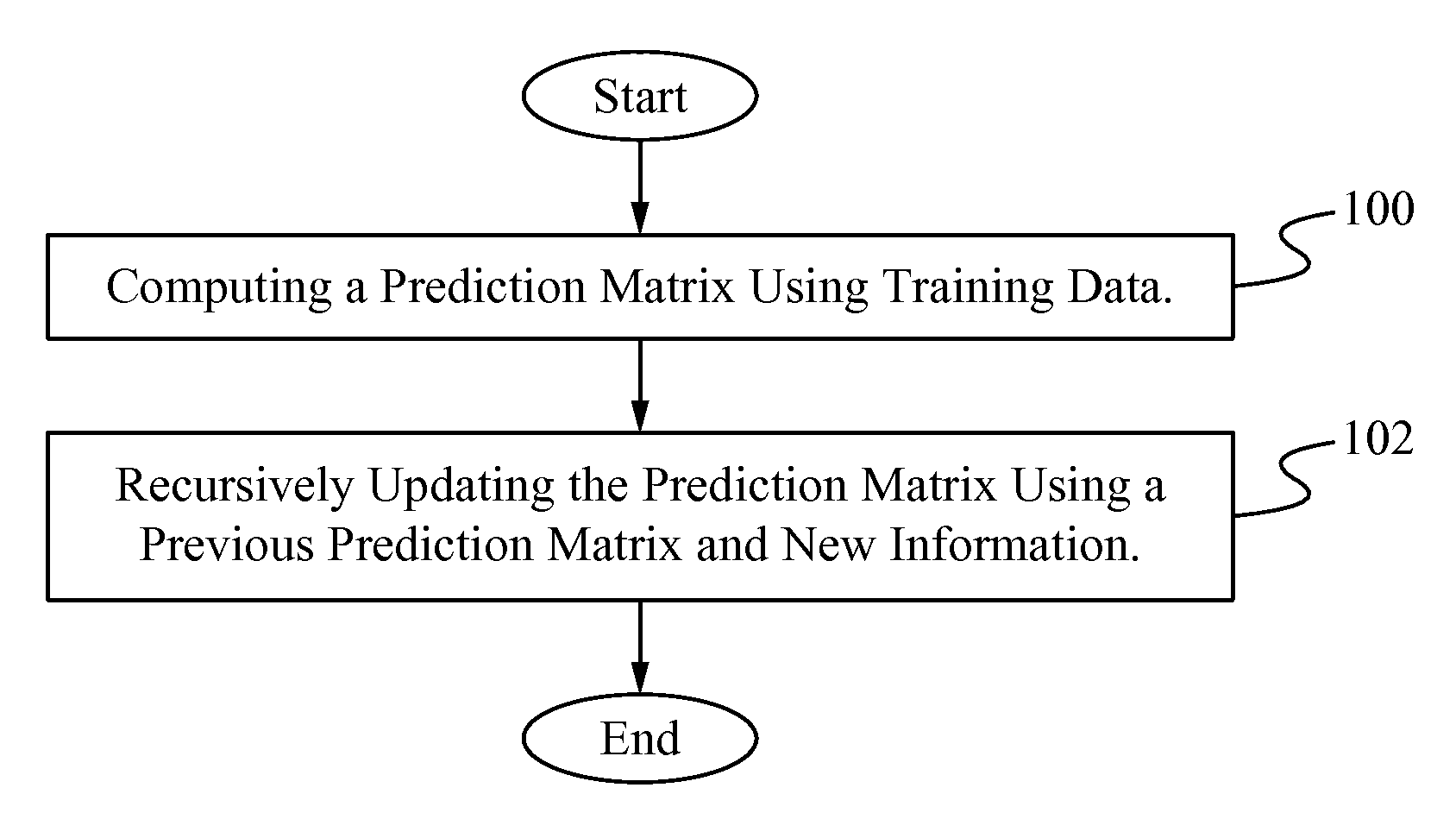
  • Figure 1
    Figure 1
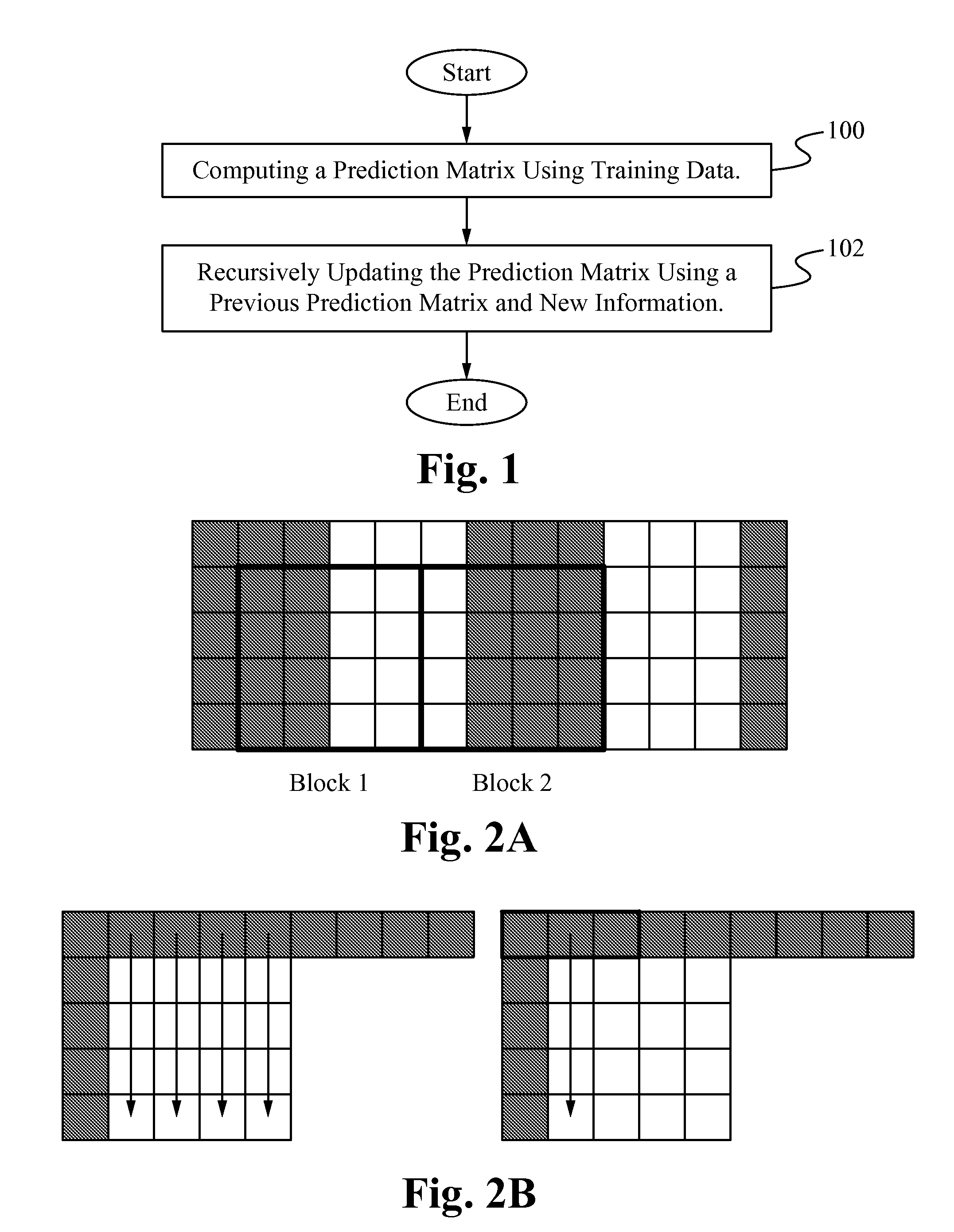
  • Figure 2
    Figure 2
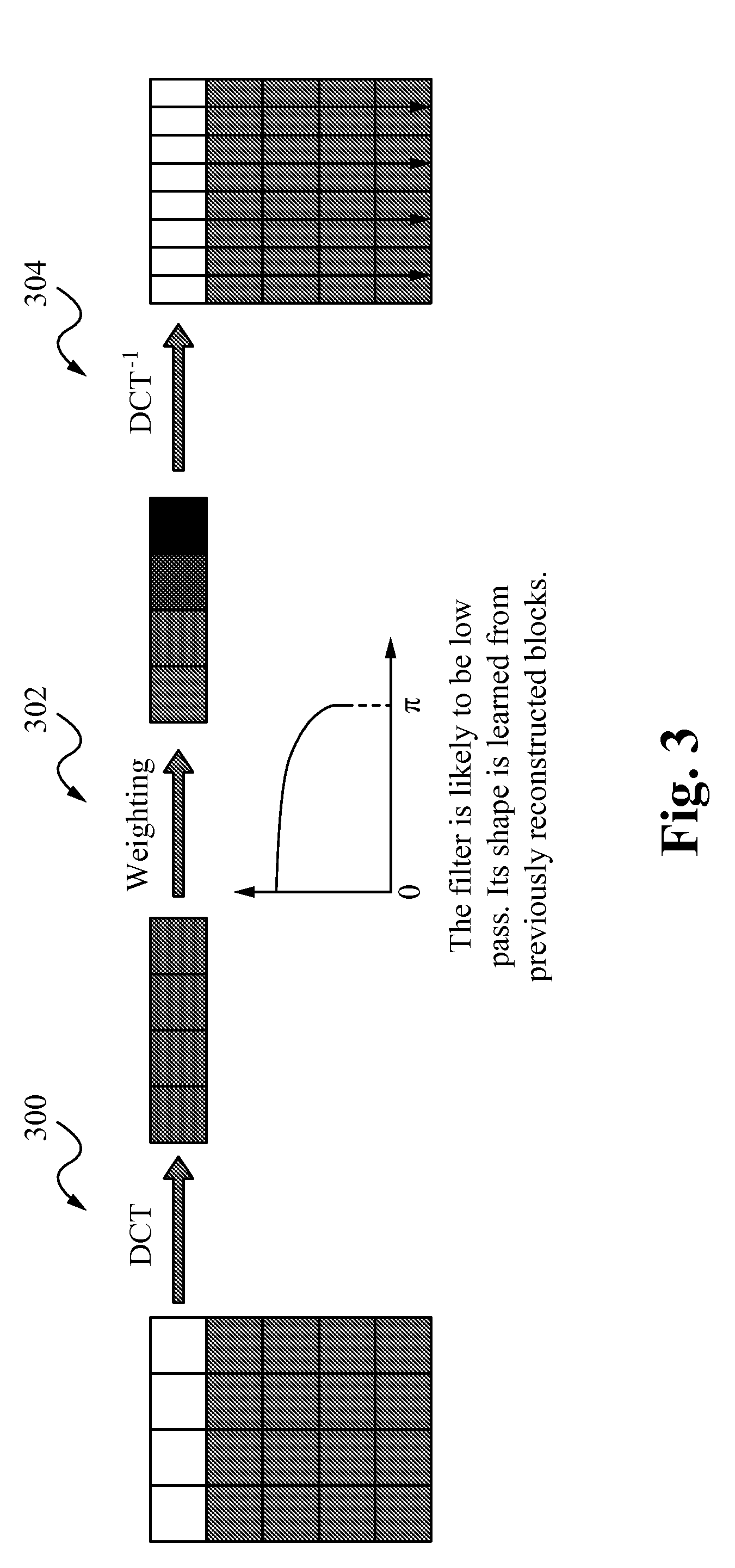
  • Figure 3
    Figure 3
Patent Text Reader

Abstract

A recursive adaptive intra smoothing filter for intra-mode video coding is executed using one or more approaches including, but not limited to matrix multiplication, spatial filtering and frequency domain filtering. Matrix multiplication includes initially computing a prediction matrix Pm using training data. After coding a macroblock, Pm is updated for future macroblocks. In the case of applying spatial filtering, the shift invariance problem is reduced by imposing certain constraints on the matrix to be solved. In frequency domain filtering, a transform residual is minimized using DCT-domain filtering.
Need to check novelty before this filing date? Find Prior Art

Description

FIELD OF THE INVENTION

[0001] The present invention relates to the field of image / video processing. More specifically, the present invention relates to recursive adaptive intra smoothing (RAIS) for video coding.BACKGROUND OF THE INVENTION

[0002] H.264 / AVC is a relatively new international video coding standard. It considerably reduces the bit rate by approximately 30 to 70 percent when compared with previous video coding standards such as MPEG-4 Part 2 and H.263, while providing similar or better image quality.

[0003] The intra coding algorithm of H.264 exploits the spatial and spectral correlation present in an image. Intra prediction removes spatial redundancy between adjacent blocks by predicting one block from its spatially adjacent causal neighbors. A choice of coarse and fine intra prediction is allowed on a block-by-block basis. There are two types of prediction modes for the luminance samples. The 4×4 Intra mode predicts each 4×4 block independently within a macroblock, and the 16...

Examples

Embodiment Construction

[0021]A recursive adaptive intra smoothing (RAIS) filter for intra-mode video coding is described herein. The filter is able to be executed using one or more approaches including, but not limited to matrix multiplication, spatial filtering and frequency domain filtering. Matrix multiplication includes initially computing a prediction matrix Pm using offline training data. After coding a macroblock, Pm is updated for future macroblocks. In the case of applying spatial filtering, the shift invariance problem is reduced by imposing certain constraints on the matrix to be solved. In frequency domain filtering, a transform residual is minimized using DCT-domain filtering.

[0022]In inter-frame Recursive Adaptive Interpolation Filter (RAIF), for example, as described in U.S. Patent Application Ser. No. 61 / 301,430 , filed Feb. 4, 2011 and entitled, “RECURSIVE ADAPTIVE INTERPOLATION FILTERS (RAIF),” which is hereby incorporated by reference in its entirety for all purposes, if a current block...