
Using autocorrelation to detect model mismatch in a process controller
a technology of process controller and model mismatch, applied in the field of process control, can solve problems such as the performance gap between pid and mpc controller, and achieve the effects of improving the disturbance rejection performance of mpc controller, best overall performance, and enhanced mpc controller performan
- Summary
- Abstract
- Description
- Claims
- Application Information
AI Technical Summary
Benefits of technology
Problems solved by technology
Method used
Image

Examples
Embodiment Construction
[0047]Generally speaking, a new controller adaptation, design and tuning method is discussed herein that may be applied to various different types of model predictive control (MPC) controllers for use in any desired or appropriate controller setting. However, this new controller adaptation, design and tuning method is particularly useful in control systems used in process plants, such as in industrial process plants, like drug and chemical manufacturing plants, refinery plants, etc. Moreover, while the new MPC controller adaptation, design and tuning technique is described herein as being implemented as part of a distributed process control network, it could also be implemented in other types of control environments including, for example, as a part of a centralized control system, as part of a programmable logic control (PLC) system, as part of a stand-alone control system, etc.
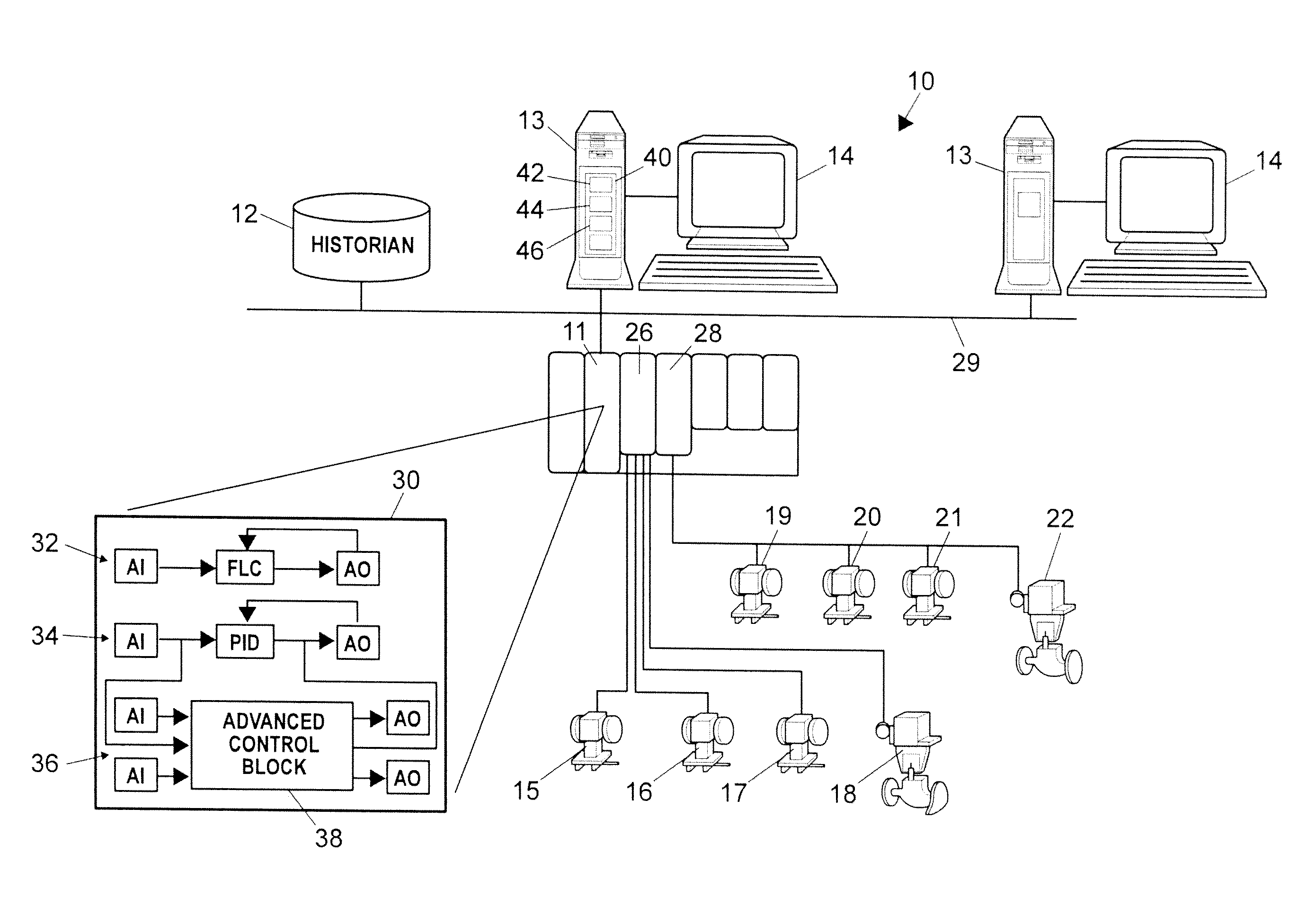
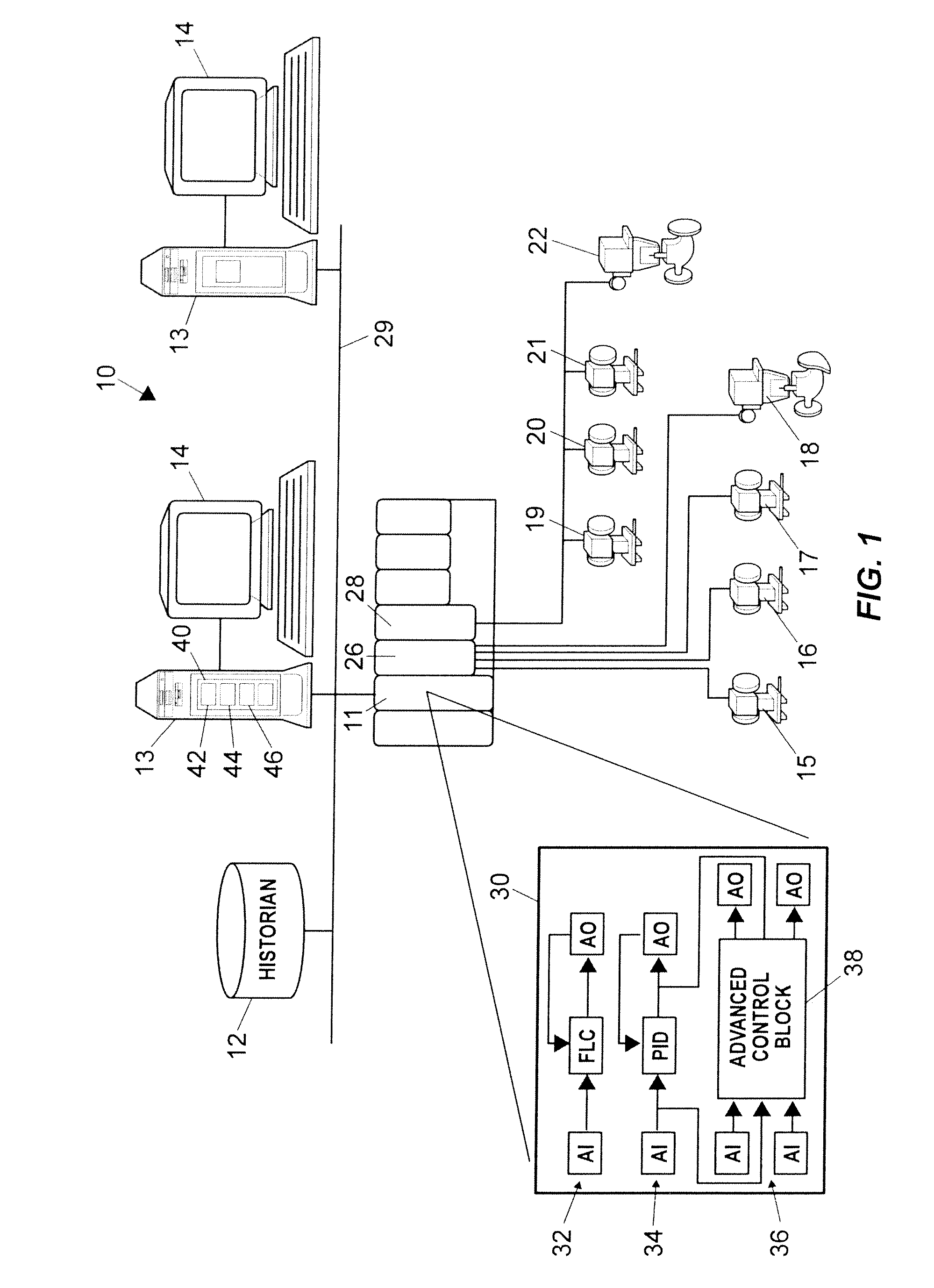
[0048]Referring now to FIG. 1, a process control system 10 in which the MPC controller adaptation, design...
PUM
 Login to View More
 Abstract
Description
Claims
Application Information
 Login to View More